What Is HIIT Fitness? 7 Easy HIIT Exercises For Beginners
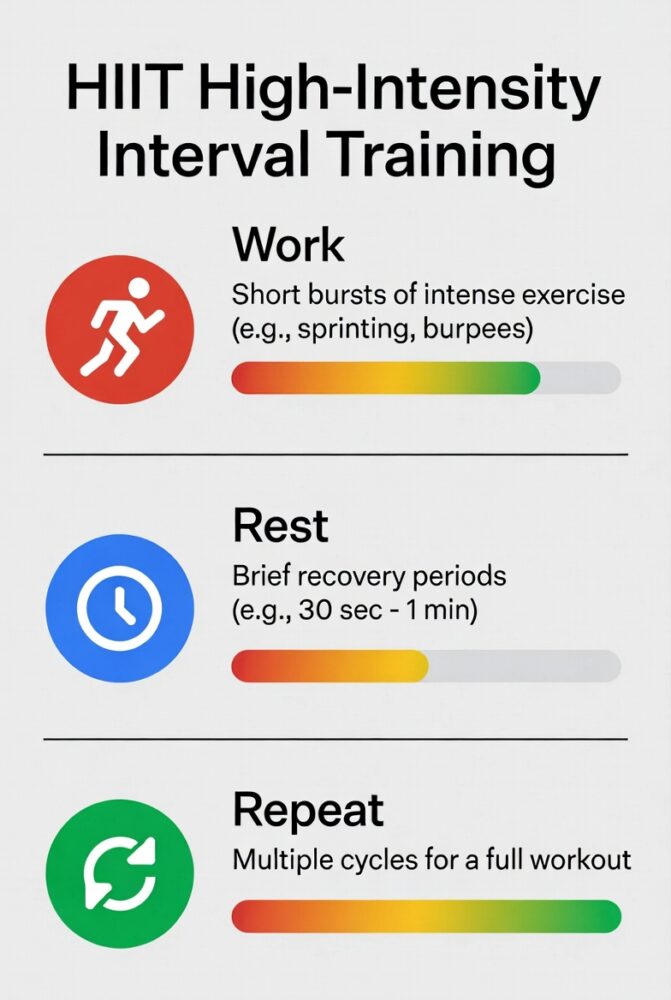
HIIT Exercises for Beginners are a simple and effective way to improve fitness using short bursts of high-intensity movement followed by brief recovery periods. This HIIT training style helps beginners;
- burn calories,
- improve cardiovascular health, and
- build endurance without spending hours exercising.
Unlike steady-state cardio, HIIT focuses on intensity rather than duration, allowing workouts to be completed in as little as 15–30 minutes. When structured correctly, HIIT exercises for beginners can be safe, adaptable, and highly effective for all fitness levels.
Is HIIT Suitable for Beginners?
Yes — HIIT can be beginner-friendly when approached correctly.
Although HIIT has a reputation for being intense, beginners can safely participate by adjusting the workout structure and exercise selection. This may include;
- Use lower Impact variations
- Shorter work intervals
- Increased rest periods
- More focus on form over speed
A good rule of thumb for beginners is to work at a level that feels challenging but still manageable. You should be breathing heavily during intervals but still able to speak a short sentence. If form begins to break down or recovery feels difficult, it’s a sign to slow down or rest longer.
⚠️ Beginner Safety Tip:
If you’re new to exercise, returning after a long break, or managing joint issues or health conditions, consult a healthcare professional before starting HIIT.
7 Easy HIIT Exercises for Beginners
These exercises require little to no equipment and can be performed at home. Aim for 20–40 seconds of work followed by 20–60 seconds of rest, depending on your fitness level.
1. Burpees
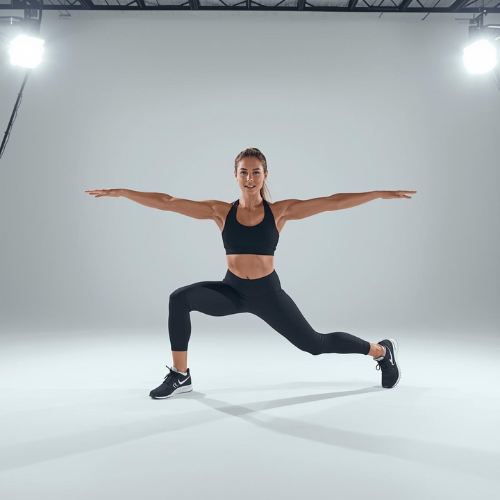
Burpees are one of the most effective full-body movements used in HIIT exercises for beginners because they combine strength, coordination, and cardiovascular effort in a single exercise.
This movement rapidly raises the heart rate while engaging multiple muscle groups at once, making it ideal for short, high-intensity intervals.
Burpees primarily target the legs, glutes, core, chest, shoulders, and arms, while also improving overall coordination and endurance. Because of their intensity, they deliver excellent calorie-burning potential even when performed for short durations.
How To Perform a Burpee:
- Start standing with feet shoulder-width apart
- Lower into a squat and place hands on the floor
- Kick feet back into a plank position
- Perform a push-up (optional for beginners)
- Jump feet back toward hands
- Explode upward into a small jump
Beginner Modification: Step feet back instead of jumping.
2. Mountain Climbers

Mountain Climbers are a dynamic core exercise that also engages the shoulders and legs while boosting cardiovascular fitness.
How To Perform Mountain Climbers:
- Start in a plank position
- Drive one knee toward the chest
- Switch legs quickly in a running motion
- Keep hips level and core engaged
Tip: Move slowly at first to maintain proper form. Avoid lifting your hips too high or allowing them to sag, as this reduces core engagement and can place strain on the lower back. Focus on controlled movement and steady breathing.
3. Jump Squats

Jump Squats are a powerful lower-body exercise that helps build strength, coordination, and explosive power while quickly increasing heart rate. As part of HIIT exercises for beginners, jump squats are especially effective for improving leg strength and cardiovascular fitness at the same time.
This movement primarily targets the glutes, quadriceps, hamstrings, and calves, while also engaging the core to stabilise the body during take-off and landing. Because jump squats involve an explosive jump, they elevate intensity quickly, making them ideal for short HIIT intervals.
How to Perform Jump Squats:
- Stand with feet shoulder-width apart and weight in your heels
- Lower into a squat by bending your knees and pushing hips back
- Keep your chest lifted and core engaged
- Explode upward into a jump, swinging arms for momentum
- Land softly with knees slightly bent and return to the squat position
Beginner Modification: Perform regular bodyweight squats without jumping to reduce impact. Focus on soft landings, keeping knees in line with toes, and maintaining control throughout the movement to protect the joints.
4. High Knees

High Knees are an effective cardio move that targets the legs and core while quickly elevating the heart rate.
How to Perform High Knees:
- Stand tall with feet hip-width apart
- Lift knees toward waist height while alternating legs
- Pump arms naturally to maintain rhythm
- Keep chest upright and core engaged
Beginners should focus on posture and controlled movement rather than speed. Moving too quickly can reduce effectiveness and increase fatigue.
Low-impact option: March in place while lifting knees to a comfortable height.
5. Plank Jacks

Plank Jacks are a challenging but highly effective movement that combines core stability with cardiovascular conditioning, making them a great addition to HIIT exercises for beginners when modified appropriately.
This exercise primarily targets the core, shoulders, glutes, and legs, while also increasing heart rate. Because plank jacks require maintaining a strong plank position, they help improve posture, balance, and overall body control.
How to Perform Plank Jacks:
- Start in a high plank position with hands directly under shoulders
- Engage your core and keep your body in a straight line from head to heels
- Jump both feet out wide, similar to a jumping jack motion
- Jump feet back together while maintaining plank form
- Continue at a controlled pace
Beginner Modification: Step feet out one at a time instead of jumping. If wrist discomfort occurs, plank jacks can also be performed on the forearms while keeping the core braced.
6. Jumping Jacks (Star Jumps)
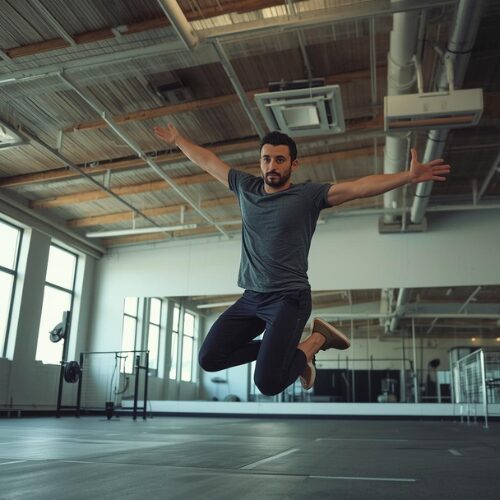
Jumping jacks, also known as star jumps, are a classic full-body cardio exercise that works exceptionally well in HIIT exercises for beginners. They are easy to learn, require no equipment, and quickly elevate heart rate, making them ideal for interval-based workouts.
This movement targets the legs, glutes, shoulders, and core while improving coordination and cardiovascular endurance. Because jumping jacks can be easily modified, they are accessible to beginners and suitable for home workouts.
How to Perform Jumping Jacks:
- Start standing upright with feet together and arms at your sides
- Jump feet out wide while raising arms overhead
- Keep your core engaged and chest lifted
- Jump feet back together as arms return to your sides
- Repeat at a steady, controlled pace
Low-impact option: Step one foot out at a time instead of jumping.
Maintain a steady, controlled rhythm and avoid locking the elbows or knees during the movement to reduce joint stress.
7. Bodyweight Squats

Bodyweight Squats are one of the most beginner-friendly and effective lower-body movements used in HIIT exercises for beginners. They help build strength, improve mobility, and reinforce proper movement patterns that support more advanced exercises over time.
This exercise primarily targets the quadriceps, hamstrings, glutes, and core, while also supporting balance and joint stability. Because bodyweight squats are low-impact and easily scalable, they are ideal for beginners looking to improve strength safely within a HIIT workout.
How to Perform Bodyweight Squats:
Press through heels to return to standing
- Stand with feet shoulder-width apart and toes slightly turned out
- Engage your core and keep your chest upright
- Push hips back and bend knees as if sitting into a chair
- Lower until thighs are parallel to the floor or as low as comfortable
Bodyweight squats help beginners develop lower-body strength, coordination, and confidence. When included in HIIT routines, they raise heart rate while improving muscular endurance, making them an essential building block for long-term fitness progress.
How to Structure a Beginner HIIT Workout (Tabata Style Intervals)
Tabata is a HIIT protocol – not an exercise. This involves 20 seconds of intense effort followed by 10 seconds of rest, repeated for 4 minutes.
For beginners, a more manageable option is a 30-second work / 30-second rest structure, which allows better recovery while maintaining effectiveness.
Sample beginner HIIT workout:
- Bodyweight squats – 30 seconds
- Rest – 30 seconds
- High knees – 30 seconds
- Rest – 30 seconds
- Mountain climbers – 30 seconds
- Rest – 30 seconds
- Jumping jacks – 30 seconds
Repeat for 2–3 rounds for a total workout time of 15–20 minutes. Beginners should aim to perform HIIT workouts 2–3 times per week, allowing rest days between sessions for recovery.
Understanding the Benefits of HIIT Training:

HIIT Exercises for Beginners offer a wide range of physical and metabolic benefits, making this training style one of the most efficient ways to improve overall fitness. When performed correctly, HIIT delivers results in less time than many traditional workout methods.
- Increased calorie burn during and after workouts
- Improved cardiovascular health
- Enhanced insulin sensitivity
- Improved endurance and stamina
- Time efficiency for busy schedules
HIIT also triggers the afterburn effect, where the body continues burning calories after exercise due to increased oxygen consumption, making it a highly efficient training method.
The Science Behind HIIT Fitness

HIIT exercises for beginners are effective because they push the body to work at high intensity for short periods, followed by brief recovery. During intense intervals, the body relies on anaerobic energy systems, using stored energy rather than oxygen. This quickly raises heart rate and challenges the muscles.
After the workout, the body continues to use more oxygen than normal to restore energy levels and repair muscle tissue — a process known as excess post-exercise oxygen consumption (EPOC). This “afterburn effect” allows the body to keep burning calories even after exercise has finished.
HIIT also improves cardiovascular efficiency by repeatedly raising and lowering heart rate, strengthening the heart over time. For beginners, this means improved fitness and endurance without long, steady cardio sessions.
How HIIT Differs from Other Forms of Exercise
HIIT exercises for beginners differ from traditional workouts by focusing on short bursts of high-intensity effort rather than maintaining a steady pace for long periods. Instead of exercising at one consistent intensity, HIIT alternates between intense work intervals and recovery, which challenges both the cardiovascular system and muscles in less time.
HIIT vs Steady-State Cardio:
Steady-state cardio, such as jogging or cycling, keeps the heart rate at a moderate level for an extended duration. While effective, it often requires longer sessions to achieve similar calorie burn. HIIT raises the heart rate quickly, making workouts shorter yet more efficient.
HIIT vs Strength Training:
Traditional weight training prioritises muscle strength and size, with longer rest periods between sets. HIIT focuses more on cardiovascular conditioning and calorie expenditure, though many HIIT exercises for beginners still build functional strength using bodyweight movements.
Why Combining Both Works Best:
For beginners, combining HIIT with resistance training offers a balanced approach to fitness. HIIT improves endurance and heart health, while strength training supports muscle development and joint stability. Together, they create a well-rounded and sustainable exercise routine.
Final Thoughts on HIIT Exercises for Beginners
HIIT Fitness is an effective, time-saving training method that can be adapted for beginners when performed correctly. By choosing appropriate exercises, managing intensity, and allowing adequate rest, HIIT can safely improve cardiovascular fitness, burn calories, and build endurance.
Starting small and remaining consistent is key. Focus on good form, listen to your body, and gradually progress as your fitness improves. With time, HIIT can become a powerful tool for supporting long-term health, strength, and overall wellbeing.
Related FAQs
Is HIIT Safe for Beginners?
Yes, HIIT is safe for beginners when exercises are modified, intensity is controlled, and proper form is prioritised.
How often should beginners do HIIT?
Beginners should start with 2–3 HIIT workouts per week, allowing rest days in between.
How long should a beginner HIIT workout last?
A beginner HIIT workout can be effective in 15–20 minutes.
Can HIIT help with weight loss?
Yes, HIIT can support fat loss by increasing calorie burn and boosting metabolism when combined with a balanced diet.
Do I need equipment for HIIT?
No, most beginner HIIT exercises can be done using bodyweight alone.
Should I warm up before HIIT?
Absolutely. A 5–10 minute warm-up reduces injury risk and improves performance.






Fix Your Energy, Sleep and Nutrition Today 🛠
Get our 20-Step Healthy Living eBook, Daily Health Planner and our other bonuses sent to your inbox instantly. Start your journey with 7 days of exclusive gifts and expert tips to stay fit throughout 2026.
Disclaimer: We hate spam too. Unsubscribe anytime.
Anxiety and Depression are you magnesium deficient BiOptimizers blood pressure supplements blood sugar control blood sugar support supplements digestive enzymes Digestive Enzymes Supplement Digestive Health digital products Dr Sam Robbins Gut Health Gut Health While Travelling Health Tips for Travelling Healthy Living heart health HFL hypomagnesia insulin resistance joint health supplement keto dieting Keto Diet Weight Loss leaky gut supplements leptin resistance list magnesium Magnesium deficiency Matt Gallant mental health multivitamins Nootopia Nootropics Probiotics Probiotic Supplements reverse type 2 diabetes stress and anxiety stress relief Supplements vitabalance Wade Lightheart weight loss articles weight loss diet plans weight loss product reviews weight loss supplements weight loss tea
About Author