
Why Your Blood Sugar Spikes After Meals (Even If You Don’t Have Diabetes)
Do you ever feel sleepy, foggy, or hungry again shortly after eating — even when your meal seemed “healthy”?
You might be experiencing post-meal blood sugar spikes and crashes without realising it.
This isn’t just a concern for people with diabetes. Blood sugar fluctuations affect energy, mood, fat storage, gut health, and long-term metabolic health — even in otherwise healthy people.
Let’s break down what’s happening in your body and how to keep your blood sugar steady naturally.
🩸 What Is a Post-Meal Blood Sugar Spike?
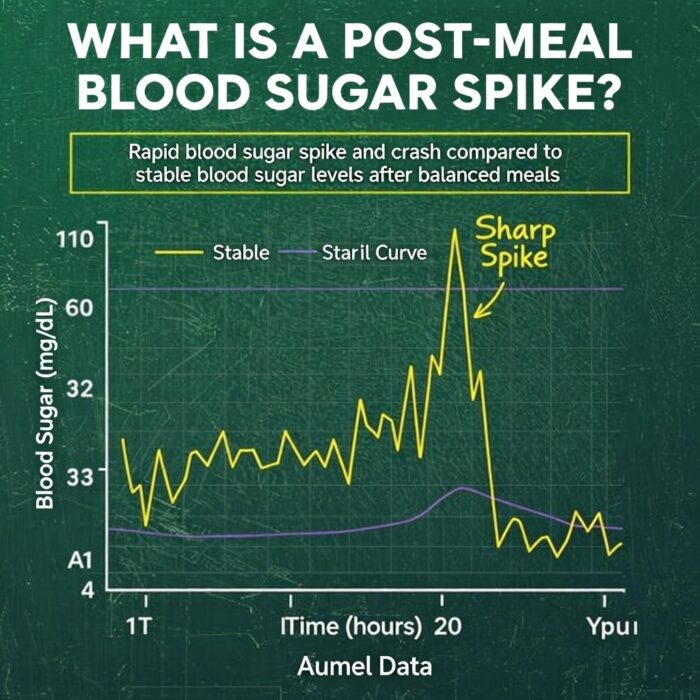
After you eat, your body breaks carbohydrates down into glucose (sugar), which enters the bloodstream.
Your pancreas releases insulin, a hormone that helps move glucose into cells to be used for energy.
When a meal digests very quickly (especially refined or low-fiber carbs), glucose enters the blood rapidly, causing a sharp rise in blood sugar. Your body responds with a large insulin release, which can then drive blood sugar down too quickly — leading to a crash.
Spike → Big insulin response → Drop → Hunger + fatigue
⚠️ Signs Your Blood Sugar Is Spiking and Crashing

Many people live with unstable blood sugar and don’t know it. Common clues include:
- Feeling tired or sleepy after meals
- Afternoon energy crashes
- Sugar or carb cravings 1–2 hours after eating
- Brain fog or poor concentration
- Irritability when hungry
- Constant snacking
- Stubborn belly fat
If this sounds familiar, your meals may be triggering glucose swings.
🍞 Foods That Cause the Biggest Blood Sugar Spikes
Even foods marketed as “healthy” can spike glucose if eaten alone or in large amounts.
| Food | Why It Spikes Blood Sugar |
|---|---|
| White bread, pasta, rice | Rapidly digested refined carbs |
| Breakfast cereals | Processed grains + added sugar |
| Fruit juice | No fiber to slow absorption |
| Smoothies | Liquid carbs digest very quickly |
| Pastries & baked goods | Sugar + refined flour combo |
| Low-fat snacks | Often higher in sugar |
It’s not just what you eat — it’s also how you combine foods.
🧠 Why Blood Sugar Spikes Matter Long-Term
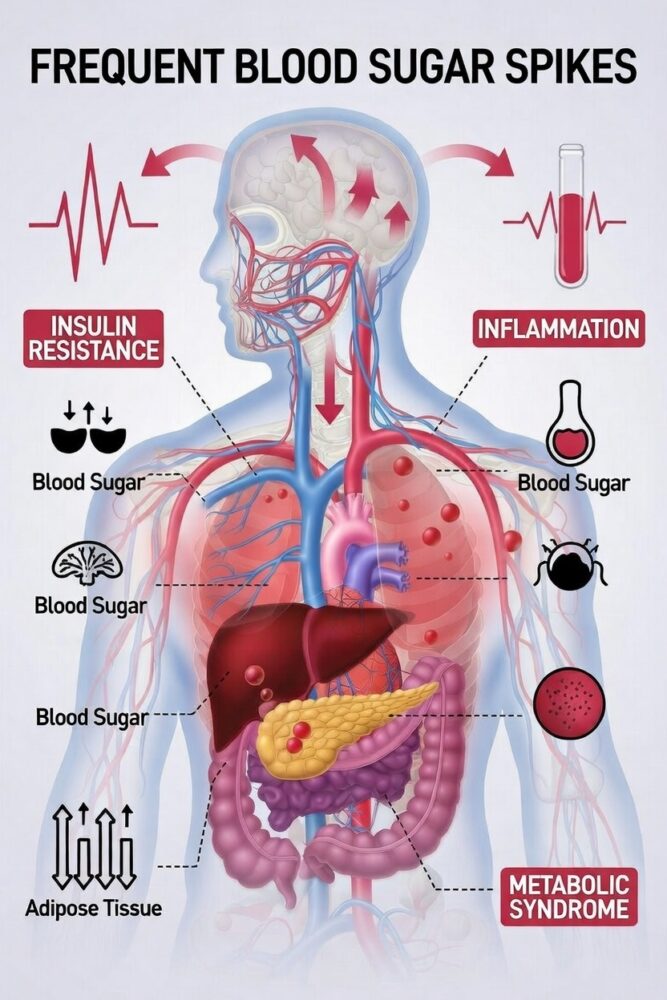
Occasional blood sugar spikes are normal, but frequent or large surges can have cumulative effects on your body. Every spike forces your pancreas to release insulin to lower blood glucose. Over time, this repeated stress can make your cells less responsive to insulin, a condition known as insulin resistance.
Insulin resistance is linked to:
- Weight gain, particularly around the abdomen
- Energy instability — feeling tired after meals or crashing mid-afternoon
- Increased inflammation, which can affect heart health and other organs
- Hormone imbalances, including appetite-regulating hormones like leptin and ghrelin
- Higher long-term risk of metabolic disorders such as type 2 diabetes
Even in otherwise healthy individuals, these spikes can subtly affect mood, focus, and energy levels, making daily tasks feel more draining than they need to be.
By understanding and controlling post-meal blood sugar spikes, you support steady energy, better fat metabolism, and overall long-term health.
🥗 Sample Blood Sugar–Friendly Day of Eating
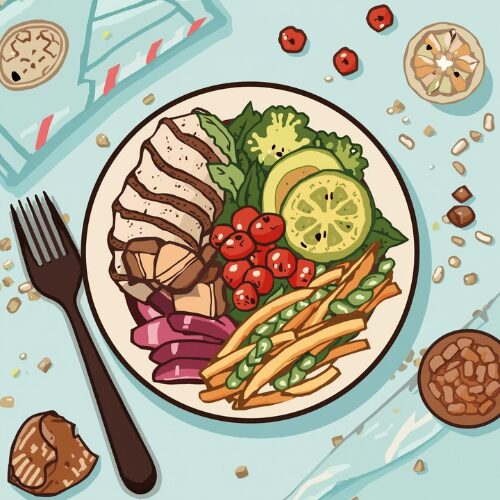
Designed to:
✔ Prevent big glucose spikes
✔ Keep energy steady
✔ Reduce cravings
✔ Support gut health
The key formula you’ll see repeated:
Protein + Fiber + Healthy Fat + Smart Carbs
Option:
🍳 2 eggs (scrambled or poached)
🥑 ½ avocado
🍞 1 slice wholegrain or sourdough toast
🥬 Side of sautéed spinach or tomatoes
Why this works:
– Protein (eggs) slows digestion
– Fat (avocado) blunts glucose rise
– Fiber (veg + wholegrain bread) stabilizes blood sugar
👉 Much better than cereal, toast + jam, or fruit smoothie alone
Option:
🥜 Handful of mixed nuts + a few berries
Why:
Fat + fiber + a little natural sugar = slow release energy, no crash.
Option:
🍗 Grilled chicken or chickpeas
🥗 Large mixed salad (leafy greens, cucumber, peppers, carrots)
🫒 Olive oil + lemon dressing
🍠 Small portion roasted sweet potato or quinoa
Plate method:
– ½ plate non-starchy vegetables
– ¼ protein
– ¼ slow-digesting carbs
Why this works:
– Fiber and fat slow how quickly the carbs from sweet potato enter the bloodstream.
– 10–15 minute walk.
– This helps muscles use glucose, lowering post-meal spikes.
Option:
🧀 Greek yogurt (unsweetened)
🌰 Sprinkle of chia seeds or walnuts
🍓 A few sliced strawberries
– Protein + fat + fiber = stable energy, reduced sugar cravings.
Option:
🐟 Baked salmon (or tofu)
🥦 Steamed broccoli & courgette
🍚 Small portion brown rice or lentils
🧈 Drizzle olive oil or add tahini sauce
Why: Evening carb tolerance can be lower for some people — pairing carbs with protein and fiber prevents night-time spikes and crashes.
Instead of high-sugar dessert:
🍫 1–2 squares dark chocolate (70%+)
OR
🍎 Apple slices with almond butter
Fat + fiber slow sugar absorption.
✔ Eat vegetables or protein before carbs when possible
✔ Avoid drinking carbs (juice, sweet coffees, sugary smoothies)
✔ Don’t eat carbs alone
✔ Stay hydrated
✔ Prioritise sleep — it directly affects blood sugar control
🧠 The Big Takeaway
This isn’t low-carb — it’s smart carb timing and pairing.
You don’t need to remove carbs. You just need to:
➡ Slow digestion
➡ Support insulin response
➡ Avoid rapid glucose surges
That’s how you get steady energy, fewer cravings, and better metabolic balance.
✅ How to Reduce Blood Sugar Spikes Naturally
Small changes can make a huge difference.
✔ 1. Eat Protein First
Protein slows digestion and reduces the speed glucose enters the bloodstream.
✔ 2. Add Healthy Fats
Avocado, olive oil, nuts, and seeds blunt glucose spikes by slowing gastric emptying.
✔ 3. Increase Fiber Intake
Vegetables, legumes, chia, flax, and whole foods help regulate blood sugar response.
Tip: Eat vegetables before carbs — this can significantly reduce spikes.
✔ 4. Pair Carbs With Protein or Fat
Avoid eating carbs alone (like fruit juice or plain toast).
✔ 5. Walk After Meals
A 10–15 minute walk helps muscles use glucose, reducing blood sugar peaks.
✔ 6. Avoid Liquid Carbs
Liquid sugar absorbs faster than solid food.
✔ 7. Improve Sleep
Poor sleep reduces insulin sensitivity, making spikes worse.
✔ 8. Consider Apple Cider Vinegar
Some research suggests apple cider vinegar before carb-heavy meals may improve glucose response.
Support insulin response and glucose balance – Some people use targeted nutrients like berberine, chromium, or fiber-based supplements alongside dietary changes. (Read more about this here<<)
🦠 The Gut–Blood Sugar Connection

Your gut microbiome plays a role in how your body handles carbohydrates.
A healthy gut may help:
- Improve insulin sensitivity
- Reduce inflammation
- Support better glucose regulation
Fiber-rich foods and fermented foods (like yogurt, kefir, and sauerkraut) help nourish beneficial bacteria that support metabolic balance.
“A healthy microbiome and specific nutrients may support better glucose regulation.”
🚩 When to Pay Closer Attention
You may want to seek medical advice if you experience:
- Frequent dizziness or shaking between meals
- Extreme fatigue after eating
- Strong family history of diabetes
- Rapid weight gain with high hunger
Tracking meals and symptoms can help identify patterns.
Struggling with blood sugar crashes despite eating well?
You may benefit from targeted glucose-support nutrients alongside diet changes. See my breakdown of evidence-based blood sugar supplements here <<
Related FAQs
1. What causes blood sugar to spike after eating?
Fast-digesting carbohydrates, low fiber intake, and eating carbs alone can cause glucose to enter the bloodstream quickly, leading to a sharp rise in blood sugar.
2. Is it normal to feel tired after eating?
Mild tiredness can happen, but frequent fatigue after meals may signal blood sugar spikes and crashes.
3. How long do blood sugar spikes last?
In healthy individuals, blood sugar usually peaks within 30–60 minutes after eating and returns to normal within 2 hours. Large spikes may take longer.
4. Can healthy foods still spike blood sugar?
Yes. Smoothies, fruit juice, and large portions of grains can spike blood sugar if not paired with protein, fat, or fiber.
5. Does walking after meals really help?
Yes. Light movement helps muscles use glucose, reducing post-meal blood sugar peaks.
6. How can I tell if I’m having blood sugar crashes?
Symptoms may include shakiness, sudden hunger, fatigue, irritability, or brain fog a few hours after eating.
Disclaimer: This article is for informational purposes only and is not a substitute for professional medical advice. If you have concerns about blood sugar, diabetes, or any medical condition, please consult a qualified healthcare provider before making dietary or supplement changes. Individual results may vary.
🌿 The Takeaway
Blood sugar spikes aren’t just a diabetes issue — they affect how you feel every day.
By balancing meals with protein, fiber, and healthy fats — and avoiding refined, fast-digesting carbs — you can support:
✔ Steady energy
✔ Fewer cravings
✔ Better mood
✔ Improved gut health
✔ Long-term metabolic health
Small adjustments to meal structure often matter more than strict dieting.

Fix Your Energy, Sleep and Nutrition Today 🛠
Get our 20-Step Healthy Living eBook, Daily Health Planner and our other bonuses sent to your inbox instantly. Start your journey with 7 days of exclusive gifts and expert tips to stay fit throughout 2026.
Disclaimer: We hate spam too. Unsubscribe anytime.




Anxiety and Depression are you magnesium deficient BiOptimizers blood pressure supplements blood sugar control blood sugar support supplements digestive enzymes Digestive Enzymes Supplement Digestive Health digital products Dr Sam Robbins Gut Health Gut Health While Travelling Health Tips for Travelling Healthy Living heart health HFL hypomagnesia insulin resistance joint health supplement keto dieting Keto Diet Weight Loss leaky gut supplements list Low Stomach Acid magnesium Magnesium deficiency Matt Gallant mental health multivitamins Nootopia Nootropics Probiotics Probiotic Supplements reverse type 2 diabetes stress and anxiety stress relief Supplements vitapost Wade Lightheart weight loss articles weight loss diet plans weight loss product reviews weight loss supplements weight loss tea
About Author




Being health conscious in my senior years, learning from reading your article on blood sugar spikes has been extremely interesting. I try to eat healthy since I am older in age now, but I never thought about blood sugar spikes before.
Wow, providing your readers with the signs has been very helpful. I have experienced all those symptoms from time to time, but i never realized it was from blood sugar spikes.
Since I am into natural health your natural ways to manage blood sugar spikes is valuable information, I have learned so much from reading your article.
Thank you for taking the time to write this to help me
Jeff
Your most welcome Jeff. Glad you have found this information valuable. I hope these tips maybe useful to you in future.
Best regards
Alex