

Do Crunches Really Work (Quick Answer)
Crunches can strengthen the rectus abdominis (the visible “six-pack” muscle), but they do not effectively train the deeper core muscles responsible for spinal stability and injury prevention. For functional core strength, stability-based exercises like planks, dead bugs, and Pallof presses are more effective than crunches alone.
Do Crunches Really Work for building core strength and flat abs? For decades, crunches have been promoted as the ultimate exercise for flattening the stomach and sculpting visible abs. Fitness magazines, workout programmes, and social media routines often suggest that doing hundreds of crunches a day is the key to a stronger, leaner midsection.
However, the reality is very different. While crunches do activate the abdominal muscles, they only train a small portion of the core and fall short when it comes to strength, stability, and long-term function. In some cases, relying too heavily on crunches can even contribute to muscle imbalances, poor posture, and lower back discomfort.
In this article, we’ll explore whether crunches really work, explain why they’re often ineffective for true core strength, and outline the best exercises you should be doing instead to build a stronger, more functional core.
Do Crunches Really Work for Core Strength?

Crunches are not the most effective exercise for core strength. While they activate the front abdominal muscles, they do not adequately train the deeper stabilising muscles responsible for spinal support, posture, and injury prevention. Stability-based exercises like planks, dead bugs, and anti-rotation movements are more effective for building functional core strength.
To understand whether crunches work, it’s important to define what the core actually does. The core’s primary role isn’t just to flex the spine or create visible abs — it’s to stabilise the spine, transfer force between the upper and lower body, and protect against injury during movement.
Crunches mainly involve repeated spinal flexion and primarily target one muscle: the rectus abdominis. While this muscle contributes to the appearance of a six-pack, it plays a relatively small role in overall core stability. As a result, crunches alone are not an effective way to build real, functional core strength.
Are Crunches Effective for Abs or Core Strength?
Crunches can help strengthen the abdominal muscles, particularly the rectus abdominis, but they are limited for overall core development. Visible abs depend more on body fat levels and nutrition, while true core strength depends on stability, control, and multi-muscle engagement rather than repeated spinal flexion.
The Science Behind Why Crunches Don’t Work
The reason crunches don’t work particularly well lies in how the core is structured. The core consists of multiple muscle groups, including:
- Rectus abdominis (front abdominal muscles)
- Transverse abdominis (deep stabilising muscle)
- Internal and external obliques
- Erector spinae (muscles supporting the spine)
When you perform a traditional crunch, the rectus abdominis does most of the work. The deeper stabilising muscles — especially the transverse abdominis — are minimally engaged. These deeper muscles are crucial for spinal support, posture, and injury prevention.
Training only the superficial muscles while neglecting deeper stabilisers can lead to muscular imbalances. Over time, this may increase the risk of lower back pain, reduced movement efficiency, and poor posture.
What Research Suggests About Core Function
Research in biomechanics indicates that the primary role of the core is spinal stabilisation rather than repeated bending of the spine. Exercises that resist movement (anti-extension, anti-rotation, anti-lateral flexion) tend to activate deeper stabilising muscles more effectively than traditional crunches.
The Negative Effects of Crunches on the Body

Although crunches are often seen as harmless, excessive reliance on them can have drawbacks. One of the most common issues is strain on the neck and spine, especially when form breaks down or the neck is pulled during the movement.
Repeated spinal flexion under fatigue can also increase stress on the lower back. For individuals who already experience back discomfort or have poor core stability, this can worsen existing problems.
Additionally, because crunches emphasise the rectus abdominis while neglecting deeper stabilisers, they may reinforce poor movement patterns. This imbalance can contribute to:
- Increased injury risk
- Poor posture
- Lower back pain
- Reduced athletic performance
Who Should Be Cautious With Crunches
Individuals with lower back pain, spinal disc issues, or poor core stability may find crunches uncomfortable. Stability-focused exercises are often safer alternatives. If pain occurs during exercise, consult a qualified fitness or healthcare professional.
Better Alternatives to Crunches for Core Strength
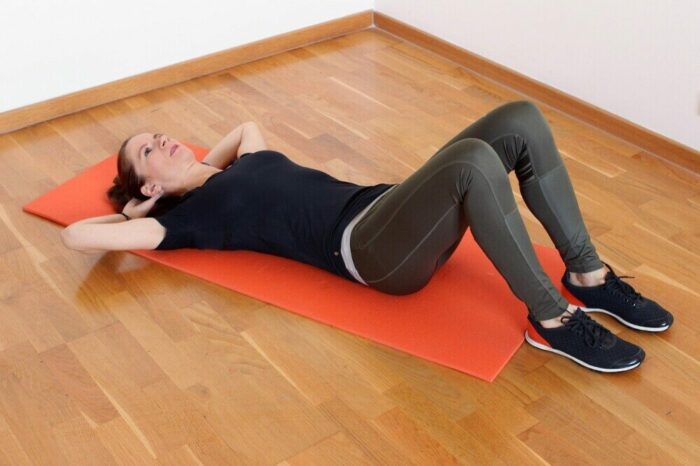
Fortunately, there are far more effective alternatives to crunches that train the core the way it’s designed to function. Exercises that focus on stability and control rather than repeated bending of the spine are generally superior.
Crunches vs Effective Core Exercises
| Exercise | Core Function Trained | Spine Stress | Overall Effectiveness |
|---|---|---|---|
| Crunches | Spinal flexion only | Moderate–High | Low |
| Plank | Anti-extension | Low | High |
| Side Plank | Anti-lateral flexion | Low | High |
| Dead Bug | Core stability & control | Very Low | High |
| Pallof Press | Anti-rotation | Very Low | High |
| Farmer’s Carry | Full-core bracing | Low | Very High |
Top 5 Core Exercises That Work Better Than Crunches
Some of the best crunch alternatives include:
- Planks and side planks
Engage the entire core, including deep stabilisers - Dead bugs
Improve coordination and spinal control - Bird dogs
Strengthen the core while supporting proper posture - Pallof presses
Train the core to resist rotation - Farmer’s carries
Build real-world core strength and stability
These exercises work multiple core muscles simultaneously and place less strain on the neck and spine.
Functional Exercises for a Stronger Core
In addition to targeted core exercises, functional movements play a major role in developing core strength. Functional exercises mimic everyday movements and require the core to stabilise the body during load and motion.
Effective functional exercises include:
- Squats
- Deadlifts
- Lunges
- Kettlebell swings
- Overhead presses
During these movements, the core works continuously to support the spine and transfer force efficiently. This makes functional training far more effective for building usable strength than isolation exercises alone.er force efficiently. This makes functional training far more effective for building usable strength than isolation exercises alone.
How to Incorporate Core Strengthening into Your Workout Routine
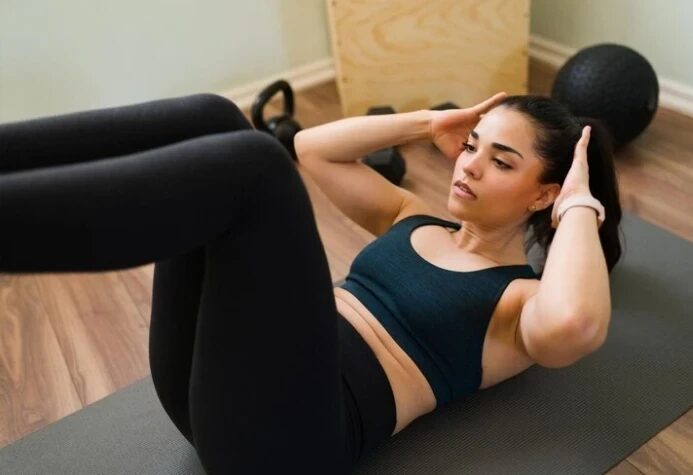
Building a strong core doesn’t require endless ab workouts. Instead, aim to integrate core engagement throughout your training week.
You can do this by:
- Adding planks or dead bugs to warm-ups or cooldowns
- Including anti-rotation exercises in strength sessions
- Prioritising compound lifts that demand core stability
- Focusing on proper form and controlled movement
Quality matters more than quantity. A few well-executed core exercises performed consistently will deliver better results than hundreds of rushed crunches.
The Importance of a Balanced Approach to Fitness
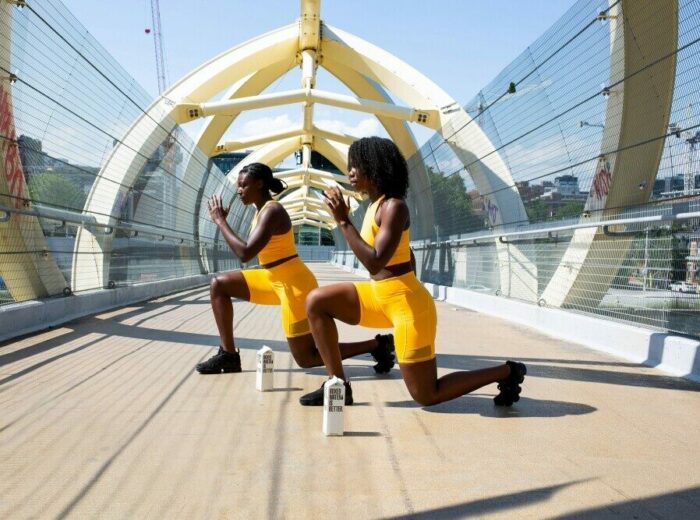
While core training is essential, it should be part of a balanced fitness routine. Cardiovascular exercise, strength training, mobility work, and balance training all contribute to overall health and injury prevention.
Focusing solely on aesthetics often leads to short-term results and long-term setbacks. Prioritising strength, movement quality, and consistency is far more effective for sustainable fitness progress.
Related FAQS
Do crunches really work for abs?
Crunches can help strengthen the rectus abdominis, the muscle responsible for the appearance of abs. However, they are not enough on their own to build a strong core or achieve visible abs without proper nutrition and full-body training.
Are crunches bad for your back?
Crunches are not inherently bad, but excessive spinal flexion or poor form can increase strain on the neck and lower back. People with existing back issues may benefit more from stability-based core exercises.
What is the best exercise for core strength?
There is no single best exercise, but planks, dead bugs, Pallof presses, and loaded carries are among the most effective for building functional core strength.
How often should I train my core?
Most people benefit from core training 2–4 times per week, focusing on quality movements rather than high repetitions.
If you have existing back pain, spinal conditions, or are unsure about proper exercise form, consult a qualified fitness professional before starting new movements.
In Conclusion – Are Crunches Worth Doing?
So, do crunches really work? They can play a small role in abdominal training, but they are not the best or most effective way to build real core strength. Relying on crunches alone limits core development and may increase the risk of discomfort or injury.
A stronger, more functional core comes from training stability, control, and full-body movement. By incorporating effective core exercises and functional training into your routine, you’ll build strength that supports better posture, improved performance, and long-term health — without putting unnecessary strain on your neck or spine.

Fix Your Energy, Sleep and Nutrition Today 🛠
Get our 20-Step Healthy Living eBook, Daily Health Planner and our other bonuses sent to your inbox instantly. Start your journey with 7 days of exclusive gifts and expert tips to stay fit throughout 2026.
Disclaimer: We hate spam too. Unsubscribe anytime.


Anxiety and Depression are you magnesium deficient BiOptimizers blood pressure supplements blood sugar control blood sugar support supplements digestive enzymes Digestive Enzymes Supplement Digestive Health digital products Dr Sam Robbins Gut Health Gut Health While Travelling Health Tips for Travelling Healthy Living heart health HFL hypomagnesia insulin resistance joint health supplement keto dieting Keto Diet Weight Loss leaky gut supplements list Low Stomach Acid magnesium Magnesium deficiency Matt Gallant mental health multivitamins Nootopia Nootropics Probiotics Probiotic Supplements reverse type 2 diabetes stress and anxiety stress relief Supplements vitapost Wade Lightheart weight loss articles weight loss diet plans weight loss product reviews weight loss supplements weight loss tea
About Author