

Best Vitamins To Take Daily For Overall Health (2026 Guide)
In today’s world finding the time to maintain a healthy and balanced diet can be increasingly difficult. Busy schedules, processed foods, stress, a lack of sleep, and limited sun exposure can all be factors that affect the nutrients our bodies receive daily.
Why vitamin supplements remain popular among millions of people from all walks of life. As much as they shouldn’t replace a healthy diet taking them still may help fill nutritional gaps and support overall health when used in the right way.
The challenge? With thousands of vitamin products available, it’s hard to distinguish which supplements offer real benefits and which are simply just marketing hype.
It can make things very off putting when choosing the right product to satisfy our needs. No one wants to waste their money on something that doesn’t work, but here is where this guide can help. We’ll explore the most important vitamins for overall health, their proven benefits, and how to choose the best quality supplements just for you in 2026.
Quick Summary
When it comes to supplementing vitamins specifically for different areas of health it is good to know what to look out for. For this purpose I shall sure this simple table below;
| Health Goal | Vitamin |
|---|---|
| Immune Support | Vitamin C |
| Bone Health | Vitamin D3 |
| Energy Production | Vitamin B Complex |
| Eye Health | Vitamin A |
| Antioxidant Protection | Vitamin E |
| Daily Nutritional Insurance | Multivitamin |
The vitamins listed above are among the most popular and widely used supplements for supporting overall health. However, before you start filling your shopping basket, it’s important to remember that supplements are not always necessary for everyone.
While some people may benefit from additional nutritional support, others can meet most of their vitamin needs through a balanced diet and healthy lifestyle.
***Understanding whether supplementation is right for you is the first step toward making informed decisions about your health.
Do You Really Need Vitamin Supplements?
This is actually a very good question – and I will get straight to the point here – the simple answer is no – not everyone really needs vitamin supplements.
It sounds like a sensible investment in our health for sure but what should be noted is that many people can obtain the nutrients they need through a healthy diet alone – meaning that taking these supplements is in many cases just a waste of money.
Mostly, focusing on a diet that is rich in fruits, vegetables, lean proteins, healthy fats, and whole grains can go a long way to meet our dietary needs and this is not just making things up.
However, with this being said some individuals may be more likely to benefit from vitamin supplementation, including:
- People with restricted diets
- Older adults
- Individuals with digestive disorders
- People who spend little time outdoors
- Vegans and vegetarians
- Those with diagnosed nutrient deficiencies
Note: If you suspect that you might have a nutrient deficiency, it’s always wise to speak with a healthcare professional and consider appropriate testing before starting supplementation.
Now, let’s continue here…
What Are The Best Vitamins To Take Daily
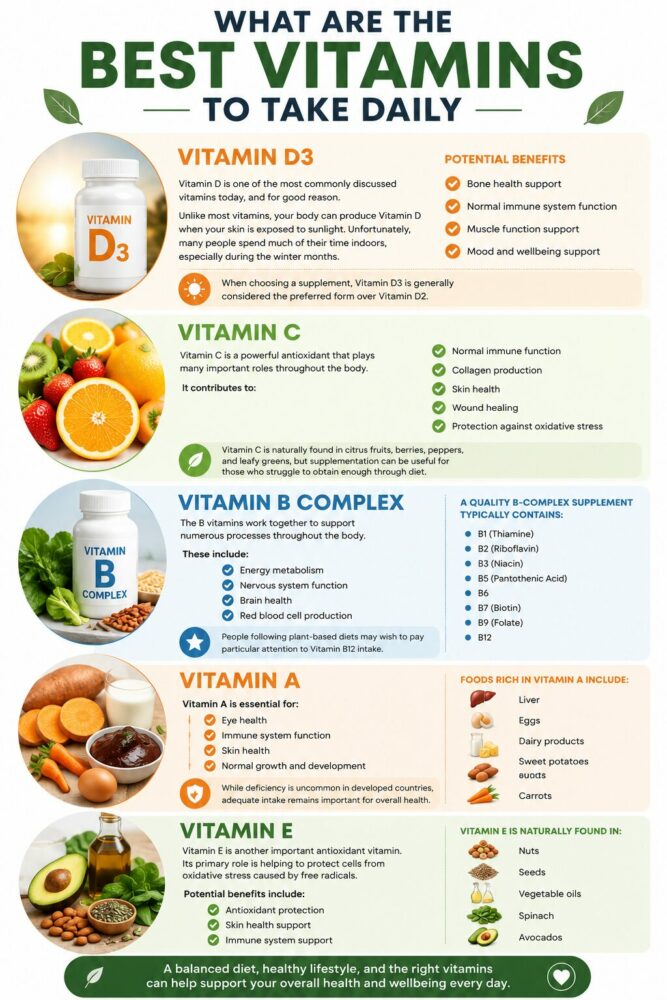
Vitamin D3
Vitamin D is one of the most commonly discussed vitamins today, and for good reason.
Unlike most vitamins, your body can produce Vitamin D when your skin is exposed to sunlight. Unfortunately, many people spend much of their time indoors, especially during the winter months.
Potential benefits of adequate Vitamin D levels include:
- Bone health support
- Normal immune system function
- Muscle function support
- Mood and wellbeing support
When choosing a supplement, Vitamin D3 is generally considered the preferred form over Vitamin D2.
Vitamin C
Vitamin C is a powerful antioxidant that plays many important roles throughout the body.
It contributes to:
- Normal immune function
- Collagen production
- Skin health
- Wound healing
- Protection against oxidative stress
Vitamin C is naturally found in citrus fruits, berries, peppers, and leafy greens, but supplementation can be useful for those who struggle to obtain enough through diet.
One Interesting thing to note here is it was found in the old days that many who died at sea with scurvy where actually Vitamin C deficient. In 1747 it was proven by James Lind a Royal Navy Surgeon that citrus fruits (specifically oranges and lemons) cured the disease.
Vitamin B Complex
The B vitamins work together to support numerous processes throughout the body.
These include:
- Energy metabolism
- Nervous system function
- Brain health
- Red blood cell production
A quality B-complex supplement typically contains:
- B1 (Thiamine)
- B2 (Riboflavin)
- B3 (Niacin)
- B5 (Pantothenic Acid)
- B6
- B7 (Biotin)
- B9 (Folate)
- B12
People following plant-based diets may wish to pay particular attention to Vitamin B12 intake.
Vitamin A
Vitamin A is essential for:
- Eye health
- Immune system function
- Skin health
- Normal growth and development
While deficiency is uncommon in developed countries, adequate intake remains important for overall health.
Foods rich in Vitamin A include:
- Liver
- Eggs
- Dairy products
- Sweet potatoes
- Carrots
Vitamin E
Vitamin E is another important antioxidant vitamin.
Its primary role is helping to protect cells from oxidative stress caused by free radicals.
Potential benefits include:
- Antioxidant protection
- Skin health support
- Immune system support
Vitamin E is naturally found in:
- Nuts
- Seeds
- Vegetable oils
- Spinach
- Avocados
Vitamins Vs Minerals: What’s The Difference?
Many people use the terms vitamins and minerals interchangeably, but they are actually two different types of nutrients that perform unique functions within the body.
Both are considered essential nutrients, meaning your body needs them to function properly, but your body cannot produce sufficient amounts on its own.
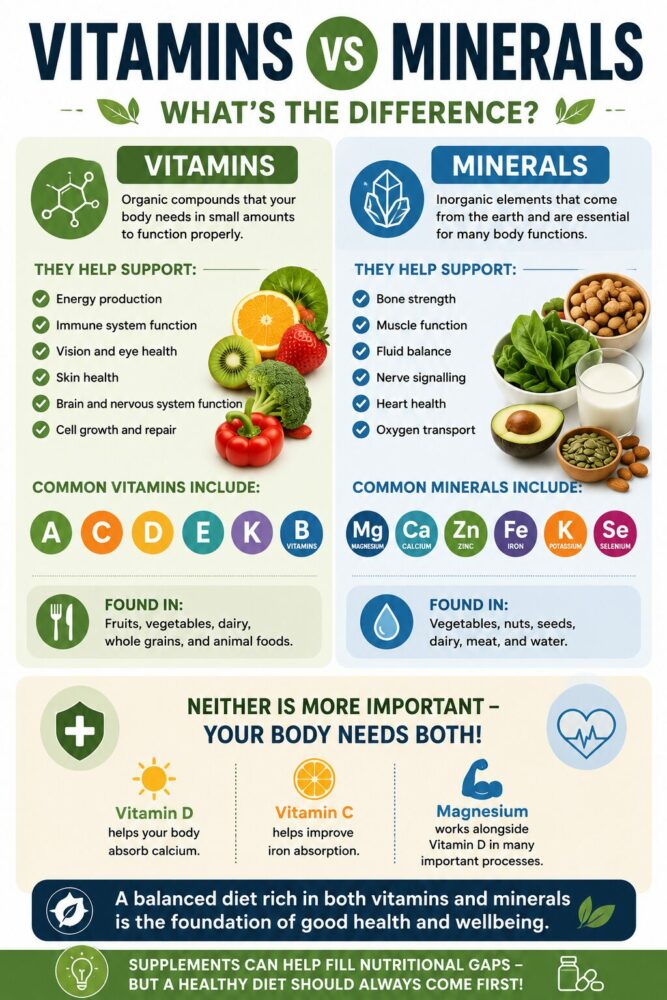
Vitamins
Vitamins are organic compounds that are primarily obtained through food and supplements.
They help support a wide range of bodily functions, including:
- Energy production
- Immune system function
- Vision and eye health
- Skin health
- Brain and nervous system function
- Cell growth and repair
Some of the most well-known vitamins include:
- Vitamin A
- Vitamin C
- Vitamin D
- Vitamin E
- Vitamin K
- B Vitamins
Minerals
Minerals are inorganic substances that come from the earth and are absorbed by plants or consumed through food and water.
They are equally important and help support:
- Bone strength
- Muscle function
- Fluid balance
- Nerve signalling
- Heart health
- Oxygen transport
Common minerals include:
- Magnesium
- Calcium
- Potassium
- Zinc
- Iron
- Selenium
👉 Magnesium is one of the most important minerals involved in hundreds of processes throughout the body. You can learn more in our guide to the Benefits of Magnesium<<
Vitamins vs Minerals Comparison
| Vitamins | Minerals |
|---|---|
| Organic compounds | Inorganic elements |
| Help support immune function, energy production, vision, and cell growth | Help support bones, muscles, nerves, hydration, and heart health |
| Found in fruits, vegetables, dairy, and animal foods | Found in vegetables, nuts, seeds, dairy, meat, and water |
| Examples: Vitamin C, Vitamin D, Vitamin A, B Vitamins | Examples: Magnesium, Calcium, Zinc, Iron, Potassium |
Which Is More Important?
Neither vitamins nor minerals are more important than the other.
Your body relies on both working together to maintain good health.
For example:
- Vitamin D helps your body absorb calcium.
- Vitamin C helps improve iron absorption.
- Magnesium works alongside Vitamin D in many important processes throughout the body.
This is one reason why many people choose a balanced diet combined with carefully selected supplements rather than focusing on a single nutrient.
The Bottom Line
While this guide focuses primarily on vitamins, it’s important not to overlook minerals. Nutrients such as magnesium, calcium, zinc, and iron play equally important roles in supporting overall health and wellbeing.
Should You Take A Multivitamin?
A quality multivitamin can be a convenient option for people who want broad nutritional coverage without purchasing multiple separate supplements.
Potential advantages include:
- Convenience
- Cost effectiveness
- Filling nutritional gaps
- Supporting overall wellness
However, multivitamins should still complement a healthy diet rather than replace one.
For those who want a simple way to support their daily nutrient intake, a quality multivitamin may be worth considering. While no supplement can replace a healthy diet, the right product can help fill nutritional gaps and provide convenient nutritional support.
Recommended Multivitamin Supplements For Overall Health
| Product | Best For | Key Features |
|---|---|---|
| Organixx Clean Sourced Multivitamin | Overall Nutrition | Broad-spectrum vitamin and mineral formula |
| HFL Perfect Vitamin D & K | Bone & Immune Health | High-strength Vitamin D3 |
| Zooki Liposamal Vitamin C | Immune Support | High-potency antioxidant formula |
| Nordic Naturals Vitamin B Complex | Energy & Focus | Full spectrum B vitamins |
| Bioptimizers Magnesium Breakthrough | Sleep & Stress | Multiple forms of magnesium |
How To Choose A Quality Vitamin Supplement
Of course, like any other product on the market not all vitamin supplements are created equal.
Ineed, when out shopping for vitamins it is always Important to consider the following:
| Factor | Why It Matters | What To Look For |
|---|---|---|
| Third-Party Testing | Independent testing helps verify a supplement’s purity, potency, and quality. | Manufacturers that provide third-party lab testing and quality certifications. |
| Transparent Ingredients | Knowing exactly what is in a supplement allows you to make informed decisions. | Clear ingredient labels with no hidden amounts or unnecessary proprietary blends. |
| Appropriate Dosages | More is not always better. Excessive doses may provide no additional benefit and could increase the risk of side effects. | Products that provide evidence-based dosages appropriate for daily use. |
| Manufacturer Reputation | Reputable brands are more likely to follow strict quality and safety standards. | Companies with positive customer reviews, transparent practices, and a strong track record for quality. |
Common Mistakes To Avoid
| Common Mistake | Why It’s A Problem | Better Approach |
|---|---|---|
| Buying The Cheapest Product | Very low-cost supplements may use lower-quality ingredients, poor absorption forms, or unnecessary fillers. | Focus on quality, testing, and ingredient transparency rather than price alone. |
| Ignoring Diet Quality | No supplement can replace the nutrients and health benefits of a balanced diet. | Use supplements to complement a healthy diet, not as a substitute for one. |
| Expecting Instant Results | Most vitamins support long-term health and are unlikely to produce immediate or dramatic changes. | Be consistent and allow time for supplements to support your overall wellness goals. |
| Taking Too Many Supplements | More supplements do not always equal better health and may increase the risk of excessive nutrient intake. | Focus on your individual needs and choose supplements that address specific nutritional gaps. |
💡 Remember: The goal of supplementation is not to take as many vitamins as possible. The best approach is to combine a nutritious diet, regular exercise, quality sleep, and carefully selected supplements that support your individual health needs.
Related FAQs
What are the most important vitamins to take daily?
Vitamin D, Vitamin C, B vitamins, and a quality multivitamin are among the most commonly used supplements for general health support. Individual needs vary.
Can I get enough vitamins from food alone?
Many people can obtain sufficient vitamins through a balanced diet. Others may benefit from supplementation depending on lifestyle, age, health conditions, or dietary restrictions.
Is Vitamin D3 better than Vitamin D2?
Vitamin D3 is generally considered the preferred supplemental form because it is the same type naturally produced by the body when exposed to sunlight.
Are expensive vitamins always better?
Not necessarily. Quality, testing, ingredient forms, and manufacturer reputation are often more important than price alone.
Can I take several vitamins together?
Many vitamins can be taken together, but it’s important to avoid excessive dosages and consult a healthcare professional if you are unsure.
Final Thoughts
Vitamins play an important role in maintaining overall health and wellbeing. While a healthy diet should always be the foundation of good nutrition, supplements may help fill nutritional gaps and support specific health goals.
The best approach is to focus on your individual needs, choose high-quality products, and maintain realistic expectations. Supplements work best when combined with healthy habits such as nutritious eating, regular exercise, quality sleep, and stress management.
By taking a thoughtful approach, vitamins can become a useful part of your long-term wellness strategy.
Want More Healthy Living Tips?
Taking the right vitamins can be one part of a healthy lifestyle, but lasting health is about much more than supplements alone.
That’s why I’ve put together a collection of free Healthy Living Bonuses packed with practical advice on nutrition, weight management, digestion, exercise, sleep, and overall wellbeing.
Join my free newsletter below and you’ll also receive regular health tips, product recommendations, and wellness strategies designed to help you feel your best.
👉 Enter your details below to access your free bonuses today.

Fix Your Energy, Sleep and Nutrition Today 🛠
Get our 20-Step Healthy Living eBook, Daily Health Planner and our other bonuses sent to your inbox instantly. Start your journey with 7 days of exclusive gifts and expert tips to stay fit throughout 2026.
Disclaimer: We hate spam too. Unsubscribe anytime.
Anxiety and Depression are you magnesium deficient BiOptimizers blood pressure supplements blood sugar control blood sugar support supplements digestive enzymes Digestive Enzymes Supplement Digestive Health digital products Dr Sam Robbins Gut Health Gut Health While Travelling Health Tips for Travelling Healthy Living heart health HFL hypomagnesia insulin resistance joint health supplement keto dieting Keto Diet Weight Loss leaky gut supplements list Low Stomach Acid magnesium Magnesium deficiency Matt Gallant mental health multivitamins Nootopia Nootropics Probiotics Probiotic Supplements reverse type 2 diabetes stress and anxiety stress relief Supplements vitapost Wade Lightheart weight loss articles weight loss diet plans weight loss product reviews weight loss supplements weight loss tea
About Author



Hello,
Well, I certainly know vitamins are important to anyone’s health. I take mine every day, which helps keep a balance with all the essential requirements our bodies need to functions at peak levels. This is a very competitive industry, but what isn’t competitive these’s days. Educating your visitors is what you are doing, and illustrating the importance of the different vitamins we require.
All the Best,
Joseph Botelho
Hi Joseph,
thanks for reading and commenting.
Lisa.
I did have a great time reading this article. The information on these vitamin supplements you have here is very detailed and educating. I have had a great learning experience from reading this article. These are really great vitamin supplements you have recommended in this article. The cons for each of the supplement does not seem to matter at all as they do not have anything to do with the effectiveness of the supplements. Great job on this one.
Hello Nelson,
Many thanks for the comment. I’m happy to hear you enjoyed reading it.
Lisa.
Hello there, it is good for people to live a healthy life as this helps them stay lively and more strong, and in the process of staying healthy, there are things that people must do, they must eat healthy, do exercise and also take supplements which will help them. Thank you for sharing with us the vitamins that we can take to make us healthy.
Thanks for commenting.
With our unhealthy eating habit, we need a lot of supplement to help our body system meet up with its requirement. I am drawn to the vitamin d3 and its ability to help prevent respiratory issues like bronchittis. I will take a look at the vitamin d3 from CLE holostic health, it will be good for me since it is suitable for vegans
Many thanks for reading and commenting.
It is suitable for vegans.
Lisa.
It is very advisable that we take time to read through things we’re consider to use into our body system as it will help us know how beat it can be of help to our health and also to be able to know which one is the safest for us. Vitamins are very essential to the body system, getting vitamin supplements online will be a good idea , thanks for the information.
Thanks for reading and commenting.