
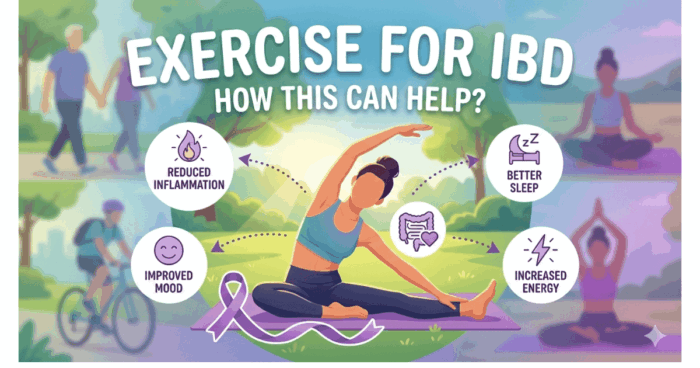
Exercise For IBD: How This Can Help?
Exercise For IBD (Inflammatory Bowel Disease) may seem like an unlikely pairing—especially during periods of fatigue, pain, or flare‑ups. However, the good news is that when approached correctly, physical activity can play a valuable role in managing symptoms, supporting gut health, reducing inflammation, and improving overall quality of life for those living with IBD.
While diet, medication, and lifestyle changes such as quitting smoking are essential pillars of IBD management, exercise deserves equal attention. When integrated thoughtfully, regular physical activity can positively influence;
- Disease activity,
- Stress levels,
- Immune function, and
- General wellbeing
In this article, we explore the relationship between Exercise and IBD, how movement may help relieve symptoms, and how to exercise safely with Crohn’s disease or Ulcerative colitis.
Medical Disclaimer:
The information provided in this article is for educational purposes only and should not replace personalised medical advice. If you have IBD or any ongoing health condition, speak with a healthcare professional before making changes to your exercise routine.
What Is IBD? Understanding Crohn’s Disease and Ulcerative Colitis
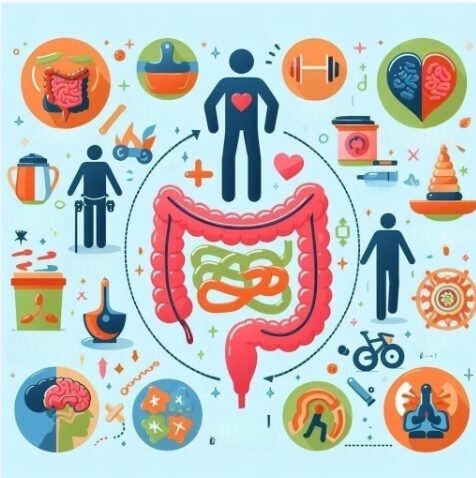
Inflammatory Bowel Disease (IBD) is a collective term used to describe chronic inflammatory conditions that affect the digestive tract. The two main forms of IBD are Crohn’s disease and ulcerative colitis. Both conditions are characterised by ongoing inflammation that interferes with normal digestion and nutrient absorption.
Common symptoms of IBD include:
- Chronic diarrhoea
- Abdominal pain and cramping
- Fatigue
- Unintended weight loss
- Blood or mucus in stools
These symptoms can vary in severity and frequency, often cycling between periods of remission and flare‑ups.
Crohn’s Disease vs Ulcerative Colitis
While both Crohn’s Disease and Ulcerative Colitis contribute to the umbrella of IBD, each manifest differently. Crohn’s disease, named after Dr Burril B. Crohn (who first identified the disease), is characterised by inflammation anywhere in the digestive tract from the mouth to the anus.
This predominantly affects the lower part of the small intestine whilst Ulcerative colitis itself differs because it instead affects the large intestine (colon) and the rectum causing sores or ulcers in the inner lining.
There is not really one that is worse than the other they just are different causes of the same disease. It really depends on the Individual. Although, by contrast, Crohn’s disease is often considered more unpredictable, while ulcerative colitis is more self contained.
Current Treatment Options for IBD

IBD treatment varies depending on disease type, severity, and individual health factors. The primary goals of treatment are to reduce inflammation, manage symptoms, and maintain long‑term remission.
Common treatment approaches include:
- Anti‑inflammatory and immunosuppressive medications
- Biologic therapies
- Dietary adjustments, such as a low‑residue diet
- Stress management strategies
- Surgery in severe or unresponsive cases
As IBD is a chronic condition, treatment focuses on long‑term symptom control and quality of life rather than a permanent cure.
Benefits of Exercise for IBD Patients
Exercise is often overlooked in IBD management, yet growing research suggests it can be highly beneficial when performed at appropriate intensity levels.
Potential benefits of regular exercise for people with IBD include:
- Reduced systemic inflammation
- Improved digestion and bowel motility
- Better stress and anxiety management
- Increased energy levels and reduced fatigue
- Improved sleep quality
- Maintenance of muscle mass and bone density
- Enhanced overall mood and mental wellbeing
Light‑to‑moderate physical activity may also help improve treatment outcomes and support remission maintenance.
How Exercise Influences Inflammation in IBD
IBD is driven by an abnormal immune response that results in chronic inflammation of the gut. Research suggests that regular moderate exercise can help regulate immune activity by promoting the release of anti‑inflammatory cytokines.
Exercise also supports tissue repair processes and helps clear cellular debris that may otherwise stimulate immune reactions. Over time, these effects may contribute to improved inflammatory control and reduced symptom severity in some individuals.
Exercise, Stress, and Gut Health
Exercise and IBD: Unravelling the Connection
The term Inflammatory Bowel Disease (IBD) covers two primary conditions, namely Crohn’s Disease and Ulcerative Colitis, which are defined by chronic inflammation within the gastrointestinal tract. This continuous inflammation could result in symptoms such as ongoing diarrhoea, abdominal pain, fatigue, and weight loss.
Although medication and dietary adjustments form the cornerstone of IBD management, recent studies have started highlighting the significant potential benefits of incorporating exercise into IBD management strategies.
The Role of Exercise in IBD

Exercise is universally lauded for its numerous health benefits, from cardiovascular wellbeing to mental health improvement. For those with IBD, the advantages of engaging in physical activity mirror these aspects and extend much further.
Current research in the field of exercise physiology and gastrointestinal medicine suggests that regular, moderate exercise may have a positive impact on symptoms of IBD, relapse rates, and overall quality of life.
Exercise is considered an adjuvant to conventional IBD treatment regimens, augmenting medication efficacy and improving physical function and wellbeing. Regular activity has found to be associated with lower IBD disease activity, reduced fatigue, improved muscle strength and a better perception of overall health.
Furthermore, it can mitigate the permeability of the gut, common in IBD, reducing instances of bacterial translocation that may exacerbate inflammation.
Is Exercise Safe for IBD? Key Precautions to Know
While exercise is generally beneficial, it must be approached with caution. High‑intensity or prolonged workouts can sometimes worsen gastrointestinal symptoms or contribute to excessive fatigue.
Important precautions include:
- Starting slowly and increasing intensity gradually
- Avoiding over‑exertion
- Staying well hydrated, especially during diarrhoea episodes
- Allowing adequate rest and recovery
Individuals with IBD may also be at increased risk of bone density loss due to nutrient malabsorption. Weight‑bearing and resistance exercises can support bone health, but should be performed safely to avoid injury.

Exercise Recommendations for People with IBD
Suitable Types of Exercise
A balanced exercise routine for individuals with IBD may include:
- Cardiovascular activities: walking, swimming, cycling, low‑impact aerobics
- Strength training: bodyweight exercises, resistance bands, light weights
- Flexibility and relaxation: yoga, Pilates, stretching, breathing exercises
These activities support cardiovascular health, muscle strength, joint mobility, and stress reduction.
How Often Should You Exercise?
General recommendations suggest aiming for around 150 minutes of moderate‑intensity exercise per week. This can be broken into shorter sessions based on energy levels, symptom severity, and personal schedule.
Types and Frequency of Exercises
A combination of cardiovascular exercises, strength training, flexibility exercises, and relaxation techniques forms an ideal exercise plan for persons with IBD. Walking, swimming, cycling, and low impact aerobics can serve as ideal cardiovascular activities.
Strength training exercises can include bodyweight training, resistance band exercises or supervised weight training. Yoga and Pilates can significantly improve flexibility and promote relaxation.
As for frequency, exercising for a minimum of 150 minutes per week is recommended. This can be broken up into smaller durations over the week, depending on one’s comfort and weekly schedule.
Precautions to Take
People with IBD need to exercise caution before initiating any workout routine. It is crucial to listen to your body and not push beyond personal comfort limits.
Hydration is Essential, especially for those prone to diarrhoea.
Additionally, it’s essential to acknowledge that IBD patients are at a higher risk of bone thinning due to malabsorption of Calcium and Vitamin D.
Weight-bearing exercises can help strengthen bones, but care must be taken not to put excess load to prevent any fractures. It’s also essential to balance rest with exercise, as over-exertion can lead to fatigue instead of boosting energy levels.
Adjusting Exercise During Flare‑Ups and Remission
Exercise routines should be flexible and responsive to disease activity.
- During flare‑ups: gentle walking, stretching, yoga, or breathing exercises may be most appropriate
- During remission: strength training and more structured cardiovascular exercise can usually be resumed
Listening to your body is essential. Exercise should support recovery—not hinder it.
Consulting Healthcare Professionals
Before starting or modifying an exercise routine, it is important to consult a healthcare professional familiar with IBD. A doctor, physiotherapist, or specialist can help design a personalised plan that aligns with your current health status and treatment strategy.
Regular check‑ins allow for adjustments as symptoms, fitness levels, or disease activity change.
Final Thoughts: Can Exercise Improve Life with IBD?
Incorporating regular, appropriate physical activity into daily life can be an empowering and supportive strategy for individuals living with IBD. When combined with medical treatment, dietary adjustments, and stress management, exercise may help improve symptom control, enhance mental wellbeing, and support long‑term quality of life.
While further research is still needed to determine optimal exercise types and intensities for IBD, current evidence suggests that movement—when approached mindfully—can be a valuable part of holistic IBD management.
I shall finish this article up here but if you would like to read more Check Out Our Exercise and Fitness page HERE and our IBS and IBD Category page HERE<<
If you have any questions or anything else leave us a comment below<<
Related FAQS
Can exercise trigger IBD flare‑ups?
Exercise does not cause IBD flare‑ups, but excessive or high‑intensity workouts may temporarily worsen symptoms in some individuals.
What is the best exercise for Crohn’s disease?
Low‑impact activities such as walking, swimming, cycling, yoga, and light strength training are often well tolerated.
Is it safe to exercise during an IBD flare‑up?
Gentle movement is usually safest during flare‑ups. Always listen to your body and consult your healthcare provider if unsure.
How much exercise should someone with IBD do?
Most people can aim for around 150 minutes of moderate activity per week, adjusted for symptoms and energy levels.
Can exercise help reduce inflammation in IBD?
Moderate exercise may help regulate immune responses and reduce systemic inflammation over time.
Does exercise help with IBD‑related fatigue?
Yes. Regular gentle exercise has been shown to improve energy levels and reduce chronic fatigue in many individuals.






Fix Your Energy, Sleep and Nutrition Today 🛠
Get our 20-Step Healthy Living eBook, Daily Health Planner and our other bonuses sent to your inbox instantly. Start your journey with 7 days of exclusive gifts and expert tips to stay fit throughout 2026.
Disclaimer: We hate spam too. Unsubscribe anytime.
Anxiety and Depression BiOptimizers blood pressure supplements blood sugar control blood sugar support supplements digestive enzymes Digestive Enzymes Supplement Digestive Health digital products Dr Sam Robbins Exercise Gut Health Gut Health While Travelling Health Tips for Travelling Healthy Living heart health HFL how to lower blood sugar levels insulin resistance joint health supplement Keto keto dieting Keto Diet Weight Loss leaky gut supplements leptin resistance list magnesium Magnesium deficiency Matt Gallant mental health Nootropics Probiotics Probiotic Supplements reverse type 2 diabetes stress and anxiety stress relief Supplements vitabalance vitapost Wade Lightheart weight loss articles weight loss diet plans weight loss product reviews weight loss supplements weight loss tea
About Author






I find it incomprehensible that you are not more popular than you already are, given your intelligence. I was able to look at this topic from a number of angles because of your depth of knowledge. It appears that until a conversation turns to Woman gaga, neither men nor women seem to be really interested in things related to women. Continue your fantastic work.
Of course, I like your website, but several of your pieces need to have their spelling checked. Several of them contain multiple spelling mistakes, which makes it challenging for me to be honest. Still, I will most certainly return.
OK, Thanks for bringing to my attention I will make sure I check this thanks.
Hi Neat post There is a problem along with your website in internet explorer would test this IE still is the market chief and a good section of other folks will pass over your magnificent writing due to this problem
Thanks for making me aware. Need to do a lot of work on this website. Hopefully this is something I can resolve soon enough.
I have been surfing online more than 3 hours today yet I never found any interesting article like yours It is pretty worth enough for me In my opinion if all web owners and bloggers made good content as you did the web will be much more useful than ever before
Thank you much appreciated.
Your blog has quickly become my go-to source for reliable information and thought-provoking commentary. I’m constantly recommending it to friends and colleagues. Keep up the excellent work!
Thank you. Much appreciated