
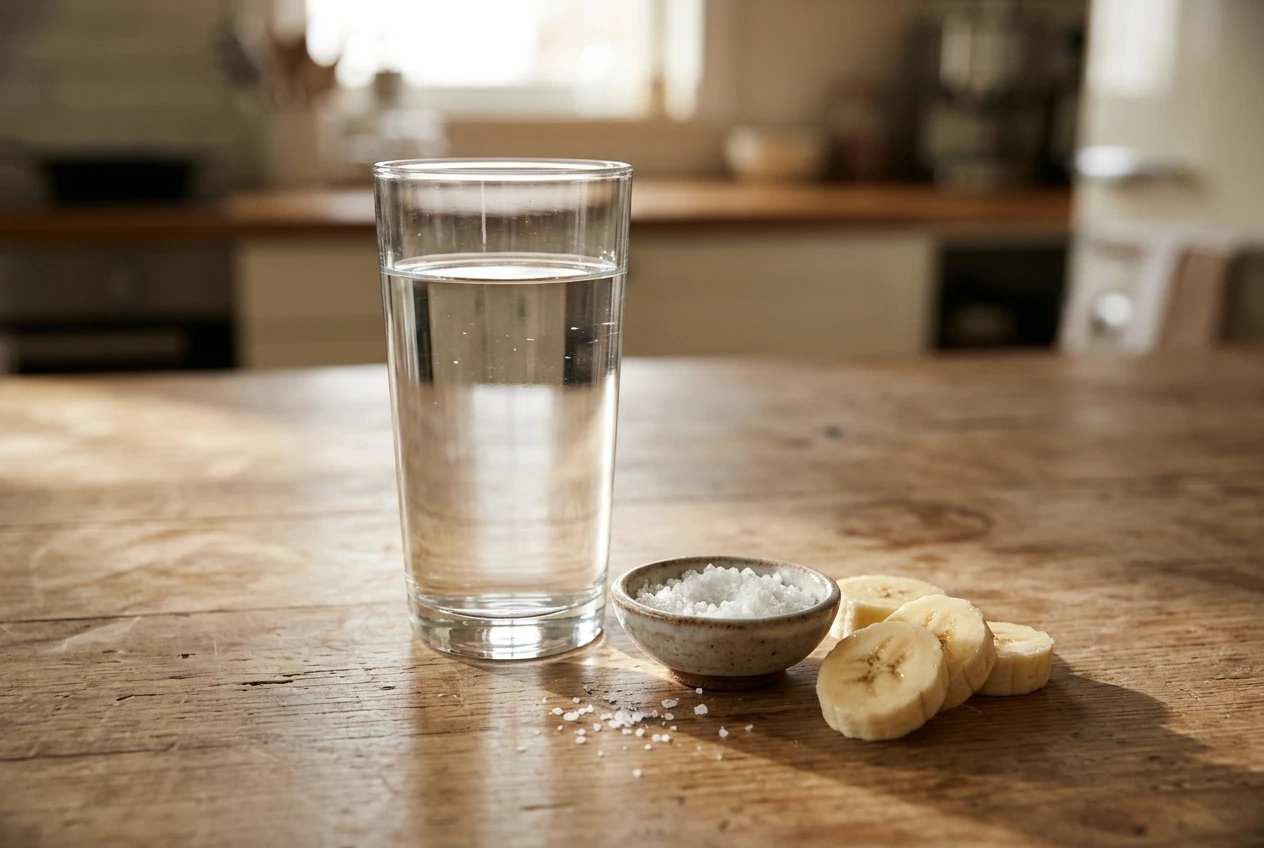
Plenty of people drink water all day and still feel thirsty, flat, or prone to muscle twitches. Water is only part of hydration. Your body also has to keep that water in the right places, and minerals called electrolytes do much of that work. Understanding the role of electrolytes in hydration explains why a full water bottle doesn’t always translate into feeling hydrated.
This article covers what the main electrolytes do, when your needs may rise, how to get them from ordinary food, and when a drink mix is worth considering.
Why water alone doesn’t always hydrate you
Water moves between the fluid around your cells and the fluid inside them. The direction it moves depends on how much dissolved mineral sits on each side of the cell membrane. Water tends to follow the minerals, so when the mineral balance shifts, the water moves with it.
That is why the amount you drink is only one variable. If you sweat heavily, lose fluids through illness, or eat very little sodium, you can take in plenty of water while your body struggles to hold onto it. Much of what you drink passes through and leaves as urine, and you may feel thirsty again soon after.
The reverse can also happen. Drinking very large volumes of plain water in a short time can dilute the sodium in your blood. This is uncommon in daily life and mostly shows up in extreme situations, but it shows that water and minerals work as a pair.
For most people eating a varied diet and living a moderate life, the minerals arrive without any planning. The questions in this article matter most when something about your routine, climate, health, or diet has changed.
What electrolytes are and the job each main one does
Electrolytes are minerals that carry a small electrical charge when dissolved in body fluid. That charge lets them help send nerve signals, trigger muscle contractions, and control fluid movement. The four that come up most often are sodium, potassium, magnesium, and calcium.
Sodium
Sodium is the main electrolyte in the fluid outside your cells. It helps set how much water your body holds on to and supports nerve signaling and muscle function. Sodium also has a bad reputation because of its link to blood pressure in some people, but your body needs it. Sweat contains more sodium than any other electrolyte, so it is the one most affected by heavy sweating.
Potassium
Potassium sits mostly inside your cells and works in partnership with sodium. The two are pumped back and forth across the cell membrane, which keeps fluid balanced and lets nerves and muscles, including the heart muscle, work normally. Most potassium comes from fruit, vegetables, beans, and similar foods.
Magnesium
Magnesium takes part in hundreds of processes in the body, including muscle relaxation, nerve function, and energy production. It also helps regulate how other electrolytes move across cell membranes. If you want more detail on magnesium specifically, the guide on magnesium deficiency, its causes and how to address it through food goes deeper.
Calcium
Calcium is best known for bones and teeth, but a small amount circulates in the blood to help muscles contract and nerves send signals. Your body keeps blood calcium in a tight range, drawing on bone stores when it needs to, so everyday intake over time matters more than any single meal.
These four don’t act alone. Chloride and phosphate also play roles, and all of them depend on each other, which is why adding a lot of one without thinking about the rest is not usually the best approach.
Signs your electrolyte balance may be off (and when it’s something else)
Mild electrolyte imbalances can produce symptoms that are easy to overlook or blame on something else. Common ones include:
- Muscle cramps, twitches, or a feeling of weakness
- Persistent thirst despite drinking regularly
- Headaches
- Fatigue or a sluggish feeling
- Dizziness when standing up
- Feeling unusually tired after sweating a lot
Every item on that list also has many other possible causes. Poor sleep, stress, skipped meals, caffeine, low iron, thyroid problems, medication side effects, and ordinary overexertion can all produce the same feelings. Sluggish thinking in particular has a long list of explanations, which the article on what can cause brain fog walks through.
So treat these symptoms as a prompt to look at your situation, not as a diagnosis. If you have been sweating heavily, eating very little, or recovering from a stomach bug, electrolytes are a reasonable thing to consider. If symptoms are severe, sudden, or keep returning, see a doctor. Only a blood test can show what your levels actually are, and symptoms like a racing or irregular heartbeat, confusion, or fainting need prompt medical attention.
Everyday situations that change what you need
Your baseline needs are usually met by regular meals. A few situations push the balance in one direction.

Heavy sweating. Long workouts, physical work, and sauna sessions all pull sodium out through the skin, along with smaller amounts of potassium, magnesium, and calcium. People differ a lot in how salty their sweat is, so two people doing the same session can lose quite different amounts.
Hot weather. In heat you sweat more even when you aren’t exercising. You may also drink more plain water, which makes replacing sodium more relevant than it would be on a cool day.
Illness. Vomiting and diarrhea cause fast fluid and electrolyte loss. Fever adds sweating on top. This is the situation where oral rehydration solutions are designed to help, and where small, frequent sips of fluid with some salt in it tend to work better than large amounts of plain water. Illness that lasts more than a day or two, or that involves signs of significant dehydration, deserves a call to a doctor.
Travel. Flying exposes you to very dry cabin air, and travel often means irregular meals, more caffeine, and less water than usual. Eating well and sipping steadily usually covers it. If digestion is the main complaint on trips, the piece on airplane bloating may help.
Restrictive or low-sodium eating. Very low-calorie diets, long fasts, very low-carbohydrate eating, and strict low-sodium plans can all reduce your intake of electrolytes or increase how much you lose through urine. If you follow one of these, it is worth checking that your food choices still supply sodium, potassium, and magnesium. If you were told to limit sodium for a medical reason, follow that advice and talk to your doctor before changing it.
Getting electrolytes from food first
Food supplies electrolytes in forms your body handles well, alongside fiber, protein, and other nutrients. For most people, small changes to what they already eat are enough.

Potassium
- Potatoes and sweet potatoes, with the skin on
- Beans, lentils, and chickpeas
- Bananas, oranges, and dried apricots
- Avocado, spinach, and tomatoes
- Yogurt and milk
Magnesium
- Pumpkin seeds, almonds, and cashews
- Leafy greens such as spinach and chard
- Whole grains and oats
- Black beans and edamame
- Dark chocolate in modest amounts
Calcium
- Dairy products, or fortified plant milks
- Canned fish with soft bones, such as sardines
- Tofu made with calcium
- Kale and bok choy
Sodium
- Broth and soup
- Olives, pickles, and cheese
- Salted nuts
- Ordinary salt on home-cooked food
Some pairings put several electrolytes into one snack:
- Yogurt with banana and a handful of pumpkin seeds
- Hummus with vegetable sticks and olives
- Oatmeal made with milk, topped with almonds and berries
- A baked potato with beans and a spoonful of yogurt
- A cup of broth alongside a salad with avocado
If you eat mostly packaged food, you probably already get plenty of sodium and less potassium and magnesium. In that case, adding vegetables, beans, and nuts does more than adding salt. If you cook mostly from scratch and sweat a lot, a pinch more salt in your meals may be the useful change.
When an electrolyte drink or powder makes sense
Food covers most needs, but a drink or powder is convenient in some situations: long or intense exercise in the heat, a stomach illness when eating is difficult, or a day outdoors when meals are hard to fit in. Some people also find that a drink with a little salt in it is easier to keep up with than plain water.

When you read a label, check these points:
- Sodium per serving. Products vary widely. Compare it with how much you are likely to lose and with any sodium guidance from your doctor.
- Potassium and magnesium amounts. Some products contain very little of either, and the label lists the numbers.
- Added sugar. Some sugar can help the body absorb sodium and water, which is the basis of oral rehydration solutions, but many drinks have far more than you need for everyday use.
- Sweeteners and flavorings. Some people find certain sugar alcohols upsetting for digestion.
- The form of magnesium. Different forms are absorbed differently and can affect digestion differently. The comparison of how to choose the right magnesium explains the main types.
- Serving size. A product may look modest per scoop but be meant to be taken multiple times a day.
- Third-party testing. Supplements are less tightly checked than medicines, so an independent testing mark gives some assurance that the contents match the label.
A powder is an optional extra, not a requirement, and it works best used for particular days rather than as a constant habit.
How much is too much
More is not better with electrolytes. Excess potassium and sodium can both cause problems, and the kidneys are the main organs that keep these levels in balance. If they aren’t working normally, extra minerals can build up in the blood.
Speak to your doctor before adding electrolyte supplements, powders, or salt substitutes if any of these apply:
- You have kidney disease
- You have a heart condition
- You have high blood pressure, or you have been advised to limit sodium
- You take medications that affect fluid or mineral balance, which includes some blood pressure and heart medications and diuretics
- You are pregnant or managing another long-term condition
Salt substitutes deserve a specific mention because many are made largely from potassium chloride. That can be a problem for someone whose kidneys or medications affect potassium.
Even in healthy people, large doses of magnesium supplements commonly cause loose stools, and heavily concentrated drink mixes can upset the stomach. Follow the serving directions and start with less.
A simple daily hydration routine you can start tomorrow
This routine doesn’t need special products. Adjust the amounts to your body, your activity, and any advice from your doctor.
- Start the day with a glass of water and a real breakfast. Include something with potassium, such as fruit, yogurt, or oats with milk.
- Sip through the day instead of drinking large amounts at once. Steady intake is easier for your body to use than a litre downed in one go. Pale yellow urine is a rough, useful guide.
- Salt your cooking to taste, unless you have been told to limit sodium.
- Put a vegetable, bean, or leafy green in at least two meals. These supply potassium and magnesium.
- Keep a nut and seed snack nearby for magnesium and a bit of sodium if salted.
- Add a salty element on sweaty days. Broth, olives, or a salted snack with your water works, or an electrolyte drink if you are exercising for a long time in the heat.
- Adjust for illness and travel. Drink small amounts often, include some salt and potassium in what you eat, and see a doctor if symptoms last or get worse.
- Pay attention to patterns. If cramps, thirst, or fatigue persist even when your routine is sound, book an appointment so someone can look for other causes.
Drinking enough water remains the foundation of daily hydration. The minerals decide how well your body keeps it, and for most people ordinary food supplies them. If your circumstances change, such as hot weather, heavy training, a stomach bug, or a restrictive diet, that is the time to pay closer attention to your sodium, potassium, magnesium, and calcium intake.
About Author