
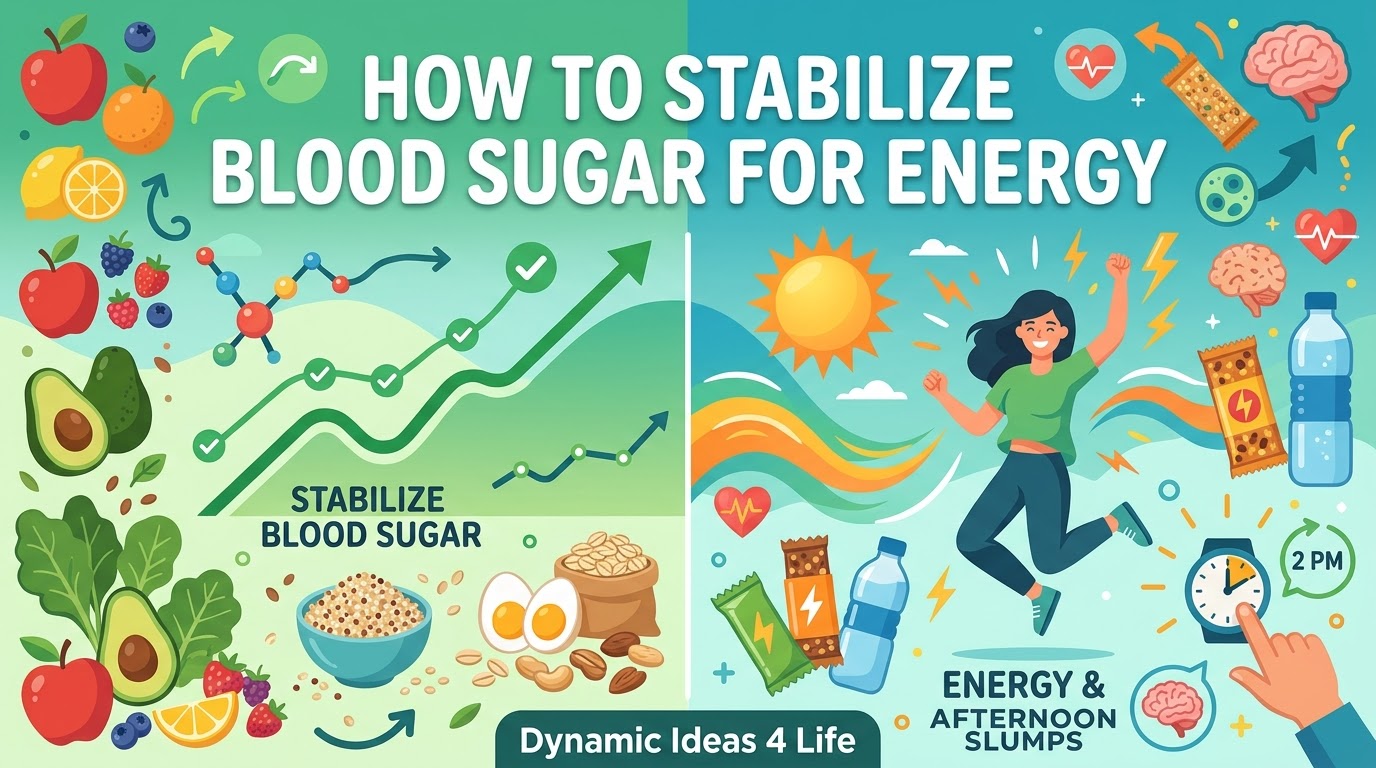
If you feel sharp at 9 AM and flat by 3 PM, what you ate at breakfast and lunch is one of the first things worth looking at. This article covers how to stabilize blood sugar for energy using ordinary food and a few daily habits, with no strict diet and no supplements. It also covers the other common causes of an afternoon slump, because blood sugar is not always the explanation.
Nothing here replaces medical advice. It is a practical guide to how meals work in the body and what you can change this week.
What insulin actually does after you eat
When you eat carbohydrates, your digestive system breaks them down into glucose, which enters your bloodstream. Your blood glucose rises, and your pancreas responds by releasing insulin. Insulin signals your muscles, liver and fat cells to take glucose out of the blood and use it or store it.
This is a normal, healthy process, and it happens after every meal that contains carbohydrate. The size and speed of the glucose rise depend on what you ate. A food that digests quickly sends glucose into the blood fast, and the body answers with a larger insulin response. A food that digests slowly releases glucose over a longer stretch, so the rise is gentler.
Once glucose has been moved out of the blood, levels come back down. In some people, after a fast, large rise, glucose can fall faster or lower than expected a few hours later. That drop is one explanation for feeling tired, shaky, hungry or unfocused. It is not the only explanation, and many people who feel flat after lunch have blood sugar in a normal range. Still, the way you build a meal changes how fast glucose arrives, and that is something you can control.
Why a quick-digesting lunch can leave you foggy by 3 PM
Consider two lunches. The first is a large white-bread sandwich with a small amount of deli meat, a bag of chips and a sweetened drink. The second is a bowl with grilled chicken, beans, roasted vegetables, a modest scoop of rice and olive oil.
The first lunch is mostly refined starch and sugar with little protein, fiber or fat to slow it down. Glucose arrives quickly. The second lunch has the same kind of carbohydrate, but protein, fiber and fat slow how fast the stomach empties and how fast the starch is broken down. Glucose arrives over a longer period.
Many people notice the difference in the afternoon. After the first lunch, a quick rise and fall can come with a sleepy, hazy feeling a couple of hours later, often paired with a craving for something sweet. After the second, energy tends to be more even. Individual responses vary a lot, so treat this as a pattern to test on yourself rather than a guarantee.
Breakfast matters for the same reason. A sugary breakfast can set up a swing in the morning, and the cravings that follow can shape what you choose for lunch.
There is also a separate point. Alertness naturally dips in the early afternoon for most people, regardless of what they ate. A heavy, fast-digesting lunch can make that dip feel deeper, but it does not create the dip from nothing.
The four-part plate: protein, fiber, fat and slower carbs
You do not need to count grams or cut out carbohydrates. Build each breakfast and lunch from four parts, and the glucose response tends to take care of itself.
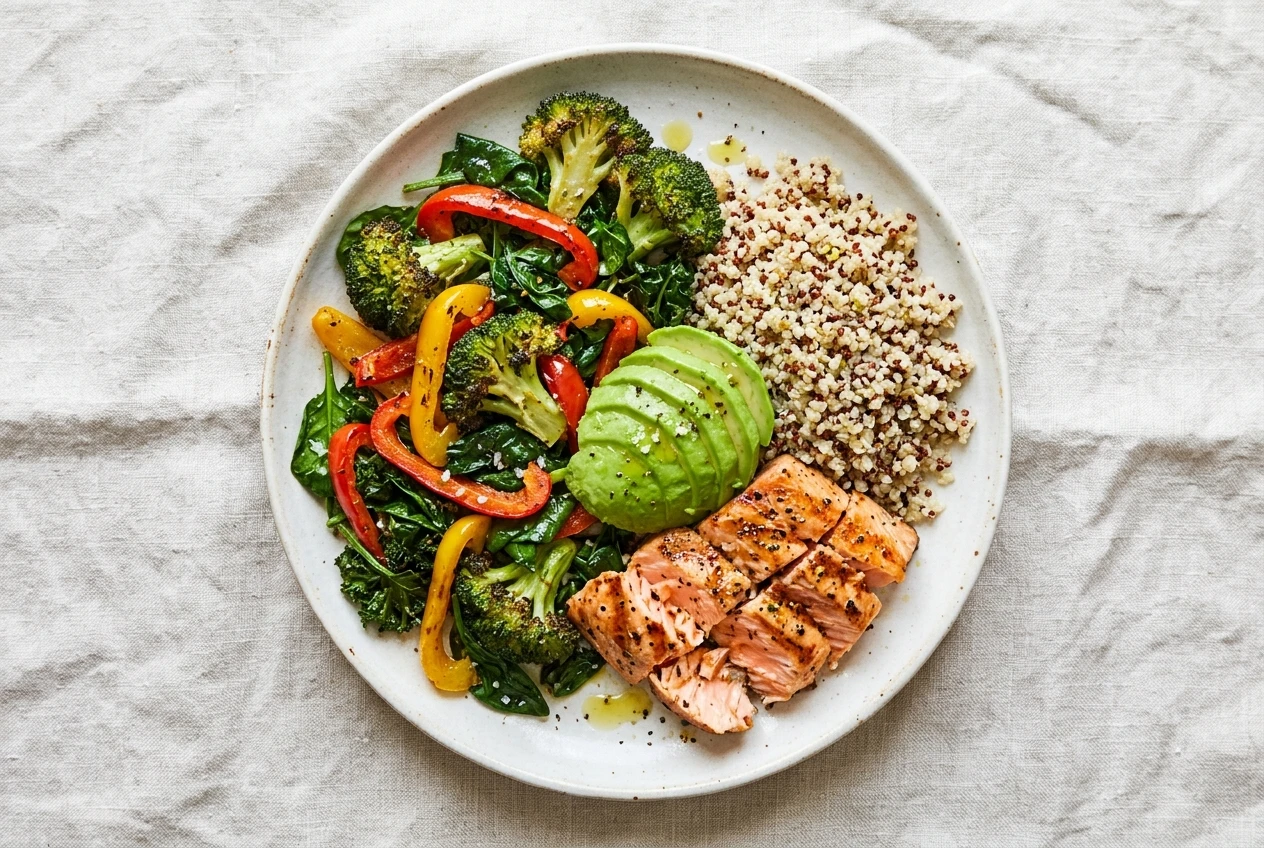
- Protein: eggs, Greek yogurt, cottage cheese, chicken, fish, tofu, tempeh, beans or lentils. Protein slows digestion and keeps you full longer.
- Fiber: vegetables, berries, beans, lentils, chia or ground flaxseed, and whole intact grains. Fiber slows the absorption of sugar in the same meal.
- Fat: olive oil, avocado, nuts, seeds, nut butter or the fat in fish and eggs. Fat also slows stomach emptying, and it makes a meal more satisfying.
- Slower carbohydrates: rolled or steel-cut oats, whole grain or sourdough bread, quinoa, barley, sweet potato, beans and whole fruit. These still raise glucose, but usually more gradually than refined flour and sugar.
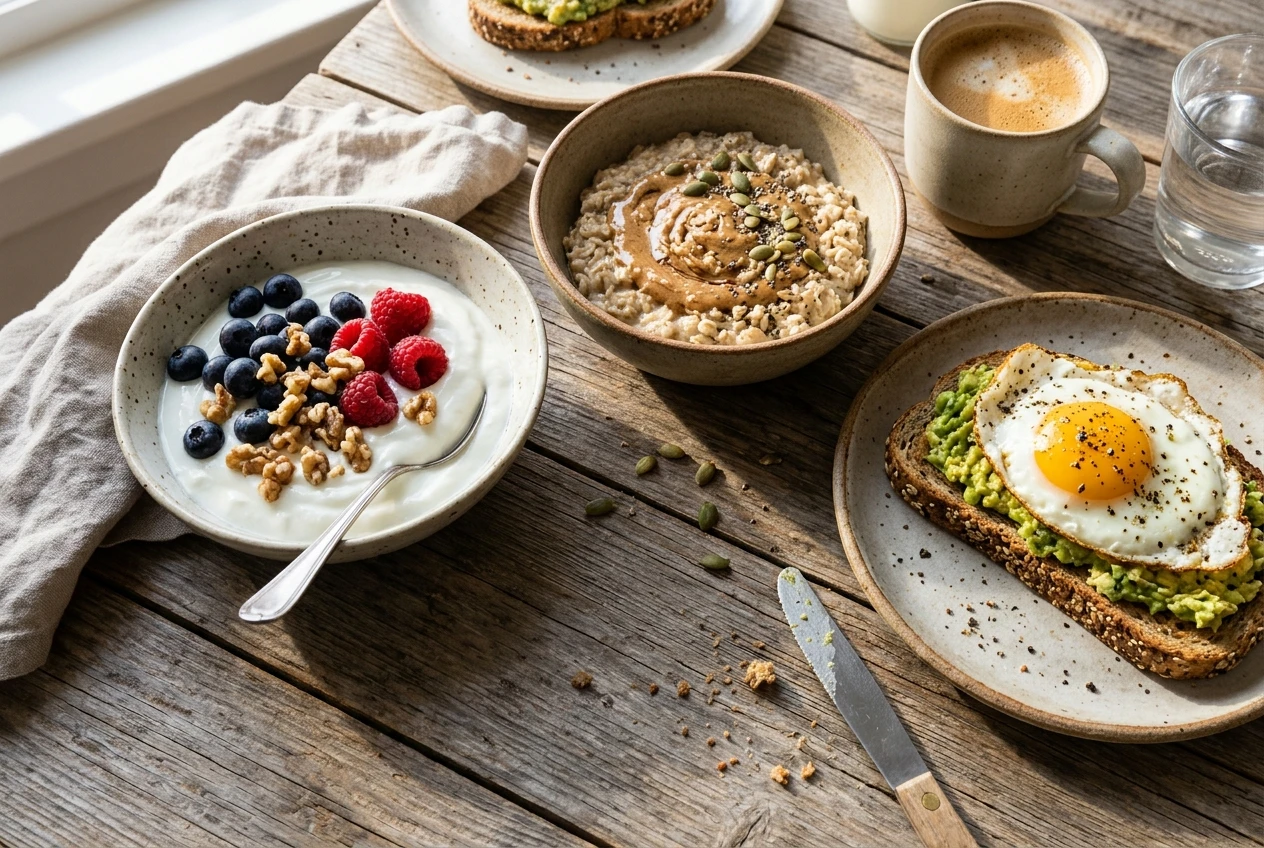
A useful visual guide: fill about half your plate with vegetables or other high-fiber foods, a quarter with protein, and the rest with a slower carbohydrate, then add a spoonful of healthy fat. At breakfast, where plates are less obvious, the same logic applies. A bowl of oats with nuts, seeds, berries and a scoop of yogurt covers all four parts.
Carbohydrates are not the problem. Carbohydrates eaten alone, in a refined form and in a large amount, are what produce the sharpest rise.
Easy swaps for the breakfasts and lunches that set up a crash
Swapping one item at a time is easier to keep up than rebuilding every meal. Each pair below keeps the convenience and changes the digestion.
Breakfast swaps
- Sweetened cereal or a pastry becomes plain Greek yogurt with berries and a handful of nuts.
- A packet of flavored instant oatmeal becomes rolled oats cooked with milk or water, topped with nut butter, seeds and fruit.
- Plain toast with jam becomes whole grain toast with eggs or avocado, plus a piece of fruit.
- Fruit juice becomes the whole fruit, which keeps its fiber.
- A flavored coffee drink with syrup becomes regular coffee or tea with milk, eaten alongside real food.
Lunch swaps
- A white-bread sandwich with chips becomes whole grain bread with a bigger portion of protein, vegetables inside, and fruit or raw vegetables on the side.
- A large bowl of plain pasta becomes a smaller portion of pasta mixed with chicken or white beans and plenty of vegetables.
- A salad of mostly lettuce becomes a salad with beans, chicken, eggs, avocado or quinoa, since greens alone do not hold you through the afternoon.
- A sweetened soda or sweet tea becomes water, sparkling water or unsweetened tea.
- A fast-food combo meal becomes a burger or sandwich without the fries and soda, with a side salad or fruit instead.
If you change only two things this week, choose the sugary breakfast and the sweetened drink at lunch. They are the easiest to replace, and they involve the least cooking.
Small habits that blunt a spike
Food composition is the biggest lever, but three habits add to it and cost almost nothing.
Eat in a smart order
Some small studies found that eating vegetables and protein before the starchy part of a meal led to a lower glucose rise than eating the starch first. The research is limited and results vary by person, but the habit is easy to try. Start with the salad, vegetables or protein, and finish with the bread, rice or potato.
Walk for 10 to 15 minutes afterward
Working muscles take up glucose from the blood without needing as much insulin. A short, easy walk after lunch is enough to help. It does not need to be brisk or sweaty. It also gets you away from your desk and into daylight, which helps with afternoon alertness for reasons unrelated to glucose.

Do not eat carbohydrates alone
A banana, a granola bar or a handful of pretzels eaten by themselves digest faster than the same food paired with protein or fat. Pair the banana with peanut butter, the granola bar with a yogurt, the pretzels with cheese or hummus. This matters most for mid-morning and mid-afternoon snacks, where carbohydrate-only choices are common.
When the afternoon slump is not about blood sugar
Blood sugar is a reasonable first suspect, but it is far from the only one. If you have rebuilt your meals and still hit a wall at 3 PM, look at these.
- Sleep: short or broken sleep produces a slump almost every time, whatever you eat. It can also make carbohydrate cravings stronger.
- Hydration: mild dehydration can cause tiredness and poor concentration. If plain water never seems to be enough, the article on the role of electrolytes in hydration explains what else your body needs to hold onto fluid.
- Caffeine timing: a late-morning coffee wears off just as the natural afternoon dip arrives, and caffeine late in the day can damage that night’s sleep, which feeds the next day’s slump.
- Stress: long, tense work blocks without breaks drain attention whatever you have eaten.
- Sitting still: hours in one position leave you feeling heavy and slow. Movement often does more than another snack.
- Iron, thyroid and other health issues: persistent tiredness can have medical causes, including low iron, thyroid problems, sleep apnea, anemia and depression.
- Medications: some prescriptions list drowsiness as a side effect.
Mental cloudiness often shows up alongside the slump. If fog is your main complaint, the guide on what can cause brain fog covers a wider set of possible reasons.
A simple one-week experiment to find what keeps your own energy steady
You will learn more from your own week than from any general rule. Here is a plan that takes a few minutes a day.
Days 1 to 3: record your baseline. Eat as you normally do. Each day, write down what you had for breakfast and lunch, when you ate, and your energy at 11 AM, 2 PM and 4 PM on a scale from 1 to 10. Note sleep from the night before and how much coffee you drank.
Days 4 to 7: change one thing at a time. Pick the changes that fit your routine:
- Build breakfast with protein, fiber and fat, using one of the swaps above.
- Build lunch with the four-part plate and replace any sugary drink with water or unsweetened tea.
- Walk for 10 to 15 minutes after lunch.
- Pair any snack that contains carbohydrate with protein or fat.
Keep the same energy ratings. If you want to be more precise, change breakfast on day 4, add the lunch change on day 5, and add the walk on day 6, so you can see which change did the most.
Read the results. If your afternoon scores rise on the days with the new meals, your meal composition was part of the problem. If they do not change, look back at sleep, hydration, caffeine and stress, since the cause is probably elsewhere. Either result is useful.
When to talk to your doctor
See a doctor if you have diabetes or prediabetes, take medication that affects blood sugar, or are pregnant, because changes to meals can interact with your treatment. Also get checked if your tiredness is severe, lasts for weeks, or comes with extreme thirst, frequent urination, unexplained weight loss, shakiness, sweating, fainting or a racing heart. These can point to a condition that food changes will not fix.
A doctor can order blood tests, such as fasting glucose, HbA1c, iron and thyroid markers, that show what is happening more reliably than guessing. Bring your week of notes with you. A record of meals, timing and energy levels gives them something concrete to work with.
About Author