

How To Keep Your Gut Healthy Whilst Travelling (Complete Digestive Health Guide)
Travelling is one of life’s greatest pleasures — being a frequent jet setter myself that has travelled around much of Europe as well as places in Africa and Asia I can tell you it is truly life changing. (read my travel blog here)
Exploring new places, discovering new cultures, and just the joys of breaking away from the mundane reality of every day life – it is totally worth every single minute.
However, one unfortunate thing that can ruin this all is poor health, and quite often, right at the centre of this all is gut health whilst travelling.
Nothing ruins a long-planned trip away faster than digestive problems such as;
- constipation,
- diarrhoea,
- stomach discomfort,
- indigestion,
- or unexpected bathroom emergencies. (Just to name a few)
Whatever the issue might be – each are incredibly common when travelling. In fact, gut problems are one of the top reasons people feel tired, irritable, or unwell on holiday — even when everything else is going perfectly.
The good news? Most travel-related digestive issues are preventable with the right preparation and support.
In this guide, you’ll learn why travelling disrupts gut health in the first place, what you can do to protect your digestion, and how simple tools — including digestive enzymes and probiotics — can help you enjoy your trip without constantly worrying about your stomach.
Side Note: Travelling can disrupt digestion due to stress, dehydration, new foods, and time zone changes. To keep your gut healthy while travelling, focus on hydration, fibre, sleep, and stress control. Many travellers also use digestive enzymes and shelf-stable probiotics to support digestion, maintain gut bacteria balance, and reduce common travel-related digestive issues.
*Please note: This article contains affiliate links. If you choose to purchase through them, I may earn a commission at no extra cost to you. I only share products I believe may be helpful based on research and user experience.
Any questions please contact me at chivs86@dynamicideas4life.com
Who This Gut Health Travel Guide Is For
This guide is designed for:
- Frequent travellers who experience digestive upset in its many forms
- People with sensitive digestion or food intolerances
- Long-haul flyers dealing with jet lag and disrupted routines
- Those who eat out often while travelling
- Anyone wanting to protect their digestion before, during, and after a trip
If digestive issues tend to follow you when you travel, the strategies in this article are designed to help you stay comfortable and confident while away from home.
Why Travelling Disrupts Your Gut Health and Microbiome
Your gut is home to trillions of bacteria, collectively known as the gut microbiome. These bacteria play a vital role in digestion, immunity, nutrient absorption, and even mood.
When you travel, this delicate balance is easily disrupted.
Here’s why:
- New foods and unfamiliar ingredients
Your gut bacteria are used to your normal diet. Suddenly introducing new spices, fats, fibres, and food combinations can overwhelm digestion. - Different water and bacteria exposure
Even in countries with safe water, your gut may not be adapted to the local microbial environment. - Stress and disrupted routines
Travel stress, long flights, poor sleep, and irregular meal times all reduce digestive efficiency. - Jet lag and circadian rhythm changes
Your gut follows a daily rhythm. Crossing time zones can throw digestion completely out of sync.
Individually, these factors might seem small — but combined, they can significantly impact gut health while travelling.
What Does Research Say About Gut Health and Travel?
Travel affects digestion in ways that are supported by scientific research. Studies show that disruption to sleep patterns and circadian rhythms can influence gut bacteria balance and digestive function. The gut microbiome follows a daily rhythm, and jet lag or irregular sleep can interfere with normal gut motility and microbial activity.
Research has also found that stress can alter gut function through the gut-brain axis, slowing digestion and increasing the likelihood of symptoms like bloating or discomfort. In addition, certain probiotic strains have been studied for their potential role in supporting gut balance and reducing the risk of traveller’s diarrhoea when combined with good hygiene practices.
Research references:
• Thaiss CA et al. (2014). Transkingdom control of microbiota diurnal oscillations promotes metabolic homeostasis. Cell.
• McFarland LV. (2007). Meta-analysis of probiotics for the prevention of traveler’s diarrhea. Clinical Infectious Diseases.
• Konturek PC et al. (2011). Stress and the gut: pathophysiology, clinical consequences, diagnostic approach and treatment options. Journal of Physiology and Pharmacology.
Common Digestive Problems While Travelling
If you’ve ever experienced stomach issues on holiday, you’re not alone. Some of the most common travel-related digestive problems include:
- Digestive discomfort, especially after restaurant meals
- Constipation, often caused by dehydration, lack of fibre, and routine changes
- Diarrhoea or traveller’s diarrhoea, linked to unfamiliar bacteria or food hygiene
- Indigestion and acid reflux, particularly after heavy or late meals
These issues aren’t just uncomfortable — they can affect your energy levels, sleep, confidence, and overall enjoyment of your trip.
If bloating is mainly a problem for you during flights, read my full guide here: Why Flying Causes Bloating — And How To Prevent It.
Quick Gut Health Travel Checklist
✔ Stay hydrated, especially during flights
✔ Eat slowly and avoid overeating
✔ Prioritise protein and fibre at meals
✔ Limit alcohol and sugary drinks
✔ Manage stress and protect sleep
✔ Use digestive enzymes with heavy or unfamiliar meals
✔ Take probiotics daily to support gut balance
Best Foods and Habits for Gut Health While Travelling

Before turning to supplements, it’s important to cover the basics. Small lifestyle choices can make a big difference to digestive health on the road.
Stay Hydrated (Especially When Flying)
Dehydration is one of the biggest contributors to constipation and digestive sluggishness while travelling.
- Drink water regularly throughout the day
- Be cautious with alcohol and sugary drinks
- Use a reusable water bottle when possible
Eat Mindfully and Slow Down
Rushed meals, eating on the go, and distracted eating all reduce digestive efficiency.
- Sit down when you eat
- Chew food thoroughly
- Avoid overeating, especially at buffets
Prioritise Protein and Fibre Where Possible
While travelling often means indulgence, try to include:
- Lean protein (eggs, fish, chicken, legumes)
- Fibre-rich foods (vegetables, fruits, whole grains)
This supports bowel regularity and gut bacteria.
Manage Stress and Sleep
Stress directly affects digestion via the gut-brain axis.
- Take short walks
- Get sunlight exposure
- Aim for consistent sleep times when possible
These habits alone can prevent many common digestive complaints.
Why Digestion Gets Worse When Travelling

Even with good habits, travel places extra strain on your digestive system.
Stress and irregular routines reduce your body’s natural production of digestive enzymes — compounds needed to break down protein, fats, and carbohydrates.
On top of that:
- Restaurant meals are often richer and heavier
- Portion sizes may be larger
- Ingredients may be unfamiliar
When food isn’t properly broken down, it can ferment in the gut, leading to bloating, gas, and discomfort.
This is where targeted digestive support can be extremely helpful.
What Are The Best Digestive Enzymes for Travel Digestive Support?

Digestive enzymes help your body break food down efficiently, making meals easier to digest — especially when eating unfamiliar or indulgent foods.
Why digestive enzymes are useful while travelling:
- Support digestion of restaurant and buffet meals
- Support digestion after larger meals
- Improve nutrient absorption
- Help your gut cope with dietary changes
Many travellers find that taking digestive enzymes before larger or unfamiliar meals helps them enjoy local cuisine without worrying about how they’ll feel afterwards.
High-quality enzyme formulas, such as those produced by BioOptimizers, are designed to support real-world eating — not just “perfect” diets — making them particularly useful while travelling.
Many travellers find that keeping digestive enzymes in their day bag allows them to enjoy local food without worrying about post-meal discomfort.
Best Probiotics for Travel and Traveller’s Diarrhoea

While digestive enzymes help break down food, probiotics support the balance of beneficial gut bacteria. Travelling exposes your gut to;
- New microbes,
- Stress, and anxiety
- Dietary Changes
— all of which can disrupt microbial balance.
Benefits of Probiotics and Synbiotics while Travelling:
- Support gut microbiome balance
- Help maintain regular digestion
- Support immune function
- Reduce the risk of traveller’s diarrhoea
For travel, shelf-stable probiotic or synbiotic formulas (which combine probiotics with prebiotics) are especially convenient and reliable.
Using probiotics alongside digestive enzymes creates a strong foundation for gut health while on the move. (Read more About P3-OM Here<<)
*Also, Watch this video to see how Probiotics can supercharge Digestive Enzymes and Increase their effectiveness.
Building a Simple “Gut Health Travel Kit”
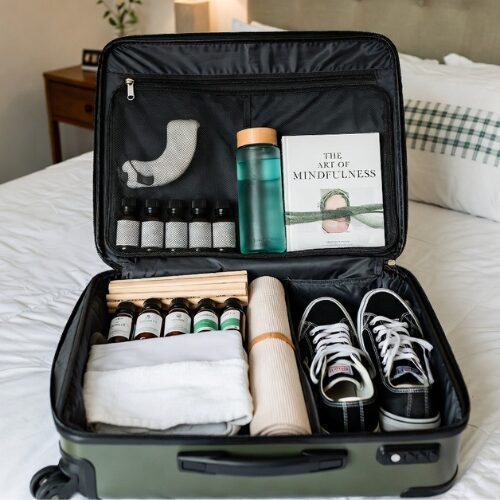
You don’t need to pack dozens of supplements or gadgets to support your digestion while travelling. Having a few key items on hand can help you stay comfortable, hydrated, and prepared for changes in food, routine, and environment.
| Item | Why It’s Helpful |
|---|---|
| Digestive Enzymes | Help break down heavier restaurant meals and unfamiliar foods more efficiently. |
| Probiotic or Synbiotic Supplement | Supports gut bacteria balance and may help reduce digestive disruption while travelling. |
| Reusable Water Bottle | Makes it easier to stay hydrated, which supports digestion and bowel regularity. |
| Healthy Snacks | Nuts, fruit, protein bars, or trail mix can help prevent long gaps between meals and reduce the temptation to rely on processed airport food. |
| Electrolyte Packets (Optional) | Useful during long flights, hot climates, or after episodes of diarrhoea to help maintain hydration. |
| Herbal Tea Bags (Optional) | Peppermint or ginger tea may help soothe digestion and support stomach comfort while travelling. |
Having these basics available can help you maintain healthy digestive habits even when your normal routine is disrupted. A little preparation before you leave home can often prevent digestive issues from interfering with your trip. isn’t.
How Travel Affects The Gut Microbiome
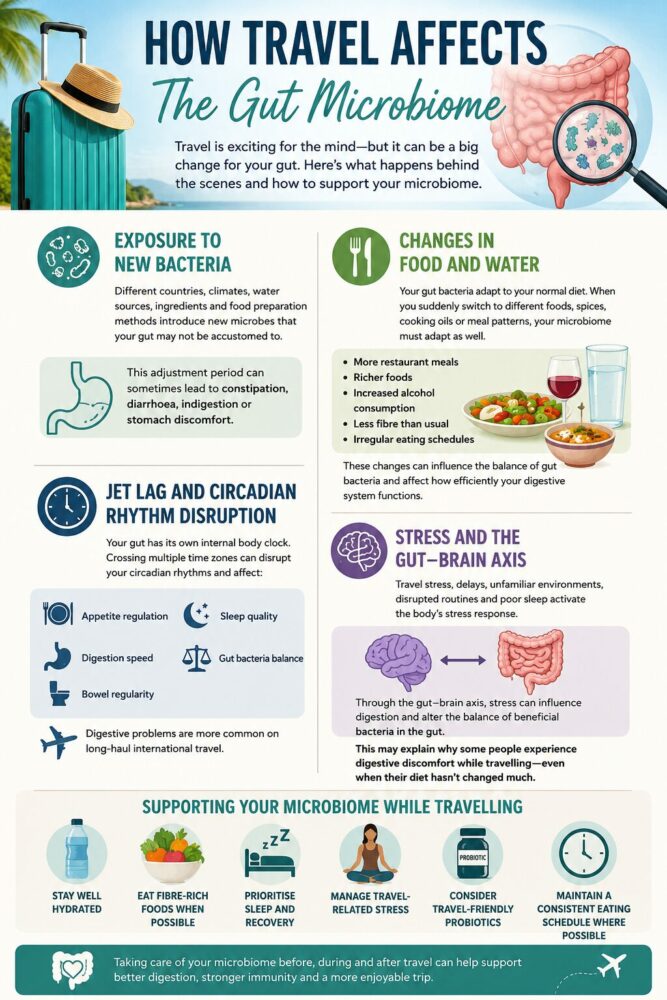
Most people think of travel-related digestive problems as simply eating too much holiday food, but there is often much more happening behind the scenes.
Your digestive system is home to trillions of microorganisms known collectively as the gut microbiome. These beneficial bacteria help support digestion, nutrient absorption, immune function, and even mood. When you travel, several factors can disrupt this delicate balance.
Exposure to New Bacteria
One of the biggest changes during travel is exposure to unfamiliar bacteria and microbes.
Even when food and water are perfectly safe, your gut may not be accustomed to the local bacterial environment. Different countries, climates, food preparation methods, and ingredients can all introduce new microbes that temporarily alter the composition of your gut microbiome.
For some travellers, this adjustment period may contribute to digestive symptoms such as constipation, diarrhoea, indigestion, or general stomach discomfort.
Changes in Food and Water
Your gut bacteria adapt to your normal diet over time. When you suddenly switch to different foods, spices, cooking oils, or meal patterns, your microbiome must adapt as well.
Travel can often involve:
- More restaurant meals
- Richer foods
- Increased alcohol consumption
- Less fibre than usual
- Irregular eating schedules
These changes can influence the balance of gut bacteria and affect how efficiently your digestive system functions.
Jet Lag and Circadian Rhythm Disruption
Many people don’t realise that the gut has its own internal body clock.
Just like your brain follows a daily sleep-wake cycle, your digestive system operates according to circadian rhythms that influence digestion, gut motility, hormone production, and microbial activity.
When you cross multiple time zones, these rhythms can become disrupted. This may affect:
- Appetite regulation
- Digestion speed
- Bowel regularity
- Sleep quality
- Gut bacteria balance
This is one reason digestive problems are often more common during long-haul international travel than shorter domestic trips.
Stress and the Gut-Brain Axis
Travelling can be exciting, but it can also be stressful.
Flight delays, unfamiliar environments, disrupted routines, and poor sleep can activate the body’s stress response. Through a connection known as the gut-brain axis, stress can influence digestion and alter the balance of beneficial bacteria within the gut.
This may help explain why some people experience digestive discomfort while travelling even when they haven’t changed their diet significantly.
Supporting Your Microbiome While Travelling
While some disruption is normal, there are several ways to help support your gut microbiome during travel:
- Stay well hydrated
- Eat fibre-rich foods when possible
- Prioritise sleep and recovery
- Manage travel-related stress
- Consider travel-friendly probiotics
- Maintain a consistent eating schedule where possible
Taking care of your microbiome before, during, and after travel can help support better digestion and make your trip far more enjoyable.
Further Reading: Gut Health While Travelling
- Preventing Traveler’s Diarrhea Naturally
- Best Probiotics for Long Flights & Jet Lag
- Best Probiotics for Travel & Flying (Buyer’s Guide)
- Digestive Enzymes for Travel
- How To Maintain Gut Health While Flying Internationally
- Best Gut Health Supplements For Frequent Travelers
- What’s Inside The BioOptimizers Travel Stack
- How To Prepare Your Gut Before Traveling
- How To Reset Your Gut After Travel
- Best Foods for Gut Health While Traveling
- What to Eat Before a Long Haul Flight
- How to Avoid Bloating on Flights
- IBS and International Travel
- Best Probiotic and Enzyme Supplements
- Probiotic Breakthrough (P3OM) Review
- Masszymes Review
- Microbiome Breakthrough Review
- HCL Breakthrough Review
- Magnesium Breakthrough Review
- Stress Guardian Review
- Berberine Breakthrough Review
- KApex Keto Activar Review
- Gluten Guardian Review
- BiOptimizers Herbal Power Flush Review
- BiOptimizers Para Guardian Review
- Who Are Bioptimizers?
When Should You Start Supporting Your Gut?
Timing is everything when it comes to protecting gut health.
- Before travel:
Start supporting digestion and gut balance a few days before departure. - During travel:
Use enzymes with meals and probiotics daily for ongoing support. - After travel:
Continue for a short period to help your gut rebalance once you return home.
This approach helps prevent problems rather than reacting once discomfort has already set in.
🌍 Traveling Internationally? Protect Your Gut Before You Go
International travel places far greater stress on your digestive system than domestic trips.
New food sources, unfamiliar bacteria, different water standards, long-haul flights, and jet lag can all disrupt your microbiome. Even people with normally strong digestion may experience digestive upset, constipation, diarrhea, fatigue, or lowered immunity when traveling abroad.
If you’re planning an overseas trip, preparation becomes even more important.
While this guide covers general gut health strategies for travel, international trips require a more structured approach, including:
- Starting probiotics 7–14 days before departure
- Supporting digestion with enzymes when eating unfamiliar meals
- Managing hydration carefully in high-risk regions
- Protecting sleep during time zone changes
- Reducing exposure to unsafe water and raw foods
For a full, step-by-step science-backed protocol, read:
👉 How to Maintain Gut Health While Traveling Internationally
That guide walks you through exactly what to do before departure, during your flight, while abroad, and after returning home — including supplement timing, food safety strategies, and microbiome recovery.
If your trip involves crossing borders or time zones, that article will give you a more complete plan.
Related FAQs
Why does my digestion get worse when?
Travel disrupts your digestion more than most people realise. Changes in routine, unfamiliar foods, dehydration, stress, and even jet lag can all slow digestion and throw your gut bacteria out of balance. When your digestive system is under stress, issues like bloating, constipation, or stomach discomfort are much more likely to show up.
*This is why many travellers focus on supporting digestion before problems start — especially when they know they’ll be eating out more than usual.
Should I take probiotics before or during travel?
Ideally, both. Starting probiotics a few days before you travel can help prepare your gut, while continuing during your trip supports balance when you’re exposed to new foods and bacteria. This can be especially helpful when travelling abroad or for longer trips.
*For convenience, many people prefer shelf-stable probiotic or synbiotic formulas that don’t require refrigeration while on the road.
What’s the difference between probiotics and digestive enzymes?
Digestive enzymes and probiotics support gut health in different ways. Digestive enzymes help your body break down food more efficiently, which can reduce bloating and discomfort after meals. Probiotics support the balance of beneficial bacteria in your gut, helping with overall digestion and immune health.
*Because travel puts stress on digestion and gut bacteria, many travellers choose to use both together for more complete support.
Can supplements really help prevent traveller’s diarrhoea?
No supplement can guarantee prevention, but probiotics and synbiotics may help reduce the risk by supporting gut balance and immune defences. They’re most effective when combined with sensible food choices, good hygiene, and proper hydration.
*For frequent travellers, having digestive support on hand can be a simple way to feel more confident about trying local food without constant worry.
How can I support healthy digestion while travelling?
Staying hydrated, managing stress, eating balanced meals, maintaining regular sleep patterns, and using probiotics or digestive enzymes can help support healthy digestion while travelling.
Final Thoughts: Travel More, Worry Less About Your Gut
Travel should be about experiences, memories, and enjoyment — not worrying about bloating, discomfort, or digestive emergencies.
By understanding how travel affects gut health and taking simple, proactive steps, you can dramatically reduce digestive issues and feel better throughout your trip.
Hydration, mindful eating, stress management, and targeted digestive support can make all the difference.
If gut problems tend to follow you when you travel, exploring travel-friendly digestive enzymes and probiotics from BioOptimizers may be a simple way to support your gut — so you can focus on enjoying the journey.
Disclaimer:
This article is for informational purposes only and is not intended as medical advice. Always consult a qualified healthcare professional before starting any new supplement, especially if you have a medical condition or are taking medication.

Fix Your Energy, Sleep and Nutrition Today 🛠
Get our 20-Step Healthy Living eBook, Daily Health Planner and our other bonuses sent to your inbox instantly. Start your journey with 7 days of exclusive gifts and expert tips to stay fit throughout 2026.
Disclaimer: We hate spam too. Unsubscribe anytime.






Alex Chivers writes about natural health, nutrition, and lifestyle wellness at Dynamic Ideas 4 Life. His mission is to help readers discover practical, evidence-based ways to feel better, live healthier, and take control of their wellbeing — naturally.
Anxiety and Depression are you magnesium deficient BiOptimizers blood pressure supplements blood sugar control blood sugar support supplements digestive enzymes Digestive Enzymes Supplement Digestive Health digital products Dr Sam Robbins Gut Health Gut Health While Travelling Health Tips for Travelling Healthy Living heart health HFL hypomagnesia insulin resistance joint health supplement keto dieting Keto Diet Weight Loss leaky gut supplements list Low Stomach Acid magnesium Magnesium deficiency Matt Gallant mental health multivitamins Nootopia Nootropics Probiotics Probiotic Supplements reverse type 2 diabetes stress and anxiety stress relief Supplements vitapost Wade Lightheart weight loss articles weight loss diet plans weight loss product reviews weight loss supplements weight loss tea
Wow, this is such a helpful read!
I’ve definitely had trips where I felt great until the second I tried a new cuisine or ate a big restaurant meal. Then the bloating and cramps hit, and suddenly I’m not enjoying the trip anymore.
I love the idea of a simple gut travel kit, especially probiotics + digestive enzymes. It makes so much sense because travel really does throw everything off (new foods, different water, stress, jet lag).
My experience is that staying hydrated and eating smaller meals helps a lot, but those supplements are a game-changer when you’re trying new foods or going on a food-heavy vacation.
What do you guys think?
Have you ever had “travel gut” issues before, and what helped you the most?
Thanks for commenting Monica. Glad you found helpful. Yes, taking supplements to travel with you can be very helpful. My biggest trouble is gas when flying which is from bloating as air pressure affects the gas in your body. So for me digestive enzymes are the main thing because gas is caused from undigested waste in the gut. Probiotics are a bit different but basically a healthy gut microbiome helps naturally produce enzymes.
It is good to drink a lot of water as you say too and before you leave for holiday it is sensible to prepare your body a couple weeks before.