
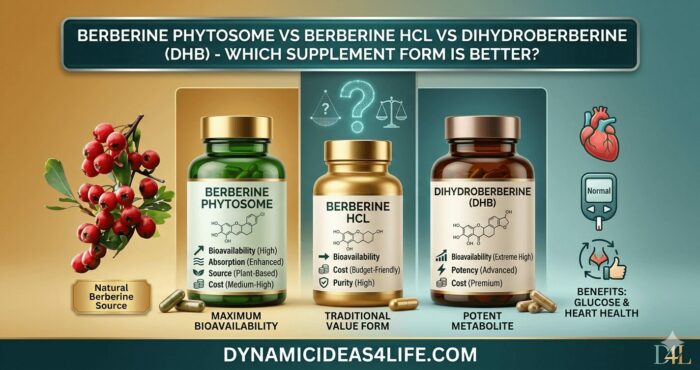
Berberine Phytosome vs Berberine HCL: Which Is Better + Liposomal & DHB Compared
Berberine has become one of the most talked-about natural supplements for blood sugar support, weight management, and metabolic health—but not all forms are created equal.
If you’ve been comparing berberine phytosome vs berberine HCL, you’ve probably noticed big differences in dosage, absorption, and price. And with newer options like liposomal berberine and dihydroberberine (DHB) entering the market, choosing the right one can quickly become confusing.
In this guide, I’ll break down the real differences between each form, including how well they’re absorbed, who they’re best suited for, and what the research currently suggests.
👉 The goal isn’t just to tell you which is “best”—but to help you choose the most effective option for your specific goals, budget, and tolerance.
⚠️ Note: While berberine is widely studied, it can interact with medications—especially those affecting blood sugar. Always consult a qualified healthcare professional before starting any new supplement.
*Please note: This article contains affiliate links. If you choose to purchase through them, I may earn a commission at no extra cost to you. I only share products I believe may be helpful based on research and user experience.
Any questions please contact me at chivs86@dynamicideas4life.com
What Is Berberine (If you don’t know?)
Berberine is a naturally occurring compound found in plants such as Berberis vulgaris, goldenseal, Oregon grape, and tree turmeric. It has a long history of use in both Ayurvedic and Traditional Chinese Medicine, where it was valued for supporting metabolic, cardiovascular, and digestive health.

Today, berberine is widely used for:
- Blood sugar support
- Weight management
- Insulin sensitivity
- Cholesterol balance
- Gut microbiome support
- Inflammation reduction
However, not all berberine is absorbed equally—and that’s what makes these three forms so important to understand.
💡 Want to Improve Your Blood Sugar Naturally?
Before choosing a supplement, it’s important to get the basics right. I’ve put together a free guide covering simple, proven strategies to support healthy blood sugar levels…
About Berberine Supplements
Modern berberine supplements typically come in four main forms:
- Berberine Phytosome
- Berberine HCL
- Dihydroberberine (DHB)
- Liposomal Berberine
These forms differ mainly in how well they are absorbed (bioavailability) and how efficiently your body can use them.
Berberine Phytosome vs Berberine HCL vs DHB vs Liposomal – Quick Comparison
| Feature | Berberine HCL | Berberine Phytosome | Dihydroberberine (DHB) | Liposomal Berberine |
|---|---|---|---|---|
| Absorption | Low | High | Very High | High |
| Dosage Needed | Higher (900–1500 mg/day) | Moderate (300–600 mg/day) | Low (100–200 mg/day) | Moderate |
| Cost | £ | ££ | £££ | ££–£££ |
| Scientific Backing | Strong | Growing | Emerging but promising | Limited but emerging |
| Best For | Beginners, budget users | People needing better absorption | Blood sugar & metabolic support | Improved absorption without very high potency |
| Digestive Tolerance | Moderate | Better | Best | Better |
| Key Benefits | Classic form, well-researched | Up to 9x higher absorption (based on early research) | Potent, long-lasting effects | Enhanced delivery via liposomes |
| Bioavailability Level | Low | High | Very High | High |
| Research Level | Extensive | Moderate | Limited | Limited |
| Typical Use Case | General Wellness | Improved Absorption | Maximum Metabolic Support | Gentle Absorption upgrade |
Quick takeaway: Berberine HCL is the most researched and affordable, while phytosome, DHB, and liposomal forms offer improved absorption and may work at lower doses.
1. Berberine Phytosome – Enhanced Absorption for Stronger Results
Berberine Phytosome is a newer form of berberine that pairs the berberine molecule with a phospholipid (usually lecithin). This creates a “phytosome complex,” which helps your body absorb it far more efficiently.

Why Berberine Phytosome Is Better Absorbed
Berberine is notoriously hard for the digestive system to take in, but the phospholipid pairing allows it to cross gut membranes more easily. This can:
- Increase bioavailability by up to 9x (based on emerging research)
- Reduce the need for high dosages
- Minimize digestive side effects
- Deliver more consistent metabolic benefits
Potential Benefits
- Improved blood sugar control
- Better cholesterol and triglyceride support
- Enhanced weight-management results
- Reduced inflammation markers
Possible Downsides
- More expensive than standard berberine
- Some people may still experience mild digestive discomfort if doses are high
Best For:
People who want the strongest absorption, mildest doses, and maximum efficiency—especially if standard berberine hasn’t worked well for them.
2. Berberine HCL – The Classic, Most Common Form
Berberine HCL (Hydrochloride) is the traditional form found in most supplements. It’s well-researched, widely available, and generally affordable.

Why People Choose Berberine HCL
- Long track record of safe use
- Strong evidence for blood sugar management
- Anti-inflammatory and metabolic benefits
- Easy to find and budget-friendly
Main Limitation: Absorption
Berberine HCL has relatively low bioavailability, which means:
- Higher doses are often required
- Some people experience digestive symptoms at larger amounts
- Results may vary depending on gut health
Safety Notes
Because berberine significantly supports blood sugar regulation, people taking diabetes medication should consult a health professional before using it.
Best For:
Beginners, budget-conscious shoppers, or anyone wanting a reliable and well-researched form of berberine.
3. Dihydroberberine (DHB) – The “Next-Gen” Berberine
Dihydroberberine (DHB) is a reduced, highly absorbable metabolite of berberine. Inside the body, standard berberine actually converts into DHB before becoming bioactive.
By taking DHB directly, you bypass part of the metabolic process—making it significantly more potent.

Benefits of Dihydroberberine
- Up to 5x more bioavailable than Berberine HCL (based on early studies)
- Requires a much lower dose for similar effects
- Potentially longer-lasting metabolic action
- May cause fewer digestive issues
Key Health Benefits
- Stronger insulin sensitivity support
- Improved glucose metabolism
- Better weight-loss potential
- Reduced oxidative stress
Drawbacks
- More expensive than HCL
- Fewer long-term studies compared to standard berberine
- Not yet as widely available
Best For:
People seeking maximum potency with minimal dosage, especially for blood sugar, insulin, and metabolic health.
4. Liposomal Berberine – A Newer Absorption-Enhanced Option
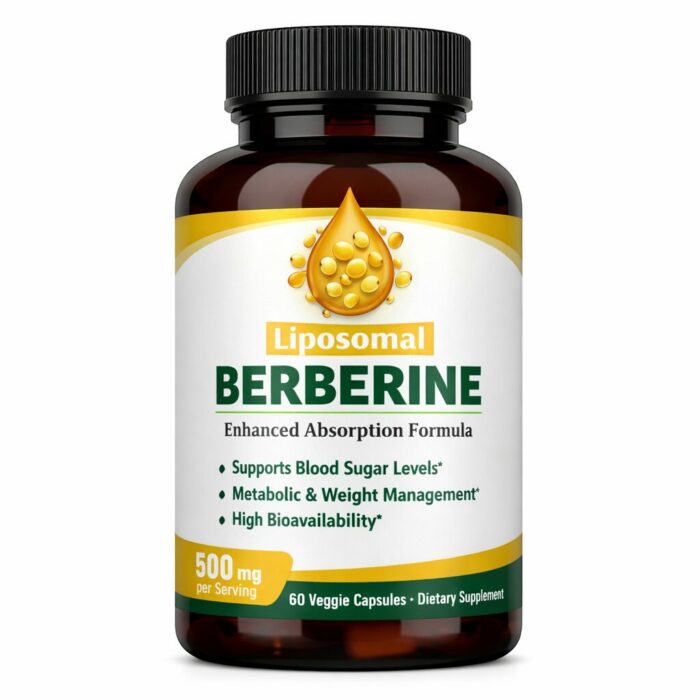
Liposomal berberine is another modern form designed to improve absorption compared to standard Berberine HCL.
It works by encapsulating berberine in tiny fat-like particles called liposomes, which help protect the compound as it passes through the digestive system and improve its ability to enter the bloodstream.
Why Liposomal Berberine May Be Better Absorbed
Like phytosome technology, liposomal delivery aims to overcome berberine’s naturally low bioavailability. By surrounding the molecule in a lipid layer, it may:
- Improve absorption through the gut lining
- Reduce breakdown in the digestive tract
- Allow for more efficient delivery into the bloodstream
Potential Benefits
- Improved blood sugar regulation
- Better metabolic support
- May require lower doses compared to Berberine HCL
- Potentially fewer digestive side effects
Possible Downsides
- Typically more expensive than standard berberine
- Less long-term research compared to HCL
- Quality can vary significantly between brands
Best For:
People who want enhanced absorption but prefer an alternative to phytosome or DHB, especially if they’ve experienced digestive issues with standard berberine.
While liposomal berberine offers improved absorption compared to HCL, it’s often compared with other high-bioavailability forms like phytosome and DHB — which we’ll summarise below.
So, Which Form of Berberine Is Best?

Choosing the best form of berberine depends on two key factors: how well your body absorbs it (bioavailability) and your specific health goals.
While all forms—berberine HCL, berberine phytosome, dihydroberberine (DHB), and liposomal berberine—offer similar core benefits, they differ significantly in potency, efficiency, and cost.
Here’s how to decide which one suits you best:
1. Best Overall Absorption: Berberine Phytosome
If your goal is to get the strongest and most reliable absorption, Berberine Phytosome is often considered the best choice.
The phospholipid pairing helps more berberine reach your bloodstream, meaning:
- Lower doses may work effectively
- Fewer digestive side effects
- More consistent results
Best for: People who tried regular berberine but didn’t notice much benefit, or anyone looking for premium absorption.
2. Best for Maximum Potency at the Lowest Dose: Dihydroberberine (DHB)
DHB is often chosen for its very high bioavailability, meaning your body can use it more efficiently than standard Berberine HCL. Because it’s already in a reduced form, it converts easily into active berberine inside the cells.
- Works at smaller doses
- May feel stronger for metabolic support
- Gentle on digestion
Best for: Those focusing specifically on blood sugar support, insulin sensitivity, or weight-related metabolism.
3. Best Budget Option: Berberine HCL
Berberine HCL is the classic, well-known form. It’s been studied extensively and is the most affordable version available.
Even though it requires a larger dose to match the effects of Phytosome or DHB, it remains a solid, reliable choice, especially when taken consistently.
Best for: Beginners, general wellness, or anyone who wants the most research-backed form at the lowest price.
4. Best Alternative Absorption Option: Liposomal Berberine
Liposomal berberine is another enhanced form designed to improve absorption compared to standard Berberine HCL. It uses fat-based delivery (liposomes) to help protect berberine through digestion and improve uptake.
While it doesn’t yet have the same level of research as Berberine HCL or the same potency as DHB, it may still offer:
- Better absorption than standard berberine
- Improved digestive tolerance
- A middle ground between HCL and more advanced forms
Best for: People who want improved absorption but prefer an alternative to phytosome or DHB.
So Which Should You Choose? A Quick Recommendation
If you want the simplest summary:
- Choose DHB if you want the strongest effects per capsule.
- Choose Berberine Phytosome if you need better absorption and fewer digestive issues.
- Choose Berberine HCL if you want a well-studied, cost-effective option.
- Choose Liposomal Berberine if you want improved absorption but prefer a gentler, alternative delivery method
No single form is “right” for everyone — but choosing the one that fits your goals, budget, and tolerance gives you the best chance of getting real benefits from berberine supplementation.
⚠️ It’s also worth noting that research into newer forms like DHB and liposomal berberine is still developing, so long-term data is more limited compared to Berberine HCL.
Recommended Berberine Supplements to Consider
If you decide to try berberine, here are a few helpful guidelines when choosing a product:
- Look for third-party testing (NSF, USP, Informed Choice).
- Choose brands with clean formulas and no unnecessary fillers.
- Match the supplement type (HCL, Phytosome, DHB) to your health goals.
✅ Best Berberine Supplements by Type (Phytosome, HCL, DHB & Liposomal)
| Supplement Type | Recommended Product | Key Features | Formula Type | Why Choose It | Price Range |
|---|---|---|---|---|---|
| Berberine Phytosome | Thorne Berberine Phytosome | Uses Indena’s Phytosome® technology; clinically studied | Enhanced (Phytosome delivery system) | Best absorption, high-quality manufacturing | £££ |
| Igennus Advanced Berberine Phytosome with Chromium | Non-GMO, soy-free, uses genuine Phytosome® | Enhanced (Phytosome delivery system) | More affordable phytosome option | ££ | |
| Berberine HCL | Double Wood Berberine HCL | High-dose per capsule, third-party tested | Standard (Berberine HCL) | Popular budget-friendly choice | £ |
| Toniiq Ultra High Strength Berberine | Highly purified, clean formula | Standard (Berberine HCL) | Strong option for first-time users | £ | |
| Dihydroberberine (DHB) | Nutrabio GlucoVantage (DHB) | Uses branded GlucoVantage® DHB | Advanced (DHB compound) | Clinically tested DHB ingredient | £££ |
| Bioptimizers Berberine Breakthrough | Uses branded GlucoVantage® DHB | Advanced (DHB compound) | High bioavailability, designed for efficient absorption | £££ | |
| Liposomal Berberine | Rho Nutrition Liposomal Berberine Capsules | Berberine HCL (300 mg) + liposomal lipid delivery system | Enhanced (Liposomal delivery system) | Enhanced absorption vs standard HCL | £££ |
| KoNefancy Liposomal Berberine Supplement | Berberine HCL + liposomal delivery (blended formula) | Enhanced (Liposomal delivery system) | Budget-friendly liposomal option | ££ |
Quick tip: If you’re unsure, choose your supplement based on absorption first (DHB or phytosome), then budget, then brand quality.
Final Verdict: Which Form of Berberine Is Best?
There’s no single “best” form of berberine—only the one that best matches your needs.
- Berberine HCL remains the most affordable and well-researched option, making it a solid choice for beginners or general metabolic support.
- Berberine phytosome offers significantly improved absorption, which may lead to better results at lower doses—especially if you’ve struggled with standard berberine.
- Dihydroberberine (DHB) stands out for its potency and efficiency, often delivering similar (or stronger) effects at much smaller doses.
- Liposomal berberine is another emerging option designed to enhance absorption, although long-term research is still developing.
👉 In practical terms, it comes down to this:
- Want the most proven and budget-friendly option → go with HCL
- Want better absorption with fewer digestive issues → consider phytosome
- Want maximum potency at lower doses → DHB is often the top choice
💡 Best Option for Maximum Results
If your goal is to get the most out of each dose without taking large amounts, choosing a high-quality supplement that uses a more bioavailable form of berberine (like DHB) can be a smart upgrade.
👉 Use code 13586 for an extra 10% off
⚠️ Final Thought
No matter which form you choose, quality matters.
Look for:
- Third-party testing
- Transparent ingredient labels
- Trusted brands with strong reputations
Because when it comes to supplements—how it’s made is just as important as what’s inside it.he version that aligns best with your goals.
Related FAQs
Is Dihydroberberine better than regular berberine?
DHB appears to have significantly higher absorption and may work effectively at much smaller doses. It also tends to be easier on digestion.
Is Berberine Phytosome worth the extra cost?
If you struggle with absorption or haven’t seen results with Berberine HCL, the Phytosome version is often worth the upgrade.
Can you stack Phytosome and DHB together?
There’s no major evidence supporting the need to combine them. Most people choose one form based on absorption preferences.
Which berberine form is best for weight loss?
DHB and Phytosome have shown the strongest metabolic support due to better bioavailability.
Does berberine cause side effects?
Possible mild effects include gas, bloating, or digestive discomfort—usually at higher doses. Starting slow can help.
Is liposomal berberine better than berberine HCL?
Liposomal berberine may offer improved absorption and require lower doses compared to berberine HCL, but it currently has less long-term research.
Which form of berberine is absorbed best?
Dihydroberberine (DHB) and berberine phytosome are generally considered the most bioavailable forms, with liposomal berberine also showing promising absorption benefits.
Related Blog Posts:


Anxiety and Depression are you magnesium deficient BiOptimizers blood pressure supplements blood sugar control blood sugar support supplements digestive enzymes Digestive Enzymes Supplement Digestive Health digital products Dr Sam Robbins Gut Health Gut Health While Travelling Health Tips for Travelling Healthy Living heart health HFL hypomagnesia insulin resistance joint health supplement keto dieting Keto Diet Weight Loss leaky gut supplements list Low Stomach Acid magnesium Magnesium deficiency Matt Gallant mental health multivitamins Nootopia Nootropics Probiotics Probiotic Supplements reverse type 2 diabetes stress and anxiety stress relief Supplements vitapost Wade Lightheart weight loss articles weight loss diet plans weight loss product reviews weight loss supplements weight loss tea

Fix Your Energy, Sleep and Nutrition Today 🛠
Get our 20-Step Healthy Living eBook, Daily Health Planner and our other bonuses sent to your inbox instantly. Start your journey with 7 days of exclusive gifts and expert tips to stay fit throughout 2026.
Disclaimer: We hate spam too. Unsubscribe anytime.
About Author





I found your post comparing berberine phytosome and berberine HCL. You explained the differences in a clear and helpful way, which makes it easier for readers to understand their options. Comparison articles like this are very useful because supplements can be confusing for many people. I usually use supplements to boost my energy when I feel tired, but I had never heard about the difference between these two forms. I also liked that you discussed effectiveness and absorption.
Have you noticed better results with one form over the other?
Thank you for sharing this informative guide.
Hi Monica,
Thank you — I’m glad you found the comparison helpful. You’re right, different forms of the same supplement can get confusing quickly, so I wanted to make that clearer.
That’s a great question. From what I’ve seen (and experienced), the main difference people tend to notice is tolerance and absorption rather than a dramatic difference in “results.”
Berberine HCL is the more traditional form and works well for many people, but some find it can be a bit harsher on digestion.
Berberine phytosome is designed to improve absorption, so some people feel they can take a lower dose or experience fewer digestive issues.
In terms of overall effect, both are used for similar purposes — it’s more about which one suits the individual better. I wouldn’t usually frame one as universally “better,” but rather as different options depending on how someone responds.
Also worth mentioning — supplements like berberine are typically used for supporting metabolic health rather than general energy, so if fatigue is the main concern, it’s often worth looking at broader factors like sleep, nutrition, and overall lifestyle as well.
Thanks again for your thoughtful question — really appreciate it.