 No More Boring Sit-Ups: Try These Standing Ab Exercises for a Stronger Core
Tired of endless sit-ups that feel repetitive or strain your lower back? Standing ab exercises offer a powerful alternative that strengthens your core while improving balance, posture, and real-world functional strength — all without getting down on the floor.
Unlike traditional floor-based ab workouts, standing core exercises engage multiple muscle groups at once, including your abdominals, obliques, hips, and lower back. These movements train your body to work as a unit, making them ideal for everyday activities, sports performance, and injury prevention.
Whether you’re a beginner looking to build core stability or an experienced athlete wanting a more dynamic challenge, standing ab exercises can be adapted to all fitness levels and performed anywhere — at home, in the gym, or even outdoors.
What Are Standing Ab Exercises?
Standing ab exercises are core-strengthening movements performed upright rather than on the floor. Instead of isolating the abdominal muscles, they challenge your body to stabilize itself against gravity while moving through multiple planes of motion.
Because these exercises require coordination, balance, and control, they closely mimic real-life movement patterns — making them a highly functional way to train your core.
Benefits of Standing Ab Exercises for Core Strength

Standing Ab Workouts provide a wide range of physical benefits beyond aesthetics.
Key benefits include:
- Stronger functional core muscles that support daily movement
- Improved balance and coordination
- Better posture and spinal alignment
- Reduced risk of lower back injury
- Engagement of multiple muscle groups simultaneously
- Greater calorie burn compared to isolated ab exercises
By strengthening the muscles that stabilize your spine and pelvis, standing ab exercises help improve overall athletic performance and movement efficiency.
Proper Form and Technique for Standing Ab Exercises

Maintaining proper form is essential for getting results and preventing injury.
Follow these technique guidelines:
- Keep your spine neutral — avoid arching or rounding your lower back
- Engage your core by gently bracing your abdominals
- Keep your shoulders relaxed and pulled slightly back
- Move slowly and with control — avoid momentum
- Exhale during the effort, inhale on the return
If you’re new to standing ab exercises, start with bodyweight movements and master proper technique before adding resistance.
Top Standing Ab Exercises for Core Strength
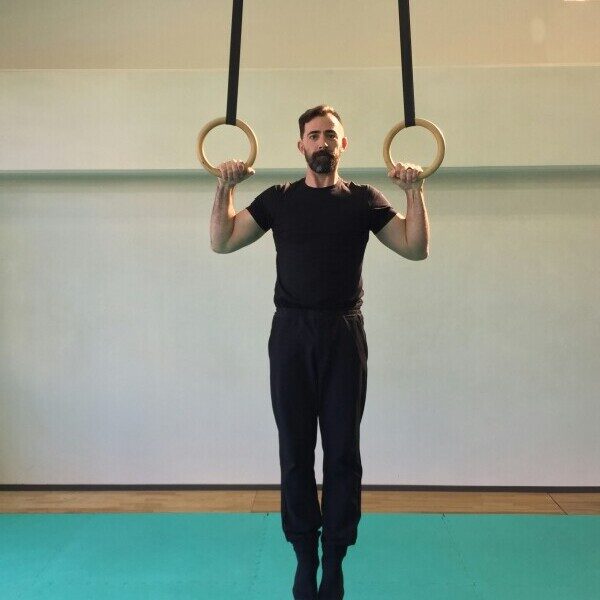
Incorporate a variety of standing ab exercises to target all areas of your core.
1. Standing Bicycle Crunch
Targets the obliques and rectus abdominis while challenging balance. Focus on slow, controlled twists rather than speed.
2. Standing Wood Chop
A rotational movement that strengthens the obliques, shoulders, hips, and lower back. Can be performed with dumbbells, cables, or resistance bands.
3. Standing Side Bend
Excellent for isolating the obliques. Perform with light weights and controlled movement to avoid strain.
4. Standing Knee Tucks
Engages the lower abs and hip flexors while improving balance and coordination.
5. Standing Russian Twist
Challenges rotational strength and core stability. Keep your torso upright and core engaged throughout the movement.
Beginner-to-Advanced Standing Ab Workout Plan

🟢 Beginner Standing Core Workout
Perform 2–3 rounds
Rest 30–45 seconds between exercises
- Standing Knee Tucks – 10 reps per side
- Standing Side Bends – 12 reps per side
- Standing Bicycle Crunch – 10 reps per side
- Standing March with Core Brace – 30 seconds
Goal: Build core awareness, balance, and basic strength.
🟡 Intermediate Standing Ab Workout
Perform 3 rounds
Rest 30 seconds between exercises
- Standing Wood Chops – 12 reps per side
- Standing Russian Twists – 15 reps per side
- Standing Knee Tucks with Hold – 10 reps per side
- Standing Side Bends (with weight) – 12 reps per side
Goal: Increase rotational strength and muscular endurance.
🔴 Advanced Standing Core Workout
Perform 3–4 rounds
Minimal rest (15–30 seconds)
- Standing Cable or Band Wood Chops – 15 reps per side
- Single-Leg Standing Bicycle Crunch – 12 reps per side
- Standing Knee Drive to Rotation – 10 reps per side
- Overhead Standing Side Bend – 12 reps per side
Goal: Maximize core stability, balance, and athletic performance.
Tips for Adding Standing Ab Exercises to Your Routine
Standing ab exercises are highly flexible and can be easily integrated into almost any workout plan. The tips below will help you get the most out of your standing core workouts while keeping them effective, efficient, and safe.
| Tip | How It Helps | Practical Application |
|---|---|---|
| Start with bodyweight movements | Builds proper core engagement, balance, and coordination before adding load | Begin with standing knee tucks, marches, or side bends before using weights |
| Use as a warm-up | Activates the core and increases mobility before heavier lifts | Perform light standing twists or marches for 5 minutes pre-workout |
| Use as a finisher | Fully fatigues the core and improves muscular endurance | Add 2–3 standing ab exercises at the end of your workout |
| Combine into circuits or supersets | Saves time and boosts calorie burn | Pair standing wood chops with squats or lunges |
| Increase difficulty without heavy weight | Improves strength while reducing injury risk | Slow the tempo, add pauses, or perform single-leg variations |
| Add instability | Enhances balance and deep core activation | Use a balance pad or BOSU ball for advanced variations |
| Prioritise consistency | Leads to long-term strength and posture improvements | Aim for 10–15 minutes, 2–4 times per week |
By applying these strategies consistently, you’ll build better core strength, improve balance, and make your workouts more engaging — without relying on long or complicated routines.
Common Mistakes to Avoid When Doing Standing Ab Exercises

Even though standing ab exercises are generally safe, poor technique can reduce their effectiveness and increase injury risk. The table below highlights the most common mistakes and how to correct them.
| Common Mistake | Why It’s a Problem | How to Fix It |
|---|---|---|
| Using momentum | Reduces core activation and increases injury risk | Slow down each rep and focus on controlled movement |
| Arching the lower back | Places strain on the spine and weakens core engagement | Brace the core and maintain a neutral spine |
| Rounding the shoulders | Leads to poor posture and compensation patterns | Keep shoulders back and chest tall |
| Holding your breath | Reduces stability and increases pressure | Exhale during effort, inhale on the return |
| Using weights that are too heavy | Causes poor form and muscle compensation | Start light and increase resistance gradually |
| Rushing repetitions | Limits time under tension and effectiveness | Perform slow, deliberate reps |
| Ignoring balance cues | Reduces functional strength benefits | Engage stabilising muscles and focus on alignment |
Avoiding these errors will help you maintain proper form, protect your lower back, and ensure your standing ab exercises deliver maximum results over time.
Final Thoughts: Are Standing Ab Exercises Really Worth Doing?
Standing ab exercises are one of the most effective ways to build a strong, stable, and functional core without the discomfort or boredom of traditional sit-ups.
By training your core in an upright position, you improve balance, posture, and real-world strength that carries over into everyday movement and athletic performance.
Because standing ab exercises engage multiple muscle groups at once, they’re suitable for all fitness levels and can be easily adjusted to match your goals — whether you’re just starting out or looking to challenge your core in new ways. When performed with proper form and consistency, even short sessions can deliver noticeable improvements in strength, stability, and confidence.
If you’re ready to upgrade your core training, try adding a few standing ab exercises to your next workout and experience the difference for yourself.
Have you tried standing ab exercises before, or do you have a favourite move that wasn’t mentioned?
Feel free to share your thoughts, experiences, or questions in the comments below — your feedback may help other readers get the most out of their own core workouts.
Related FAQs
1.) Are standing ab exercises effective?
Yes, standing ab exercises are highly effective for building functional core strength. They engage the abs, obliques, hips, and lower back while improving balance, coordination, and posture.
2.) Can standing ab exercises replace sit-ups?
Standing ab exercises can replace sit-ups for many people, especially those who experience lower back discomfort. They train the core in more natural movement patterns and place less strain on the spine.
3.) Are standing ab exercises good for beginners?
Yes, standing ab exercises are beginner-friendly and easy to modify. Bodyweight movements such as standing knee tucks and marches allow beginners to build core stability safely.
4.) How often should I do standing ab exercises?
You can perform standing ab exercises 2–4 times per week. Even short sessions of 10–15 minutes can lead to noticeable improvements in core strength and stability when done consistently.
5.) Do standing ab exercises help with belly fat?
Standing ab exercises strengthen the core muscles but do not directly burn belly fat. Fat loss occurs through a combination of consistent exercise, calorie balance, and healthy nutrition.
6.) Do I need equipment for standing ab exercises?
No equipment is required for many standing ab exercises. However, dumbbells, resistance bands, or cables can be added to increase resistance as your strength improves.
7.) Are standing ab exercises safe for lower back pain?
Standing ab exercises are generally safer than floor-based ab exercises for people with mild lower back issues, as long as proper form is maintained. If you have chronic pain or an existing condition, consult a professional before starting.






Fix Your Energy, Sleep and Nutrition Today 🛠
Get our 20-Step Healthy Living eBook, Daily Health Planner and our other bonuses sent to your inbox instantly. Start your journey with 7 days of exclusive gifts and expert tips to stay fit throughout 2026.
Disclaimer: We hate spam too. Unsubscribe anytime.
Anxiety and Depression BiOptimizers blood pressure supplements blood sugar control blood sugar support supplements digestive enzymes Digestive Enzymes Supplement digital products Dr Sam Robbins Exercise Gut Health Gut Health While Travelling Health Tips for Travelling Healthy Living heart health HFL how to lower blood sugar levels insulin resistance joint health supplement Keto keto dieting Keto Diet Weight Loss leaky gut supplements list magnesium Magnesium deficiency Matt Gallant mental health multivitamins Nootropics Probiotics Probiotic Supplements proteolytic enzymes reverse type 2 diabetes stress and anxiety stress relief Supplements vitabalance vitapost Wade Lightheart weight loss articles weight loss diet plans weight loss product reviews weight loss supplements weight loss tea
About Author