
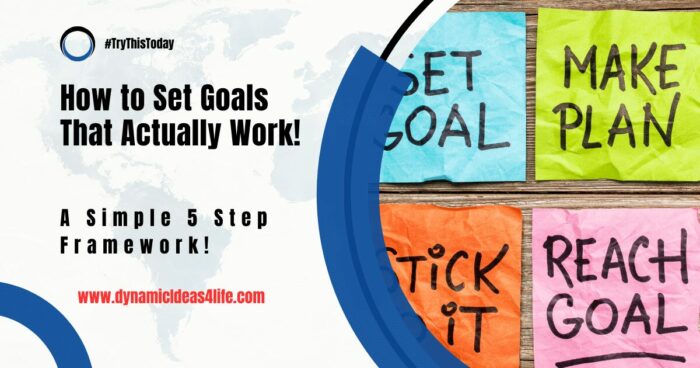
How to Set Goals That Actually Work: A Simple 5-Step Framework
Setting goals is easy — setting goals that actually work is where most people struggle.
Many goals fail not because of a lack of motivation or discipline, but because they are vague, unrealistic, or unsupported by a clear plan.
When goals lack structure, progress stalls, motivation fades, and frustration sets in.
The good news? Effective goal-setting is a skill — and like any skill, it can be learned.
These strategies are simple, practical, and designed to work in real life — not just on paper.
In this guide, you’ll discover five proven goal-setting strategies that help you stay focused, motivated, and on track — without overwhelm or burnout.
1. Get Crystal Clear: Set Specific and Measurable Goals

One of the biggest reasons goals fail is a lack of clarity.
A goal like “I want to get healthier” sounds positive, but it offers no direction. In contrast, a clear and specific goal provides a defined target and a roadmap for action.
Example:
- Vague goal: “I want to lose weight.”
- Specific goal: “I want to lose 10 pounds in 12 weeks by exercising four times per week and following a balanced meal plan.”
Specific and measurable goals help you:
- Eliminate confusion
- Track progress easily
- Increase accountability
- Stay motivated as milestones are reached
When you know exactly what you’re working toward — and how success is measured — taking action becomes far easier.
2. Set Goals You Can Sustain: Avoiding Overwhelm and Burnout

Ambition is valuable, but unrealistic goals often lead to stress, disappointment, and burnout.
Setting goals that are challenging yet achievable creates momentum rather than frustration. Sustainable goals allow you to stay consistent while balancing other responsibilities in your life.
Example:
Instead of aiming to double your income overnight, focus on increasing it by 15–20% over the next year through a specific strategy.
Realistic goals:
- Build confidence as progress accumulates
- Reduce pressure and mental fatigue
- Encourage long-term consistency
- Support a healthier work–life balance
Success isn’t about doing everything at once — it’s about making steady progress you can maintain.
A simple rule of thumb: if a task doesn’t directly move your main goal forward, delay it, delegate it, or delete it.
3. Focus on What Matters Most: The Art of Prioritization

Trying to pursue too many goals at once often leads to scattered effort and slow progress.
Prioritization helps you identify the goals that will have the greatest impact and focus your energy where it matters most.
Ask yourself:
- Which goal moves my life forward the most right now?
- What tasks directly support this goal?
- What can wait?
By narrowing your focus, you:
- Use your time and energy more efficiently
- Reduce overwhelm
- Make faster, more meaningful progress
Fewer goals, pursued with intention, outperform many goals chased inconsistently.
4. Turn Goals into Action: Create a Clear Plan

Even the best goals fail without a plan.
Breaking goals into small, manageable steps transforms them from overwhelming ideas into actionable tasks.
Example:
If your goal is to write a book, your action plan might include:
- Outlining chapters
- Writing 500 words per day
- Scheduling weekly review sessions
- Seeking feedback after each draft
A clear action plan:
- Keeps you organized
- Prevents procrastination
- Makes progress visible
- Builds momentum through small wins
When the next step is obvious, taking action becomes automatic.
When motivation fades, your systems — not willpower — are what keep you moving forward.
5. Stay Motivated: Mindset, Visualization, and Accountability

Motivation fluctuates — systems keep you moving forward.
Visualization and Affirmations
Visualization helps you mentally rehearse success, while affirmations reinforce belief in your ability to achieve your goals. Together, they strengthen focus, confidence, and resilience during setbacks.
Accountability and Support
Accountability partners and support systems dramatically increase follow-through. Sharing your goals with someone you trust creates external motivation and reinforces commitment.
Support Systems:
- Encourage consistency
- Provide perspective during challenges
- Keep you aligned with your goals
You don’t have to do it alone.
Final Thoughts: Build a Goal-Setting System That Works

Effective goal-setting isn’t about perfection — it’s about progress.
By setting clear and measurable goals, keeping them realistic, prioritizing what matters, creating actionable plans, and surrounding yourself with support, you build a system that makes success more likely.
Start small. Stay consistent. Adjust when needed.
Progress compounds faster than motivation ever could.
Choose one goal today, apply these strategies, and take the first small step — momentum starts there.
Related FAQs
What is the best way to set effective goals?
The best way to set effective goals is to make them specific, measurable, realistic, and supported by a clear action plan. This approach improves focus, accountability, and consistency.
Why do most people fail to achieve their goals?
Most people fail to achieve their goals because they set vague or unrealistic targets, lack a clear plan, or don’t have accountability systems in place.
How can I stay motivated while working toward my goals?
Staying motivated is easier when you break goals into small steps, visualize success, track progress, and use accountability partners or support systems.
What are realistic goals and why do they matter?
Realistic goals are achievable within your current time, resources, and lifestyle. They reduce burnout, improve consistency, and increase long-term success.
How does prioritization help with goal achievement?
Prioritization helps you focus on high-impact goals, manage time effectively, and avoid overwhelm by eliminating distractions and low-value tasks.







Fix Your Energy, Sleep and Nutrition Today 🛠
Get our 20-Step Healthy Living eBook, Daily Health Planner and our other bonuses sent to your inbox instantly. Start your journey with 7 days of exclusive gifts and expert tips to stay fit throughout 2026.
Disclaimer: We hate spam too. Unsubscribe anytime.
Anxiety and Depression BiOptimizers blood pressure supplements blood sugar control blood sugar support supplements digestive enzymes Digestive Enzymes Supplement digital products Dr Sam Robbins Exercise Gut Health Gut Health While Travelling Health Tips for Travelling Healthy Living heart health HFL how to lower blood sugar levels insulin resistance joint health supplement Keto keto dieting Keto Diet Weight Loss leaky gut supplements list magnesium Magnesium deficiency Matt Gallant mental health multivitamins Nootropics Probiotics Probiotic Supplements proteolytic enzymes reverse type 2 diabetes stress and anxiety stress relief Supplements vitabalance vitapost Wade Lightheart weight loss articles weight loss diet plans weight loss product reviews weight loss supplements weight loss tea
About Author



Hello Alex,
I have been around and around with my endocrinologist about eating healthy and exercise. You mentioned the goal, “I want to lose 10 pounds in 12 weeks by exercising four times per week and following a balanced meal plan,” which is almost the exact thing the doctor told me, so I know your advice is sound.
I will have to wrap my head around my goal to get where I need to be on my journey towards better health. I thank you for this article!
Michael
Thanks Michael, appreciate you taking the time to read. Glad you have found this content helpful and I hope it goes well for you with your exercise plan and diet. Best regards; Alex