

Digestive Enzymes for Travel: Do They Really Help?
Digestive discomfort is one of the most common travel complaints — which is why digestive enzymes for travel have become increasingly popular among frequent flyers and international travelers. Eating unfamiliar foods, dining out more often, and dealing with stress or jet lag can all disrupt normal digestion.
Bloating, gas, heaviness, and loose stools aren’t always caused by food poisoning. In many cases, they’re simply the result of inefficient digestion when your body struggles to break down heavier or unfamiliar meals.
When used correctly, digestive enzymes for travel can support better food breakdown, reduce post-meal discomfort, and help your gut adapt more easily while abroad.
In this guide, you’ll learn how digestive enzymes work, who benefits most from using them while traveling, and how to use them strategically to keep your digestion running smoothly on the road.
After testing digestive enzymes on several international trips, I’ve found they’re particularly helpful when eating high-protein restaurant meals or unfamiliar cuisines.
*Please note: This article contains affiliate links. If you choose to purchase through them, I may earn a commission at no extra cost to you. I only share products I believe may be helpful based on research and user experience.
Any questions please contact me at chivs86@dynamicideas4life.com
👉 Want to avoid bloating completely while traveling? >>Read my complete guide to keeping your gut healthy abroad
Why Digestion Often Fails While Traveling

Travel creates a perfect storm for digestive trouble:
- Unfamiliar foods and ingredients
- Higher fat and protein intake
- Eating quickly or at irregular times
- Stress and jet lag reducing stomach acid
When food isn’t properly broken down, it can ferment in the gut—leading to bloating, gas, cramps, and diarrhea.
What Are Digestive Enzymes?
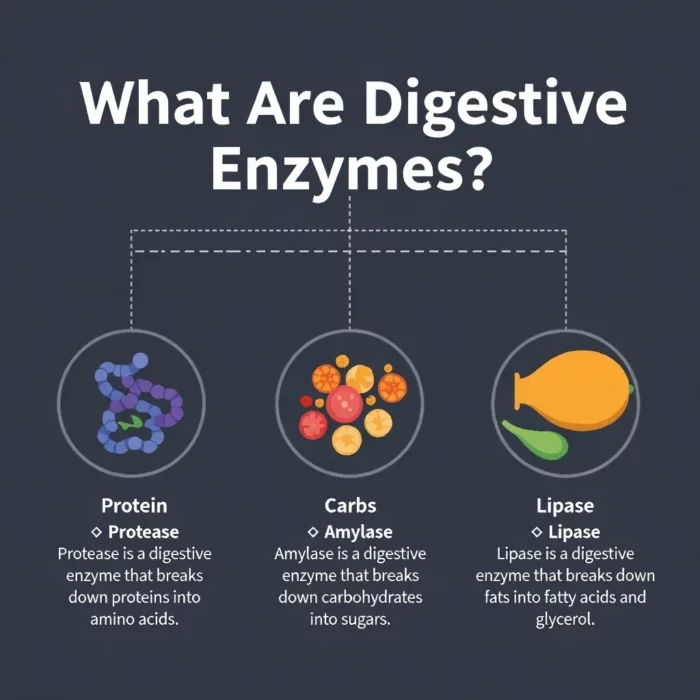
Digestive enzymes are specialized proteins that help break food down into smaller, absorbable nutrients. Without them, your body cannot properly extract amino acids from protein, fatty acids from fats, or glucose from carbohydrates.
Your body naturally produces digestive enzymes in the:
- Salivary glands (to begin carbohydrate digestion)
- Stomach (to initiate protein breakdown)
- Pancreas (the primary source of digestive enzymes)
- Small intestine (where final digestion and absorption occur)
The three main categories include:
- Proteases – break down protein into amino acids
- Amylases – digest carbohydrates into simple sugars
- Lipases – break down fats into fatty acids
Some formulas also contain additional enzymes such as:
- Lactase (helps digest dairy)
- Cellulase (helps break down plant fibers)
- Alpha-galactosidase (helps reduce gas from beans and legumes)
When digestion is functioning optimally, these enzymes work efficiently at each stage of the digestive process. However, factors like stress, aging, large meals, alcohol consumption, and irregular eating patterns — all common during travel — can reduce enzyme output or overwhelm your digestive capacity.
This is why digestive enzymes for travel can be especially helpful: they provide additional support when your body is under digestive stress or exposed to unfamiliar foods.
Do Digestive Enzymes Really Help When Traveling?
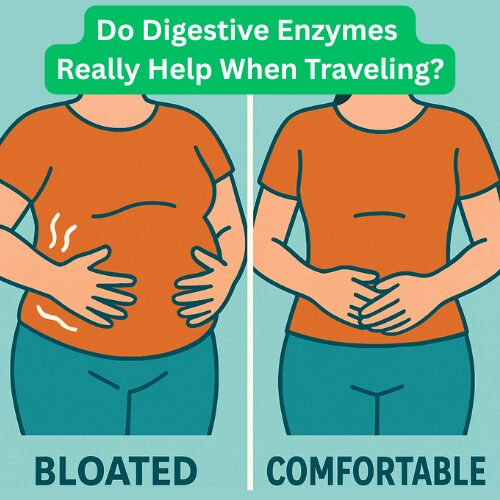
Yes, digestive enzymes can:
- Improve breakdown of unfamiliar foods
- Reduce bloating and gas after meals
- Support nutrient absorption
- Lower the risk of digestive upset while abroad
They’re especially helpful when eating:
- Restaurant meals
- Heavy or protein-rich foods
- New cuisines your gut isn’t used to
Side Note: If you’re traveling soon and want digestion support ready before you go, here’s the enzyme formula I personally recommend for travel >>
When Do Travelers Benefit Most From Digestive Enzymes?

Digestive enzymes are ideal if you:
- Travel internationally
- Eat out frequently while traveling
- Experience bloating or heaviness after meals
- Have a sensitive or “weak” stomach
They don’t replace probiotics—but they work best alongside them.
Best Way to Use Digestive Enzymes While Traveling
Using digestive enzymes for travel correctly makes a significant difference in how effective they are. Timing, dosage, and formula quality all matter.

Timing Matters
Take digestive enzymes immediately before your first bite of food — especially when eating large, protein-heavy, or unfamiliar meals.
Digestive enzymes work directly on the food in your stomach and small intestine. If taken too late (after finishing the meal), they may not provide full benefit. For restaurant meals or rich holiday foods, enzymes can help your body keep up with heavier digestion demands.
Pro tip: If you’re unsure how your body will react to a meal, it’s better to take enzymes preventively rather than waiting for symptoms.
Choose a Full-Spectrum Formula
Not all digestive enzymes are created equal. For travel, you want broad support.
Look for:
- Multiple protease types (for different protein bonds)
- Lipase for fat digestion
- Amylase for carbohydrates
- High enzyme activity levels (measured in activity units, not just milligrams)
- Stability without refrigeration (important when traveling)
If you want to see a full breakdown of the enzyme formula I personally recommend for travel, including pros, cons, and ingredient analysis, read my in-depth review here <<
Digestive Enzymes vs Probiotics: What’s the Difference?
| Feature | Digestive Enzymes | Probiotics |
|---|---|---|
| Primary Role | Break down food into absorbable nutrients | Support and balance beneficial gut bacteria |
| Speed of Effect | Immediate (works during the meal) | Gradual (requires consistent use) |
| Best Use | Taken right before or with meals | Taken daily for microbiome support |
| Travel Benefit | Helps prevent bloating and heaviness after unfamiliar meals | Helps prevent microbial imbalance while abroad |
Common Myths About Digestive Enzymes
There’s a lot of confusion around digestive enzymes, especially when it comes to travel use. Here are a few common misconceptions worth clearing up.
“They’re only for people with digestive disorders.”
Not true. While people with diagnosed digestive conditions may use enzyme supplements under medical supervision, even healthy individuals can experience temporary digestive slowdown while traveling.
Stress, jet lag, alcohol, irregular meal timing, and heavier restaurant foods can all reduce digestive efficiency. In these situations, digestive enzymes can provide short-term support — even if you normally digest food well at home.
“I only need them if I get sick.”
Digestive enzymes are most effective when used proactively, not reactively.
They work by helping break down food during the digestive process. Taking them after symptoms begin (like bloating or heaviness) may offer limited benefit because the food has already moved further through the digestive tract.
For travel, they’re best taken before or with meals rather than waiting for discomfort.
“They prevent food poisoning.”
Digestive enzymes do not kill harmful bacteria or viruses. They simply assist in breaking down food more efficiently.
While better digestion may reduce fermentation-related bloating, enzymes should not be relied upon as protection against contaminated food. Practicing safe food choices and, if appropriate, using probiotics offers broader gut support while traveling.
Related FAQs
Should I take digestive enzymes while traveling?
Yes — especially before large or unfamiliar meals. Digestive enzymes help your body break down food more efficiently, reducing bloating, gas, and heaviness while abroad. Taking them proactively is more effective than waiting for symptoms to appear.
Can digestive enzymes prevent traveler’s diarrhea?
Digestive enzymes do not kill harmful bacteria or viruses, so they cannot fully prevent foodborne illness. However, they can improve the breakdown of meals, which may reduce fermentation-related bloating and support smoother digestion. Pairing enzymes with a travel-friendly probiotic offers broader gut protection.
Are digestive enzymes safe for daily use?
Most high-quality digestive enzyme supplements are safe when taken as directed. Always follow the manufacturer’s instructions and consult a healthcare provider if you have a medical condition or are on medication.
Can digestive enzymes help with bloating from international cuisine?
Yes. Unfamiliar foods, rich sauces, and higher fat or protein meals can overwhelm your normal digestive capacity. Digestive enzymes provide additional support to break down these foods, helping reduce bloating, gas, and discomfort.
How long before a meal should I take digestive enzymes?
For best results, take enzymes immediately before or with the first bite of your meal. This ensures they’re active in your stomach and small intestine during digestion. Taking them after finishing the meal may limit their effectiveness.
Do digestive enzymes work with probiotics?
Absolutely. Digestive enzymes and probiotics serve complementary roles: enzymes break down food into absorbable nutrients, while probiotics help maintain a healthy gut microbiome. Using both together can offer better digestion support, especially while traveling.
Further Reading: Gut Health While Travelling
- Preventing Traveler’s Diarrhea Naturally
- Best Probiotics for Long Flights & Jet Lag
- Best Probiotics for Travel & Flying (Buyer’s Guide)
- Digestive Enzymes for Travel
- How To Maintain Gut Health While Flying Internationally
- Best Gut Health Supplements For Frequent Travelers
- What’s Inside The BioOptimizers Travel Stack
- How To Prepare Your Gut Before Traveling
- How To Reset Your Gut After Travel
- Best Foods for Gut Health While Traveling
- What to Eat Before a Long Haul Flight
- How to Avoid Bloating on Flights
- IBS and International Travel
- Best Probiotic and Enzyme Supplements
- Probiotic Breakthrough (P3OM) Review
- Masszymes Review
- Microbiome Breakthrough Review
- HCL Breakthrough Review
- Magnesium Breakthrough Review
- Stress Guardian Review
- Berberine Breakthrough Review
- KApex Keto Activar Review
- Gluten Guardian Review
- BiOptimizers Herbal Power Flush Review
- BiOptimizers Para Guardian Review
- Who Are Bioptimizers?
Please Note: This article is for educational purposes only and does not replace medical advice. If you have a diagnosed digestive condition, consult your healthcare provider before using enzyme supplements.
Final Takeaway
There are many high-quality digestive enzyme and probiotic formulas available. When choosing supplements for travel, look for broad-spectrum enzyme activity and strains that do not require refrigeration.
Best Travel Digestion Stack
If you want complete digestive protection while traveling, this is the stack I personally use:
- MassZymes® – digestion support
- P3-OM® – microbiome defense
- Magnesium Breakthrough® – stress & gut-brain support
👉 See the full travel digestion stack here
If bloating or digestive discomfort ruins your trips, digestive enzymes for travel may be the simplest upgrade you make before your next flight.

Fix Your Energy, Sleep and Nutrition Today 🛠
Get our 20-Step Healthy Living eBook, Daily Health Planner and our other bonuses sent to your inbox instantly. Start your journey with 7 days of exclusive gifts and expert tips to stay fit throughout 2026.
Disclaimer: We hate spam too. Unsubscribe anytime.




Anxiety and Depression are you magnesium deficient BiOptimizers blood pressure supplements blood sugar control blood sugar support supplements digestive enzymes Digestive Enzymes Supplement Digestive Health digital products Dr Sam Robbins Gut Health Gut Health While Travelling Health Tips for Travelling Healthy Living heart health HFL hypomagnesia insulin resistance joint health supplement keto dieting Keto Diet Weight Loss leaky gut supplements list Low Stomach Acid magnesium Magnesium deficiency Matt Gallant mental health multivitamins Nootopia Nootropics Probiotics Probiotic Supplements reverse type 2 diabetes stress and anxiety stress relief Supplements vitapost Wade Lightheart weight loss articles weight loss diet plans weight loss product reviews weight loss supplements weight loss tea

Alex Chivers writes about natural health, nutrition, and lifestyle wellness at Dynamic Ideas 4 Life. His mission is to help readers discover practical, evidence-based ways to feel better, live healthier, and take control of their wellbeing — naturally.
Love this post! ???? Traveling is such a vibe, but food gut-check is real — especially when you’re trying all the local eats. ???????? Digestive enzymes make total sense as a travel hack so I can enjoy food without the digestive drama later.
Thanks for the tips — definitely bookmarking this for my next foodie adventure! ????✈️
Thanks Leah, yes can work wonders with certain foods that are harder to digest. Probiotics should not be overlooked either but anyhow definitely a good travel hack in my opinion. Hope this page can be a helpful resource for you in the future.