
Building Muscle and Confidence: The Beginner’s Guide to Strength Training
Strength training is one of the most effective ways to build muscle, boost confidence, increase strength, and improve long-term health. Whether you’re stepping into the gym for the first time — or working out at home with a pair of dumbbells — this beginner-friendly guide will walk you through everything you need to get started safely and successfully.
From choosing the right exercises to tracking your results, this guide gives you the core foundation to build strength, feel more empowered, and transform your fitness over time.
For beginners with this guide I will try my best to show you what needs to be done.
*This article contains affiliate links. If you choose to purchase through them, I may earn a commission at no extra cost to you. I only share products I believe may be helpful based on research and user experience.
Any questions please contact me at chivs86@dynamicideas4life.com
⭐ Why Strength Training Is Essential for Beginners
Regular strength training can:
- Boost metabolism + fat burning
- Increase functional strength for everyday life
- Improve posture + joint health
- Strengthen bones and reduce fracture risk
- Increase confidence and mental wellbeing
- Support long-term weight management
Strength training empowers you to feel more capable — inside and out. Confidence builds with every rep.
⭐ What Is Strength Training?
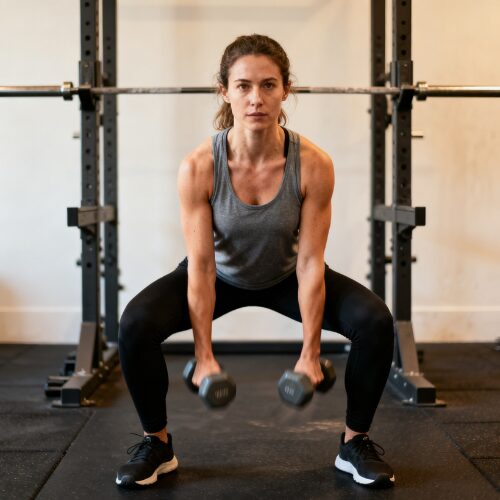
Strength (or resistance) training means making your muscles work against resistance, such as:
- Dumbbells 🏋️♂️
- Barbells
- Resistance bands
- Kettlebells
- Cable & weight machines
- Your own body weight!
And the benefits?
- 💪 More muscle and strength
- 🔥 Faster metabolism & better fat loss
- 🦴 Stronger bones & joints
- 😌 Better mood + confidence boost
- 🏃 Improved everyday movement & posture
Strength training = stronger body + stronger mind.
🔥 Quick Warm-Up (5 Minutes)
A warm-up boosts performance and prevents injury.
Try this before every session:
| Exercise | Duration |
|---|---|
| March or jog in place | 60 sec |
| Arm circles | 30 sec each direction |
| Air squats | 10 reps |
| Hip openers | 10 reps/side |
| Plank to Downward Dog | 6–8 reps |
🔁 The Importance of Progressive Overload
To build muscle, you must gradually increase the challenge over time. This can mean:
- Adding more weight
- Doing more reps or sets
- Slowing the tempo
- Reducing rest time
- Trying new variations
➡️ Progress happens when we gently push past our comfort zone.
📌 Beginner Rep & Set Guidelines
- Major muscle groups: 2–3x/week
- Start with: 8–12 reps per exercise
- Sets: 2–3 per exercise
- Rest: 60–90 seconds between sets
Consistency > perfection.
🏋️ How to Choose the Right Weight
Choose a weight where:
- Reps 1–6 = easy enough to control
- Final 2 reps = challenging but doable with good form
If you could have done 5 more → too light
If your form breaks early → too heavy
🎯 Setting Realistic Strength Training Goals
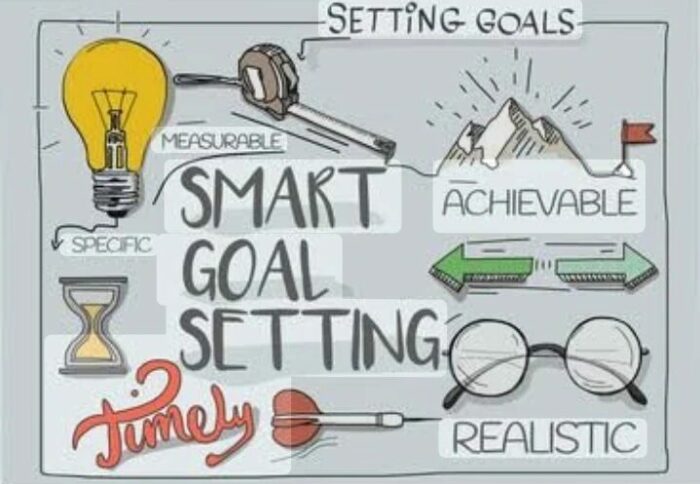
Beginners progress best when goals are S.M.A.R.T:
- Specific — “I want to complete 3 workouts per week”
- Measurable — track reps, sets, and weights
- Achievable — start with manageable workouts
- Relevant — based on what you want
- Time-bound — e.g. 8-week progress check
✨ Focus on how strength training makes you feel as well as how you look.
Celebrate every small win — they build big results!

Fix Your Energy, Sleep and Nutrition Today 🛠
Get our 20-Step Healthy Living eBook, Daily Health Planner and our other bonuses sent to your inbox instantly. Start your journey with 7 days of exclusive gifts and expert tips to stay fit throughout 2026.
Disclaimer: We hate spam too. Unsubscribe anytime.
💥 How Long Until You See Results?
Most beginners notice:
- Strength improvements → 1–3 weeks
- Muscle definition → 4–8 weeks
- Significant changes → 12+ weeks
Snap a progress photo every 2–4 weeks 📸
Future-you will be happy you did!
🏋️ Best Strength Training Exercises for Beginners

Start with compound exercises — movements that target multiple muscle groups at once:
| Exercise | Major Muscles Worked |
|---|---|
| Squats | Legs, glutes, core |
| Lunges | Legs, glutes |
| Push-ups | Chest, shoulders, arms |
| Rows (band or dumbbell) | Back, biceps |
| Planks | Core |
| Glute Bridge | Hamstrings, glutes |
📌 Tip: Learn proper form first — then add weight when you feel confident
🧩 Common Form Tips (Quick Guide)
- Keep spine neutral — no rounding
- Control every movement — avoid momentum
- Knees track over toes during squats/lunges
- Keep core engaged in every lift
If unsure — use video demos or ask a trainer.
⚠️ Biggest Beginner Mistakes to Avoid
- Lifting too heavy too soon
- Skipping warm-ups + cool-downs
- Poor technique to “just finish the reps”
- Following influencer workouts beyond your level
Start smarter → improve faster.
📅 Beginner Strength Training Routine (2–3 Days/Week)

Day A – Full-Body
| Exercise | Sets | Reps |
|---|---|---|
| Bodyweight Squats | 3 | 8–12 |
| Push-Ups (knees if needed) | 3 | 6–10 |
| Dumbbell Rows | 3 | 8–12 |
| Glute Bridge | 3 | 10–15 |
| Plank | 3 | 20–30 sec |
Day B – Full-Body
| Exercise | Sets | Reps |
|---|---|---|
| Reverse Lunges | 3 | 8–10 each side |
| Dumbbell Shoulder Press | 3 | 8–12 |
| Dead Bug | 3 | 10–12 each side |
| Resistance Band Pull-Apart | 3 | 12–15 |
| Side Plank | 3 | 15–30 sec/side |
Alternate A/B days with a rest day between.
🔥 Progression suggestion every 1–2 weeks:
- Add 2 reps to each set — or
- Add 1–2 kg to dumbbells — or
- Increase plank by 10 seconds
🏠 Home vs. Gym Gear (Beginner Essentials)
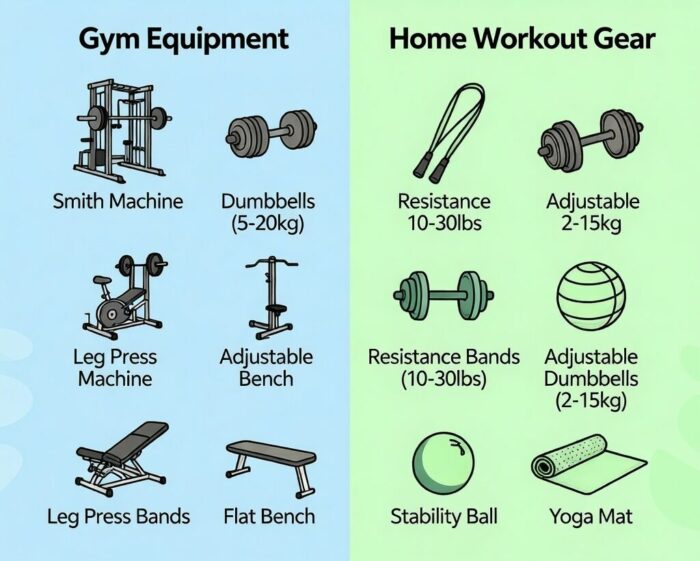
Home Starter Pack (beginner friendly):
- Adjustable dumbbells
- Long + loop resistance band set
- Anti-slip exercise mat
- Mini step bench (optional)
Gym Equipment Tips:
- Use cable machines if barbells feel intimidating at first
- Ask staff for form checks 😊
Recommended Starter Item: A quality resistance band set can replace machines and help perfect form while protecting your joints.
👍 Proper Form, Breathing & Safety
✔ Maintain a neutral spine
✔ Full range of motion
✔ Move with control — avoid momentum
✔ Inhale as you lower, exhale as you lift
✔ Stop if you feel sharp pain
If unsure → ask a trainer or watch trusted instructional videos.
🧘 Full-Body Cool-Down (3–5 Minutes)
Post-workout recovery helps muscle repair:
- Quad stretch — 20 sec/side
- Chest doorway stretch — 20 sec
- Hamstring stretch — 20–30 sec
- Core twist stretch — 20 sec/side
Deep breathing slows the nervous system and boosts recovery.
The Importance of Rest and Recovery

Strength training breaks muscle fibres down — recovery is when they rebuild stronger.
Without proper rest, progress slows and injury risk increases. Muscles need time, nutrients, and sleep to repair effectively.
To optimise recovery:
• Aim for 7–9 hours of quality sleep per night
• Consume adequate protein to support muscle repair
• Stay hydrated
• Include at least 1–2 full rest days per week
• Consider light active recovery like walking, mobility work, or stretching
Remember: growth doesn’t happen during the workout — it happens after it.
Consistency + recovery = long-term strength gains.
🥗 Beginner Nutrition for Muscle Growth

Food = fuel for results 💥
Daily protein target:
👉 1.6–2.2 g per kg bodyweight
(e.g. 60 kg person → 96–132 g protein/day)
Easy protein sources:
- Greek yogurt, cottage cheese
- Chicken, salmon, eggs
- Beans, tofu, lentils
- Whey or vegan protein shakes (fast + affordable)
Affiliate product placement:
Top Tip: A high-quality protein powder is a game-changer for muscle growth when you’re busy — one scoop can add 20–25 g protein instantly.
📈 Track Your Strength Training Progress
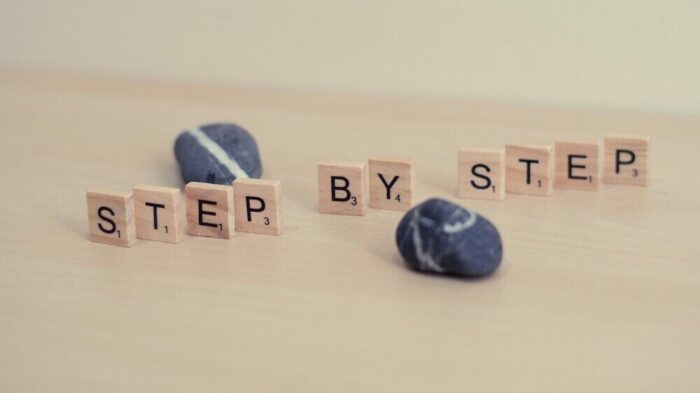
Try one or more:
- Workout journal or notes app
- Progress photos every 2–4 weeks
- Weights + reps log
- Fitness watch or app
Look for wins like:
✔ More energy
✔ Lifting heavier than before
✔ Better mood / confidence
✔ Everyday tasks feel easier
Progress isn’t always linear — but it is worth it!
Related ❓ Strength Training for Beginners — FAQs
How many times should a beginner strength train per week?
2–3 sessions weekly is ideal, allowing rest days in between.
Will lifting weights make me bulky?
No — beginners typically build a lean, toned shape while boosting metabolism.
How long until I see results?
You may feel stronger within 2–3 weeks and notice visible changes in 6–12 weeks.
Do I need to go to the gym?
Not at all! Resistance bands and bodyweight exercises work great at home.
Should I do cardio too?
Yes — 1–2 light cardio sessions complement strength training for overall fitness.
Can you lose fat and build muscle at the same time?
Yes — especially for beginners. Strength training + high-protein diet does both!
How often should beginners train?
2–3 strength sessions per week is perfect.
Do women get bulky from lifting?
No — women lack the testosterone needed for extreme muscle growth.
Is bodyweight training enough?
Yes to start — add resistance later for continued progress.
🙌 Final Thoughts: You’ve Got This
Starting strength training can feel intimidating — but every strong person once started exactly where you are now.
- You don’t need perfect form on day one.
- You don’t need heavy weights.
- You just need to start.
With consistent effort, progressive overload, and proper recovery, your body will adapt. Your strength will improve, and your confidence will grow.
Strength training builds more than muscle — it builds discipline, resilience, and belief in your own capability.
Stay patient. Stay consistent.
Your future will be stronger — inside and out.
Fix Your Energy, Sleep and Nutrition Today 🛠
Get our 20-Step Healthy Living eBook, Daily Health Planner and our other bonuses sent to your inbox instantly. Start your journey with 7 days of exclusive gifts and expert tips to stay fit throughout 2026.
Disclaimer: We hate spam too. Unsubscribe anytime.





Anxiety and Depression BiOptimizers blood pressure supplements blood sugar control blood sugar support supplements cognitive function digestive enzymes Digestive Enzymes Supplement Digestive Health digital products Dr Sam Robbins Exercise Gut Health Gut Health While Travelling Health Tips for Travelling Healthy Living heart health HFL How To Lower Cholesterol insulin resistance joint health supplement keto dieting Keto Diet Weight Loss leaky gut supplements leptin resistance magnesium Magnesium deficiency Matt Gallant mental health multivitamins Nootropics Probiotics Probiotic Supplements reverse type 2 diabetes stress and anxiety stress relief Supplements vitabalance vitapost Wade Lightheart weight loss articles weight loss diet plans weight loss product reviews weight loss supplements weight loss tea
About Author



There is a lot of very good information contained within this article. You have it laid out in a manner that is a bit confusing in the first pass, but then it starts to make better sense on the second read through. There are so many ads, they are distracting, taking the reader away from the information contained within the post. And some are duplicated, which, again is distracting and confusing.
As someone who is always looking for information on health, both physical and mental, I do like what you have presented here. Have you thought about using a combination of paragraph and point form for the content? This will show the reader a level of professionalism and higher level of knowledge on the topic.
Review your ads within this post, only use which are truly pertinent to your topic. Try not to load up too many as the reader may see your post as only one trying to sell, which could cause them to leave the page/website completely. Use link that will take them to your “Our Trusted Brands” or “Supplements” tabs. Try to remove that items that are popping up unnecessarily as this to is distracting and confusing.
Like I stated at the beginning, your information is very good and I would follow it. Try to clean up the article, make is more professional and not just a sales page. I’m sure more readers will stay, search your website and bookmark your site for future reference and sales.
Good Luck!
Hi Pauline,
Thank you for taking the time to leave such detailed feedback — I genuinely appreciate it.
I’m glad you found the information valuable, and I completely understand your points about structure and ad placement. Sometimes when you’re deep into writing a long-form guide, clarity can feel obvious to the writer but less so on a first read — so that’s helpful insight. I’ll definitely review the layout and look at incorporating more bullet-point summaries to make key sections easier to digest.
Regarding the ads, that’s fair feedback as well. Ads do help support the running of the site and allow me to keep the content free, but I never want them to distract from the reader experience. I’ll take another look at this post specifically to see where things can be streamlined and whether any placements are unnecessary or duplicated.
My goal is always to provide practical, honest health information first and foremost — not to create a sales-focused page — so I appreciate you highlighting how it may currently come across.
Thanks again for the thoughtful suggestions.
Hi Pauline,