

Preventing Travellers Diarrhoea Naturally (Before, During & After Travel)
Traveller’s diarrhoea is one of the most common travel-related illnesses, especially when visiting regions with different food hygiene standards, water quality, and bacterial exposure.
While no method guarantees complete prevention, the right preparation, hygiene habits, and gut-support strategies may significantly reduce your risk while also supporting long-term digestive health.
This guide explains how to help prevent traveller’s diarrhoea naturally — alongside safe food practices and medical awareness.
Many travellers search for ways to avoid travellers diarrhoea, especially when visiting higher-risk regions.
What Causes Traveller’s Diarrhoea?

Traveller’s diarrhoea is typically caused by exposure to unfamiliar microbes. The most common culprit is enterotoxigenic E. coli (ETEC), but viruses (such as norovirus) and parasites can also be responsible.
Exposure usually occurs through:
- Contaminated food or water
- Poor food hygiene practices
- Ice made from untreated water
- Raw produce washed in unsafe water
- Undercooked foods
- Reduced stomach acid due to stress, fatigue, or jet lag
A resilient gut microbiome and strong digestive function act as your first line of defence.
*Please note: This article contains affiliate links. If you choose to purchase through them, I may earn a commission at no extra cost to you. I only share products I believe may be helpful based on research and user experience.
Any questions please contact me at chivs86@dynamicideas4life.com
Who Is at Higher Risk?

Some travellers are more vulnerable than others. Risk increases for:
- Travel to South Asia, Africa, Central & South America
- People with IBS or IBD
- Those with low stomach acid
- Recent antibiotic use
- Weakened immunity
- High stress or poor sleep during travel
Supporting gut health before departure can be especially helpful in these cases.
How to Prevent Traveller’s Diarrhoea Naturally
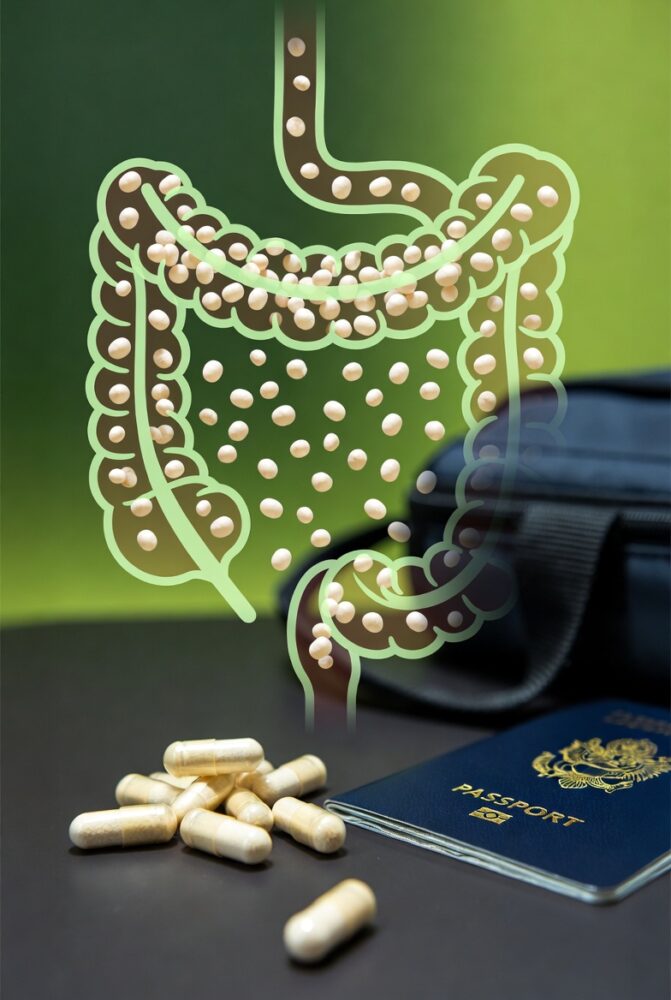
1. Strengthen Your Gut Before You Travel
Preparation is key. Begin gut support 7–14 days before departure.
Some probiotic strains have been studied for their ability to:
- Support gut barrier function
- Enhance immune activity in the digestive tract
- Promote microbial balance during travel
Research suggests certain strains such as Saccharomyces boulardii and Lactobacillus rhamnosus GG may help reduce the risk of traveller’s diarrhoea in some individuals.
Whilst, other strains like Lactobacillus plantarum are studied for their role in supporting gut barrier function and digestive resilience during dietary and environmental changes. Effectiveness depends on strain, dose, and personal factors.
🔹 A travel-stable probiotic designed to survive stomach acid can be useful during trips where refrigeration isn’t available.
2. Support Digestion of Unfamiliar Foods

Digestive upset while traveling isn’t always caused by infection. Changes in:
- Meal timing
- Food composition
- Fat or protein intake
- Spices and unfamiliar ingredients
- Stress levels
can all disrupt digestion.
Digestive enzymes may help the body break down:
- Heavier proteins
- Rich or oily foods
- Larger or irregular meals
This may reduce bloating, fermentation, and digestive strain.
🔹 A broad-spectrum enzyme formula can support efficient digestion during travel.
3. Protect Your Gut During Flights

Long flights affect digestion due to:
- Dehydration
- Circadian rhythm disruption
- Stress hormones
- Reduced movement
Travel stress activates the gut–brain axis, which influences motility, stomach acid, and digestion. Supporting relaxation and sleep may indirectly help digestive stability.
Travel tips:
- Drink bottled or filtered water
- Avoid alcohol before long flights
- Eat lightly before boarding
- Move around periodically
🔹 Magnesium and stress-support nutrients may help with relaxation and gut-brain balance during travel.
Natural Habits That Reduce Risk
Even the best supplements can’t compensate for poor food safety habits. In fact, everyday behaviours are one of the most powerful ways to lower your exposure to the bacteria, viruses, and parasites that cause traveller’s diarrhoea.
The simple precautions below are widely recommended in travel health guidance and can make a major difference in protecting your gut while abroad.
| Habit | Risk Level if Ignored | Why It Matters |
|---|---|---|
| Avoid ice and untreated water | 🔴 High | Ice and tap water may contain microbes your digestive system isn’t used to. |
| Skip raw vegetables in high-risk regions | 🔴 High | Raw produce may be washed in contaminated water and isn’t cooked to kill pathogens. |
| Choose freshly cooked, hot meals | 🟠 Moderate–High | Heat destroys many bacteria that cause foodborne illness. |
| Wash hands or use sanitizer before eating | 🔴 High | Hands easily transfer microbes from surfaces directly to food. |
| Peel fruits yourself | 🟠 Moderate | Peels act as a barrier, but contamination can occur during handling. |
| Eat slowly and chew thoroughly | 🟡 Supportive | Helps digestion cope with unfamiliar foods and reduces gut stress. |
These habits work by reducing the amount of unfamiliar microbes entering your digestive system in the first place. When combined with gut-support strategies and good hydration, they create a strong foundation for staying well during travel.
Consistency matters more than perfection — being mindful most of the time significantly lowers your overall risk.
🔬 What Does Research Say About Probiotics & Traveller’s Diarrhoea?

Several clinical studies have investigated probiotics for prevention. A meta-analysis published in Travel Medicine and Infectious Disease found certain probiotic strains were associated with a modest reduction in risk, though results vary.
Effectiveness depends on:
- Strain selection
- Dosage
- Duration of use
- Individual gut health
Probiotics should be viewed as supportive, not guaranteed protection.
What to Do If Symptoms Start
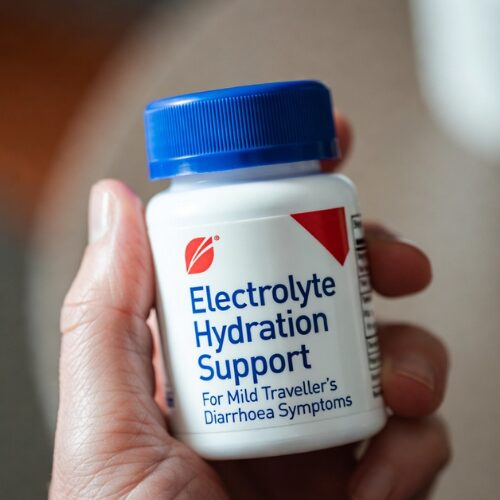
If mild digestive symptoms develop while travelling, acting early can help reduce discomfort and prevent dehydration. Most cases improve on their own with supportive care, and focusing on hydration and gentle nutrition is key.
If symptoms begin:
- Increase hydration immediately
- Use oral rehydration solutions if available
- Continue probiotic support
- Eat bland, easy-to-digest foods (rice, bananas, toast)
- Avoid sugar, alcohol, and fatty foods
These steps help support fluid balance, reduce digestive strain, and give your gut time to recover. Resting and avoiding heavy meals can also make a noticeable difference while symptoms settle.
If symptoms worsen, last more than a few days, or are accompanied by fever, severe pain, or dehydration, medical care should be sought promptly.
⚠️ When to Seek Medical Care
Seek medical help if you experience:
- Fever above 38.5°C
- Blood in stool
- Severe abdominal pain
- Signs of dehydration
- Symptoms lasting more than 3 days
- Illness in children or elderly travelers
Antibiotics may be prescribed for moderate to severe cases and should be used under medical guidance.
Comparison: “Medical Treatment vs Preventive Gut Support”
| Approach | Medical Treatment | Preventive Gut Support |
|---|---|---|
| Purpose | Treat moderate–severe infection | Support digestive resilience |
| Microbiome Impact | Can disrupt gut flora | Supports balance |
| Preventive Use | Not routine | Can be used before & during travel |
| Access | Prescription | Travel-friendly |
Related FAQs
This article is for educational purposes and does not replace professional medical advice.
Can probiotics prevent traveller’s diarrhoea?
Some strains may reduce risk in certain people, but they do not guarantee protection.
When should I start probiotics before travel?
Ideally 1–2 weeks before departure.
Is traveller’s diarrhoea always caused by infection?
No. Poor digestion, stress, and dehydration can also trigger symptoms.
Final Takeaway
Traveler’s diarrhea isn’t just bad luck — you can lower your risk with preparation and simple habits. Strengthen your gut before travel, support digestion, stay hydrated, and practice safe food and water choices. Supplements like probiotics, digestive enzymes, and stress-support nutrients can complement these habits.
Consistency matters more than perfection — being mindful most of the time dramatically reduces risk and helps you travel confidently, knowing your gut is supported.
Further Reading: Gut Health While Travelling
- Preventing Traveler’s Diarrhea Naturally
- Best Probiotics for Long Flights & Jet Lag
- Best Probiotics for Travel & Flying (Buyer’s Guide)
- Digestive Enzymes for Travel
- How To Maintain Gut Health While Flying Internationally
- Best Gut Health Supplements For Frequent Travelers
- What’s Inside The BioOptimizers Travel Stack
- How To Prepare Your Gut Before Traveling
- How To Reset Your Gut After Travel
- Best Foods for Gut Health While Traveling
- What to Eat Before a Long Haul Flight
- How to Avoid Bloating on Flights
- IBS and International Travel
- Best Probiotic and Enzyme Supplements
- Probiotic Breakthrough (P3OM) Review
- Masszymes Review
- Microbiome Breakthrough Review
- HCL Breakthrough Review
- Magnesium Breakthrough Review
- Stress Guardian Review
- Berberine Breakthrough Review
- KApex Keto Activar Review
- Gluten Guardian Review
- BiOptimizers Herbal Power Flush Review
- BiOptimizers Para Guardian Review
- Who Are Bioptimizers?
Best Natural Travel Gut Support Stack
- Probiotic — microbiome support
- Digestive enzymes — digestion of unfamiliar foods
- Magnesium or stress support — gut-brain balance
With preparation, your gut is better equipped to handle the journey 🌍


Fix Your Energy, Sleep and Nutrition Today 🛠
Get our 20-Step Healthy Living eBook, Daily Health Planner and our other bonuses sent to your inbox instantly. Start your journey with 7 days of exclusive gifts and expert tips to stay fit throughout 2026.
Disclaimer: We hate spam too. Unsubscribe anytime.





Anxiety and Depression are you magnesium deficient BiOptimizers blood pressure supplements blood sugar control blood sugar support supplements digestive enzymes Digestive Enzymes Supplement Digestive Health digital products Dr Sam Robbins Gut Health Gut Health While Travelling Health Tips for Travelling Healthy Living heart health HFL hypomagnesia insulin resistance joint health supplement keto dieting Keto Diet Weight Loss leaky gut supplements list Low Stomach Acid magnesium Magnesium deficiency Matt Gallant mental health multivitamins Nootopia Nootropics Probiotics Probiotic Supplements reverse type 2 diabetes stress and anxiety stress relief Supplements vitapost Wade Lightheart weight loss articles weight loss diet plans weight loss product reviews weight loss supplements weight loss tea