
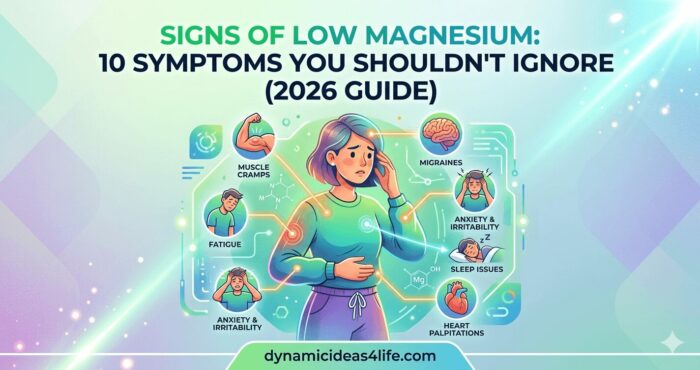
Signs of Low Magnesium: 10 Symptoms You Shouldn’t Ignore (2026 Guide)
Magnesium deficiency is far more common than most people realise — and the symptoms are often easy to overlook.
From poor sleep and fatigue to muscle cramps and anxiety, low magnesium levels can quietly impact your health in ways you wouldn’t expect.
In this updated 2026 guide, you’ll discover:
✔️ The most common signs of low magnesium
✔️ What causes deficiency (even with a “healthy” diet)
✔️ How to fix it naturally and effectively
Let’s dive in.
⚡ Quick Summary (For Busy Readers)
- Low magnesium can cause fatigue, cramps, poor sleep, and anxiety
- Modern diets, stress, and travel can deplete magnesium levels
- Blood tests are not always reliable indicators
- Diet + supplementation is often the most effective solution
Download my free 7-Day Magnesium Reset Plan and discover how to feel calmer, sleep better, and boost your energy—naturally.
👉 Fix Your Sleep, Stress & Energy in 7 Days
*Please note: This article contains affiliate links. If you choose to purchase through them, I may earn a commission at no extra cost to you. I only share products I believe may be helpful based on research and user experience.
Any questions please contact me at chivs86@dynamicideas4life.com
🔍 What Is Magnesium & Why It Matters
Magnesium is an essential mineral involved in over 300 biochemical reactions in the body.
It plays a key role in:
- Energy production (ATP)
- Muscle and nerve function
- Blood pressure regulation
- Sleep and circadian rhythm
- Hormone balance (including melatonin and insulin)
- DNA synthesis
Without enough magnesium, these systems can start to break down — often leading to subtle but noticeable symptoms.
⚠️ 10 Signs and Symptoms of Low Magnesium
Magnesium deficiency doesn’t always show up in obvious ways.
In fact, many of the symptoms can feel like everyday issues — such as poor sleep, low energy, or stress — which makes them easy to ignore.
To help you quickly identify potential warning signs, here’s a clear breakdown of the most common symptoms associated with low magnesium levels:
📊 Common Signs of Low Magnesium (Quick Reference Table)
| Symptom | What It Means |
|---|---|
| Fatigue and Low Energy | Magnesium is essential for ATP (energy) production. Low levels can leave you feeling constantly tired or lacking energy. |
| Muscle Cramps and Twitches | Magnesium helps muscles relax. Deficiency can cause spasms, cramps, or involuntary twitching. |
| Trouble Sleeping (Insomnia) | Low magnesium may disrupt melatonin production and relaxation, making it harder to fall or stay asleep. |
| Anxiety and Mood Changes | Magnesium supports neurotransmitters. Low levels may contribute to stress, anxiety, or low mood. |
| Headaches and Migraines | Magnesium helps regulate blood flow. Deficiency may increase the risk of headaches or migraines. |
| High Blood Pressure | Low magnesium may affect blood vessel relaxation, contributing to elevated blood pressure. |
| Irregular Heartbeat | In more severe cases, deficiency may lead to palpitations or abnormal heart rhythms. |
| Muscle Weakness | Beyond cramps, low magnesium can cause general weakness or reduced physical performance. |
| Loss of Appetite | Early-stage deficiency may lead to reduced appetite or mild digestive discomfort. |
| Nausea | Often overlooked, nausea can be an early and subtle warning sign of low magnesium. |
👉 Tip: If you’re experiencing multiple symptoms from this list — especially fatigue, poor sleep, and muscle cramps — it may be worth looking into your magnesium intake.
🔬 What Causes Low Magnesium?
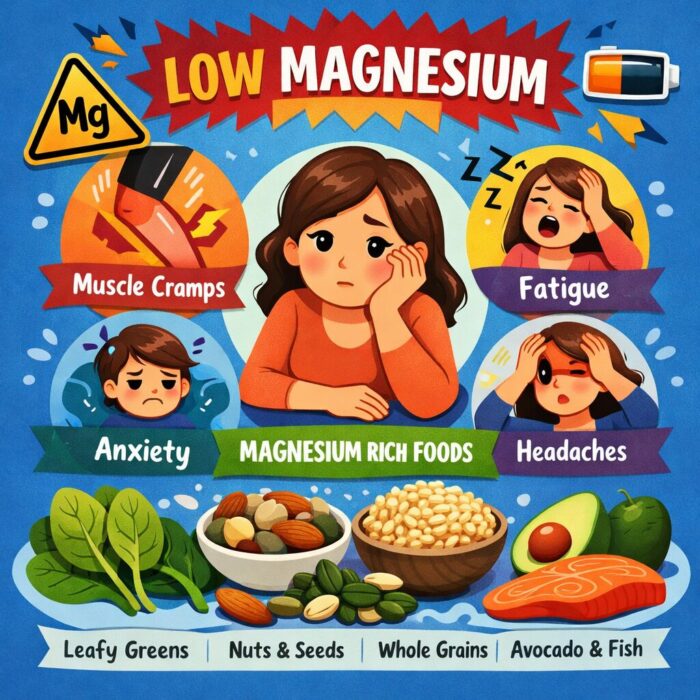
Even if you eat relatively well, modern lifestyle factors can still lead to deficiency.
Common causes include:
- Poor diet (low in whole foods, high in processed foods)
- Chronic stress (increases magnesium depletion)
- Alcohol consumption (increases excretion)
- Digestive issues (poor absorption)
- Travel & dehydration (electrolyte imbalance — especially on flights)
- Certain medications
👉 This is why magnesium deficiency is more common than many people think.
🧪 How to Test for Magnesium Deficiency
Diagnosing low magnesium isn’t always straightforward.
- Serum magnesium tests are common but may not reflect total body levels
- Only about 1% of magnesium is found in blood
- RBC magnesium tests can provide better insight (but are less common)
👉 In many cases, symptoms + lifestyle factors are more useful indicators.
Magnesium-Rich Food Ideas (Best Sources)

One of the best ways to increase your magnesium intake is through your diet.
Some magnesium-rich foods that you can include in your meals are:
| Food | Serving Size | Magnesium (Approx.) |
|---|---|---|
| Spinach (cooked) | 1 cup | 157 mg |
| Pumpkin Seeds | 1 oz (28g) | 150 mg |
| Black Beans (cooked) | 1 cup | 120 mg |
| Quinoa (cooked) | 1 cup | 118 mg |
| Brown Rice (cooked) | 1 cup | 84 mg |
| Almonds | 1 oz (28g) | 80 mg |
| Dark Chocolate | 1 oz (28g) | 64 mg |
| Avocado | 1 medium | 58 mg |
| Tofu | 3.5 oz (100g) | 53 mg |
| Yogurt (plain) | 1 cup | 47 mg |
| Bananas | 1 medium | 32 mg |
| Salmon | 3 oz (85g) | 26 mg |
👉 Including a variety of these foods in your daily diet can help support healthy magnesium levels — but if you’re experiencing symptoms, diet alone may not always be enough.
💊 Magnesium Supplements: What Actually Works?
If you’re experiencing symptoms, supplementation can be one of the most effective ways to restore levels.
🔹 Different Types of Magnesium (Important)
Not all magnesium supplements are the same:
- Magnesium Glycinate → best for sleep & relaxation
- Magnesium Citrate → supports digestion
- Magnesium Malate → helps with energy
- Magnesium Threonate → supports brain function
🔹 Why a Full-Spectrum Magnesium Supplement Is Better
Many supplements only contain one type of magnesium.
However, your body uses different forms for different functions.
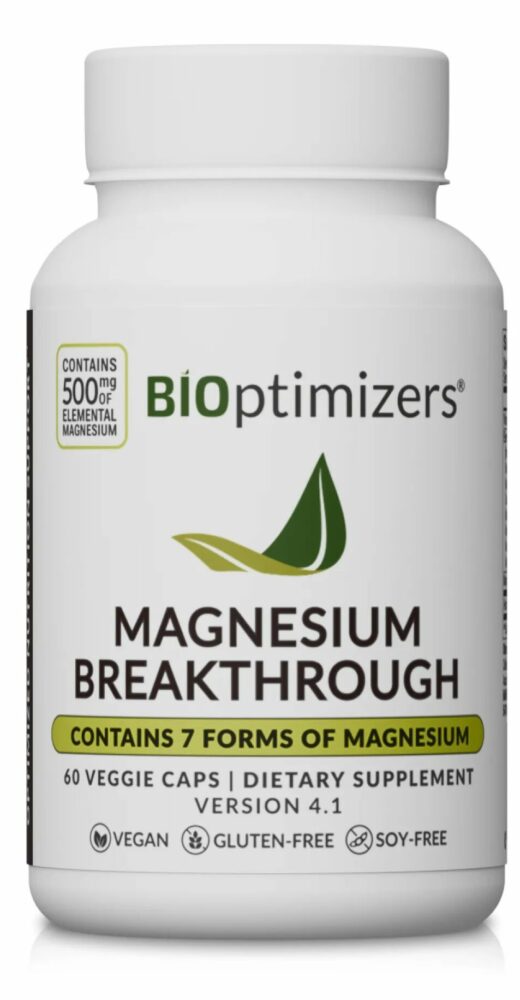
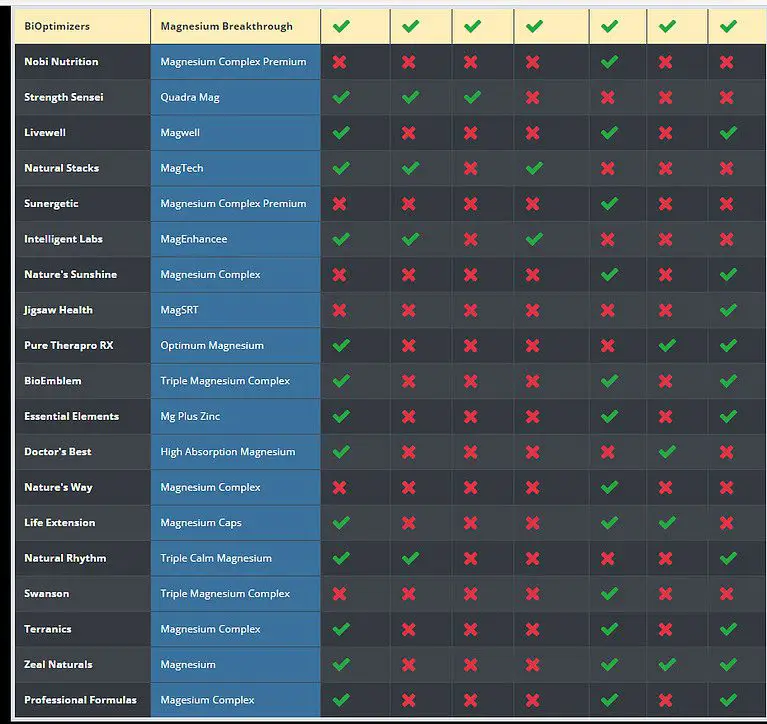
That’s why some people benefit more from a full-spectrum magnesium complex, such as:
👉 BiOptimizers Magnesium Breakthrough
This formula includes multiple forms of magnesium designed to support:
- Sleep
- Recovery
- Muscle function
- Stress management
👉 If you want a deeper breakdown, you can check out my full review here.
⚠️ Can You Take Too Much Magnesium?
Yes — although it’s uncommon from food alone, it is possible to take too much magnesium from supplements.
The upper limit from supplements is typically ~350 mg per day
- Too much may cause:
- Diarrhea
- Nausea
- Digestive discomfort
👉 Always start with a lower dose and increase gradually.
📊 How Much Magnesium Do You Need?

Getting enough magnesium each day is essential for supporting energy, sleep, muscle function, and overall health.
✅ Recommended Daily Intake
General guidelines suggest:
- Men (19–30 years): ~400 mg per day
- Men (31+ years): ~420 mg per day
- Women (19–30 years): ~310 mg per day
- Women (31+ years): ~320 mg per day
👉 These values include magnesium from both food and supplements combined.
⚠️ When Your Magnesium Needs May Be Higher Than Usual
While the above ranges are a good baseline, many people require more than the minimum — especially with modern lifestyles.
Your magnesium needs may increase if you:
- Struggle with poor sleep
Magnesium helps regulate melatonin and supports relaxation, so low levels can worsen sleep quality. - Experience high stress levels
Chronic stress increases magnesium depletion, meaning your body may use more than usual. - Exercise regularly
Magnesium is lost through sweat and used in muscle recovery and energy production. - Travel frequently (especially long-haul flights)
Dehydration, disrupted sleep, and changes in diet can all impact electrolyte balance — including magnesium. - Consume alcohol regularly
Alcohol increases magnesium excretion, which can contribute to deficiency over time. - Have digestive issues
Conditions like IBS or poor gut health can reduce magnesium absorption.
💡 Important Note
Even if you’re hitting the recommended daily intake on paper, absorption matters just as much as intake.
This is why some people still experience symptoms of low magnesium despite eating a relatively healthy diet.
👉 In these cases, combining magnesium-rich foods with a well-absorbed supplement can often be more effective.
⚠️ Upper Limit From Supplements
- The general upper limit for magnesium from supplements is around 350 mg per day
- Higher doses may be used in certain cases but can cause digestive issues (such as loose stools)
👉 Always start with a lower dose and adjust based on how your body responds.
💊 A Simple Way to Support Your Magnesium Levels
While improving your diet is important, many people still struggle to get enough magnesium — especially with stress, travel, and modern eating habits.
That’s where a high-quality magnesium supplement can help.
👉 One option I’ve personally used is BiOptimizers Magnesium Breakthrough — a full-spectrum formula designed to support sleep, recovery, and relaxation.
If you want to learn more, you can check out my full review below:
👉 Read my Magnesium Breakthrough review here
Or visit the official site:
👉 Check latest price – On The Official Bioptimizers Website Here <<
Related FAQs About Low Magnesium
How long does it take to fix magnesium deficiency?
Most people notice improvements within 1–2 weeks, but full restoration can take longer depending on severity.
Can low magnesium cause anxiety?
Yes — magnesium plays a key role in regulating the nervous system and stress response.
What is the fastest way to increase magnesium?
Combining magnesium-rich foods + supplementation is typically the most effective approach.
Is magnesium deficiency common?
Yes — due to modern diets and lifestyle factors, many people may not be getting enough.
Can low magnesium cause muscle cramps at night?
Yes — magnesium plays a key role in muscle relaxation, and low levels are a common cause of nighttime cramps or twitching.
What is the best form of magnesium to take?
It depends on your goal. Glycinate is often used for sleep, citrate for digestion, and full-spectrum blends for overall support.
Can you get enough magnesium from food alone?
It’s possible, but many people struggle due to modern diets, soil depletion, and lifestyle factors like stress.
Who is most at risk of magnesium deficiency?
People under high stress, frequent travellers, athletes, and those with digestive issues are at higher risk.
🧩 Related Guides
🧠 Final Verdict
If you’re experiencing fatigue, poor sleep, muscle cramps, or stress — low magnesium could be a contributing factor.
While improving your diet is a great first step, many people benefit from adding a high-quality magnesium supplement for faster and more reliable results.
This is especially true if you’re dealing with stress, travel, or digestive issues — all of which can deplete magnesium levels quickly.
⚠️ Disclaimer
This content is for informational purposes only and is not intended as medical advice. Always consult a qualified healthcare professional before starting any supplement.

Fix Your Energy, Sleep and Nutrition Today 🛠
Get our 20-Step Healthy Living eBook, Daily Health Planner and our other bonuses sent to your inbox instantly. Start your journey with 7 days of exclusive gifts and expert tips to stay fit throughout 2026.
Disclaimer: We hate spam too. Unsubscribe anytime.
🧩 Related Guides




Anxiety and Depression are you magnesium deficient BiOptimizers blood pressure supplements blood sugar control blood sugar support supplements digestive enzymes Digestive Enzymes Supplement Digestive Health digital products Dr Sam Robbins Gut Health Gut Health While Travelling Health Tips for Travelling Healthy Living heart health HFL hypomagnesia insulin resistance joint health supplement keto dieting Keto Diet Weight Loss leaky gut supplements list Low Stomach Acid magnesium Magnesium deficiency Matt Gallant mental health multivitamins Nootopia Nootropics Probiotics Probiotic Supplements reverse type 2 diabetes stress and anxiety stress relief Supplements vitapost Wade Lightheart weight loss articles weight loss diet plans weight loss product reviews weight loss supplements weight loss tea
Magnesium breakthrough sounds like a great product. Thank you for also including foods that are high in magnesium. My wife suffers from muscle weakness/pain issues and doctors always want her to “”mask” the issue with pain relievers which do not help. She also struggles with getting quality sleep due to the pain and it sounds like magnesium could help with both issues. Your article was educational and we will be trying out some of your suggestions. we will also pay close attention to the pros and cons.
Hi James, Excellent. I think we could all do with more magnesium in our diets. Zinc also. Anyway, this could be the answer you are looking for if you could maybe bookmark the page for later you can read again maybe.
Thanks for this. I really appreciate the important information you have provided here. You said that magnesium deficiency has many symptoms but may not be easy to diagnose definitively. You quoted a doctor saying that low magnesium to calcium ratio in the cells is a warning sign. But it sounds to me that this would not be something revealed by a regular blood test. My wife has been concerned about low magnesium in her diet for a while and has sought to address this principally through dietary changes. She seems to have reversed the situation and early warning symptoms in this way. But it is good to know about Magnesium Breakthrough because of the value of all the different forms of magnesium it contains. Thanks very much for this. Best regards
Thanks for taking the time to reply Andy, and I’m glad to hear that there is some substance here. I have personally been working on my diet myself and good to here this works for others.
Thank you so much for this highly informative article, Alex! I had no idea that magnesium had such grand health effects and was involved in so many bio processes-especially keeping your heart beating and building strong bones and muscles. While I eat a lot of green foods (especially broccoli, spinach, and greens), nuts and oatmeal, I don’t exactly know what my magnesium level is, and I definitely want to get it checked out now. I am trying to eat better and take better care of myself in general, and I now realize how important my magnesium level is to my overall health and well-being. Thank you so much for sharing this crucial information with us! I have saved your site and will share it with my friends and family. God bless you!
Thank you C.N would you like a link to check out my no.1 recommendation for magnesium supplement?
Hi Alex,
I am so pleased that I came across this article as I have been feeling fatigued lately from work and even from outside activities.
I haven’t been sleeping as well as I usually do, and I don’t think it’s because of too much coffee or something like that.
I went for a blood test when I was last at home in April, and I was told that my blood pressure is a little high. When I asked what I should do, they just said to watch my diet. But, maybe I need to look into using magnesium supplements as you recommend.
Thank you for sharing and I will let you know how I get on.
All the best,
Tom
Hi Tom, I am glad to be able to help. I’d definitely recommend trying out Magnesium Breakthrough has worked great for me. Has took me a while to finish my first bottle because i always forget to take before dinner which is the main instruction for taking this. I really need to look at what Bioptimizers say about this because it is bad really I start eating then I look at the bottle lol
But when I have took it has worked great for helping my sleep, lowering my BP when it has got too high and also it has helped boost energy levels. I really want to get in a proper flow of taking it everyday but definitely recommend.
I first learned exactly how important magnesium was years ago when I had a lot of stomach issues. I used to have a lot of stomach issues, to put it lightly. However, as soon as I introduced more magnesium into my diet it helped tremendously with my stomach issues.
I did have a question. Does Magnesium react with any medications?
Hi Garen, Interesting thank you for sharing. I never really thought about taking Magnesium for Gut Health but something for me to look at I think. If it reacts with any medications I have just had to look this up. Apparently quinolone antibiotics, tetracycline antibiotics, and nitrofurantoin (Macrodandin) can interact with magnesium so they must not be taken together at the same time. Apparently you can take 1-2 hours before.
Hi Alex,
Thank you for this informative article explaining the signs and symptoms of magnesium deficiency. I do know that I have trouble sleeping, but I think it is the medicines I have to take. I eat almost every thing you have listed on your magnesium source chart on a fairly regular basis. I love avocadoes, and bananas! And I eat whole wheat bread that is covered in nuts and seeds like flax seeds. one of my favorite snacks is a peanut butter& banana sandwich! But after I read your article, I think I am going to have my magnesium level checked. I bookmarked your site so I know where to get a good supplement. Thank you and keep up the good work!
Hi Chas, It sounds like you probably do have sufficient magnesium in your diet. I think how magnesium helps is by helping to produce Melatonin. You can try my recommended Magnesium supplement but actually Dream Optimizer also by Bioptimizers and their partner brand Nootopia I think might be something to look at.
A proper diet is normally the best way to maintain a proper magnesium level unless there are some other underlying conditions. Using a supplement like magnesium breakthrough could certainly help if that was the case. Getting a regular blood test is so important and thank you for the information in this article.