

Best Probiotics for Travel & Flying (Complete Buyer’s Guide)
Are you short on time? If you travel often and struggle with bloating, irregular digestion, or food sensitivity, a travel-stable probiotic + digestive enzyme combo is one of the most effective ways to protect your gut on the road.
If you travel frequently and struggle with bloating, irregular digestion, food sensitivity, or stomach upset, choosing the right probiotic for travel can make a noticeable difference.
Travel places unique stress on your digestive system. Changes in food, water, routines, sleep, and time zones all affect the gut microbiome — often at the same time. This is why many people experience constipation, diarrhoea, gas, or discomfort when flying or traveling abroad.
This buyer’s guide focuses on how to choose the best probiotics for travel and flying, what actually works, and which formulations are most reliable for frequent and international travellers.
Please note: Digestive disruption during travel is one of the most common issues reported by frequent flyers and international travellers, which is why travel-specific gut support has become increasingly popular.
*This article contains affiliate links. If you choose to purchase through them, I may earn a commission at no extra cost to you. I only share products I believe may be helpful based on research and user experience.
Any questions please contact me at chivs86@dynamicideas4life.com
Why Traveling Disrupts Gut Health

Travel disrupts gut health through Your digestive system relies on routine. Travel removes that stability, and several gut-disrupting factors happen at once.
- Diet changes introduce unfamiliar ingredients, different oils, additives, and often less fibre. Your usual gut bacteria may struggle to adapt, which can lead to bloating, gas, or irregular digestion.
- Water differences (minerals, treatment methods, and new microbes) can also affect sensitive digestive systems — even when water is safe to drink.
- Sleep disruption and jet lag interfere with the gut’s natural rhythm, slowing digestion for some people and causing urgency for others.
- Travel stress affects the gut–brain axis, which can alter motility, increase sensitivity, and trigger stomach discomfort.
- Flying adds dehydration, which slows digestion and increases the likelihood of constipation.
When all of these factors combine, the gut microbiome can shift quickly — which is why bloating, diarrhea, constipation, and stomach upset are so common during travel.
Do Probiotics Really Help While Traveling?

Yes — when the formula is designed for travel.
A high-quality travel probiotic may help support:
- Healthier gut bacteria balance
- Tolerance to unfamiliar foods
- Digestive discomfort, including bloating and gas while flying
- Regular bowel movements
- Digestive resilience during stress
However, many probiotics are not suitable for travel, which is why selection matters.
What to Look for in the Best Probiotics for Travel
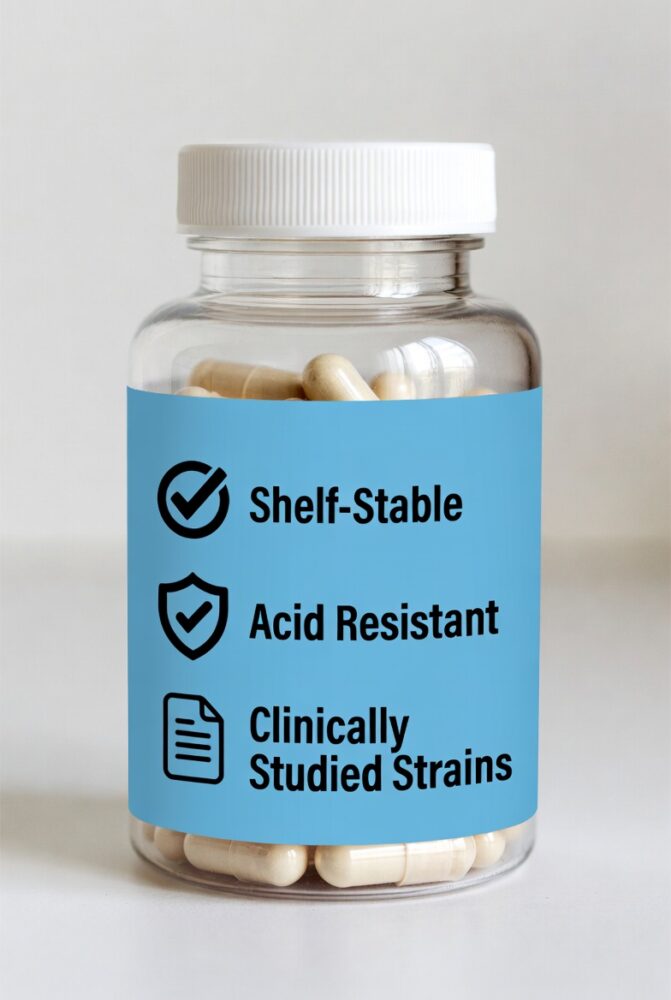
This is where most buyers go wrong. Before choosing a probiotic for travel, look for these features:
1. Shelf Stability
Travel probiotics should not require refrigeration. Heat and long travel days can reduce potency in standard formulas.
2. Clinically Studied, Purpose-Driven Strains
Look for strains known for:
- Digestive support
- Stress resilience
- Microbiome balance
Examples of probiotic strains that have been studied for digestive and gut microbiome support include Lactobacillus rhamnosus, Lactobacillus plantarum, Saccharomyces boulardii, and Bifidobacterium lactis. Different strains have different functions, which is why strain selection matters more than simply choosing the highest CFU count.
3. Acid & Bile Resistance
Most probiotics die before reaching the gut. Advanced delivery systems dramatically improve survival.
4. Practical CFU Count
More CFUs isn’t always better. Survival rate matters more than label numbers.
Why Survival Matters More Than CFU Count
Many probiotics advertise very high CFU numbers, but without protection from stomach acid, a large percentage of bacteria may not reach the intestines alive. Delivery systems designed to improve acid and bile resistance can play a significant role in how effective a probiotic is once consumed.
5. Travel-Friendly Capsules
Lightweight, easy to pack, and airport-safe.
Best Probiotics for Travel & Flying (What Actually Works)
After reviewing survivability, formulation quality, and real-world travel use, BioOptimizers probiotics consistently stand out for travellers.
They are specifically designed to:
- Survive stomach acid
- Remain shelf-stable
- Support digestion during stress and irregular meals

Why BioOptimizers Probiotics Are Ideal for Travel

BioOptimizers uses advanced delivery technology to protect probiotic strains until they reach the gut — a key advantage during flights and long travel days.
Key benefits:
- Acid-resistant capsules
- Shelf-stable formulas
- Designed for stress and digestion support
- Easy to pair with digestive enzymes
For frequent travellers, this combination offers more reliable digestive support than probiotics alone.
Please note: Other shelf-stable probiotics may also be suitable if they meet the same survivability, strain, and delivery system criteria outlined above.
Probiotics vs Digestive Enzymes for Travel (Do You Need Both?)

These serve different but complementary roles:
- Probiotics support gut bacteria balance
- Digestive enzymes help break down unfamiliar or heavy meals
The Travel Stack Approach (Recommended)
Many travellers see the best results by combining:
- A daily probiotic
- Digestive enzymes with meals
BioOptimizers offers formulations designed to work together, making this approach simple.
How to Take Probiotics When Traveling?
For best results, (especially with BioOptimizers-style formulations):
- Start 7–14 days before travel
- Take daily during your trip
- Pair with enzymes at meals
- Continue for 5–7 days after returning
- Stay hydrated
This approach helps protect digestion before, during, and after travel.
Who Benefits Most From Travel Probiotics?

Travel probiotics aren’t just for people with digestive issues — they’re especially useful for anyone whose routine, food, and stress levels change frequently.
- Frequent flyers
Regular flights mean repeated exposure to dehydration, time-zone changes, and disrupted meal patterns — all of which can throw off digestion. - International travelers
Different cuisines, food preparation methods, and water mineral content can challenge the gut microbiome, especially on longer trips. - People with sensitive digestion
Those who already deal with bloating, food sensitivities, IBS-type symptoms, or irregular bowel movements often notice travel makes symptoms worse. - Business travelers
Early mornings, late meals, restaurant food, stress, and long workdays create the perfect conditions for digestive discomfort. - Holiday travelers who overindulge
Richer foods, alcohol, and larger meals can overwhelm digestion. Probiotics paired with enzymes may help the gut adapt more comfortably. - Anyone prone to constipation or traveler’s diarrhea
Changes in hydration, routine, and microbial exposure can quickly affect bowel habits while away from home.
In short, if travel tends to affect your digestion in any way, a travel-friendly probiotic can help maintain balance and reduce the likelihood of discomfort.
Related FAQS
Are Probiotics Safe to Take on Airplanes?
Yes. Probiotics are safe to bring on planes and can be packed in carry‑on or checked luggage. Capsule supplements are not restricted by airport security. Choose shelf‑stable options to avoid heat‑related potency loss.
When should I start taking a probiotic before travel?
Ideally 7–14 days before your trip. This gives beneficial bacteria time to establish before your routine, diet, and environment change.
Should I take probiotics every day while traveling?
Yes. Daily use helps maintain microbiome balance during diet changes, stress, and flying. Consistency is more important than high CFU numbers.
Do probiotics prevent traveler’s diarrhea?
They may help support gut balance during travel, which can influence digestive resilience, but they are not a guarantee.
What’s the difference between probiotics and digestive enzymes?
Probiotics support beneficial gut bacteria, while digestive enzymes help break down fats, proteins, and carbohydrates in meals. Many travelers use both for broader digestive support.
Do probiotics need refrigeration while traveling?
Some do, but travel-specific formulas are shelf-stable and designed to remain effective without refrigeration. Always check the label.
Can probiotics help with bloating during flights?
They may help support gut balance, which can reduce gas and digestive discomfort linked to stress, dehydration, and diet changes while flying.
Are probiotics safe for most people?
Generally yes for healthy individuals, but people with compromised immune systems or medical conditions should speak to a healthcare professional first.
Final Verdict: Are Travel Probiotics Worth It?
Yes — when you choose a formula designed for travel.
A probiotic + digestive enzyme stack may offer broader digestive support than probiotics alone, especially during flying and international travel.
Bottom Line
A probiotic + digestive enzyme travel stack provides broader digestive protection than probiotics alone.
BioOptimizers-style formulations are particularly well suited for travellers because they:
- Survive harsh stomach conditions
- Support digestion of unfamiliar foods
- Fit easily into carry-on luggage
- Work synergistically across the entire digestive process
If you’re serious about protecting your gut while traveling, starting with a science-backed travel probiotic system is one of the smartest choices you can make.
Related Content
- How to Maintain Gut Health While Traveling
- Best Gut Health Supplements for Frequent Travelers
- Preventing Traveler’s Diarrhea Naturally
- Bioptimizers P3OM Probiotics Review (Updated for 2026)
Research & Sources
Scientific research continues to explore how gut bacteria influence digestion, immunity, and resilience during stress and environmental change. Studies have examined the role of certain probiotic strains in supporting gut microbiota balance, digestive comfort, and intestinal barrier function. Research has also shown that dehydration, circadian rhythm disruption (jet lag), and stress can influence gut motility and microbiome composition — all common factors during travel.
While individual responses vary, these findings help explain why travel often affects digestion and why survivability and strain selection are important considerations when choosing a probiotic.
General research areas referenced include probiotic survivability, gut microbiome balance, circadian rhythm effects on digestion, and hydration-related digestive function.
Disclaimer:
This article is for educational purposes only and is not medical advice. Supplements are not intended to diagnose, treat, cure, or prevent any disease. Individual responses to probiotics and digestive enzymes may vary. If you have a medical condition, are pregnant or breastfeeding, have a weakened immune system, or are taking medication, consult a qualified healthcare professional before starting any supplement.







Fix Your Energy, Sleep and Nutrition Today 🛠
Get our 20-Step Healthy Living eBook, Daily Health Planner and our other bonuses sent to your inbox instantly. Start your journey with 7 days of exclusive gifts and expert tips to stay fit throughout 2026.
Disclaimer: We hate spam too. Unsubscribe anytime.
Anxiety and Depression BiOptimizers blood pressure supplements blood sugar control blood sugar support supplements digestive enzymes Digestive Enzymes Supplement digital products Dr Sam Robbins Exercise Gut Health Gut Health While Travelling Health Tips for Travelling Healthy Living heart health HFL how to lower blood sugar levels insulin resistance joint health supplement Keto keto dieting Keto Diet Weight Loss leaky gut supplements list magnesium Magnesium deficiency Matt Gallant mental health multivitamins Nootropics Probiotics Probiotic Supplements proteolytic enzymes reverse type 2 diabetes stress and anxiety stress relief Supplements vitabalance vitapost Wade Lightheart weight loss articles weight loss diet plans weight loss product reviews weight loss supplements weight loss tea
This was a really helpful read. I’m actually looking into probiotics because a close friend of mine tends to have stomach issues whenever she travels, especially when the food and water are different from what she’s used to. I didn’t realize how important strain selection and timing were, or that starting probiotics before a trip can make such a difference.
I like how you explained the travel-friendly options, too. It makes it feel much more doable instead of overwhelming.
For someone helping a friend prepare for travel, would you recommend sticking with a broad-spectrum probiotic or choosing one that’s more targeted to digestive upset and immune support while on the road?
Hi Alice, thanks for commenting. Regarding your question I would say it isn’t so much about it being broad spectrum or targeted the main thing is the delivery – probiotics need to survive during transit to the gut and not long enough to start forming colonies of bacteria. P3OM I recommend as I know this is good for this but of course any supplement that has good reviews might be worth looking at. Just be careful many probiotic supplements you got the probiotics are already dead before you take them or they will not survive going through stomach acid.